
Wooster paint brushes and roller covers are for painting walls, trim, doors and cabinets. Homeowners and trade painters both use them, and every Wooster line is built for a kind of paint, so pick the brush and cover by what’s in the can.
The Wooster Brush Company started in 1851, when Adam Foss began making brushes from a crate of hog bristles he bought at a freight auction. The company is still in Wooster, Ohio, on the Madison Avenue site it moved to in 1909, and it’s privately held. Wooster is known for introducing the angle paintbrush in 1937 and synthetic roller-cover fabrics in 1964.
Silver Tip brushes for walls, doors and trim
Look at the paint on your walls. Wooster was the first to make nylon brushes that performed in latex paint, and latex is what nearly every wall gets today.
Silver Tip is the brush for latex on walls, furniture, doors and trim. It uses soft 100% CT polyester, and that thin, soft filament lets the paint level out, so brush marks all but disappear as it dries. Use the angle sash to cut in along ceilings and casing, and use the flat to lay off door panels and wide boards. A 1½” flat fits narrow trim and window sash.
For semi-gloss and gloss, Wooster’s Alpha line uses a firm nylon-polyester blend that carries more paint and keeps its shape in heavier, high-sheen paint. For oil-based paint and varnish, Wooster’s Yachtsman is the brush for a fine finish. Chinex FTP is the brush Wooster builds as its most durable, the one for a painter who uses a brush hard every day. Ultra/Pro comes in three stiffnesses, Soft for a smooth finish, Firm for all-around work and Extra-Firm for the most control on a cut line. Match the brush to the paint: soft Silver Tip for a smooth latex finish on walls and doors, firm Alpha when the can says semi-gloss or gloss.
Softip: one brush for any paint
Softip is the Wooster brush with the short pearl-yellow handle, in flat and angle sash widths from 1 to 4 inches. Its synthetic polyester filament has fine, feather-like ends that lay paint down smooth and cut brush marks, and it works in both latex and oil-based paint. That makes it the brush to keep on hand when you don’t know what the next can holds: the angle sash for cutting in, the 3- and 4-inch flats for doors and siding boards. Clean it in the solvent the paint calls for, water for latex and mineral spirits for oil, and hang it or lay it flat to dry so the tip stays straight.

Shortcut and Gold Edge for tight spots and long runs
The Shortcut has a short, flexible rubber handle. The brush fits behind toilets, inside closets and along baseboard in cramped rooms while your hand still steers the tip. Gold Edge is Wooster’s high-production brush, and the thin angle version cuts a clean line along ceilings and casing when there’s a lot of trim to get through. The Lindbeck angled sash, in 1½”, 2” and 2½”, is an angle brush made for cutting in a long, clean line along a ceiling or casing. Keep a 2” Shortcut in the kit for the corners where a full-length handle hits the wall.
Roller covers matched to sheen
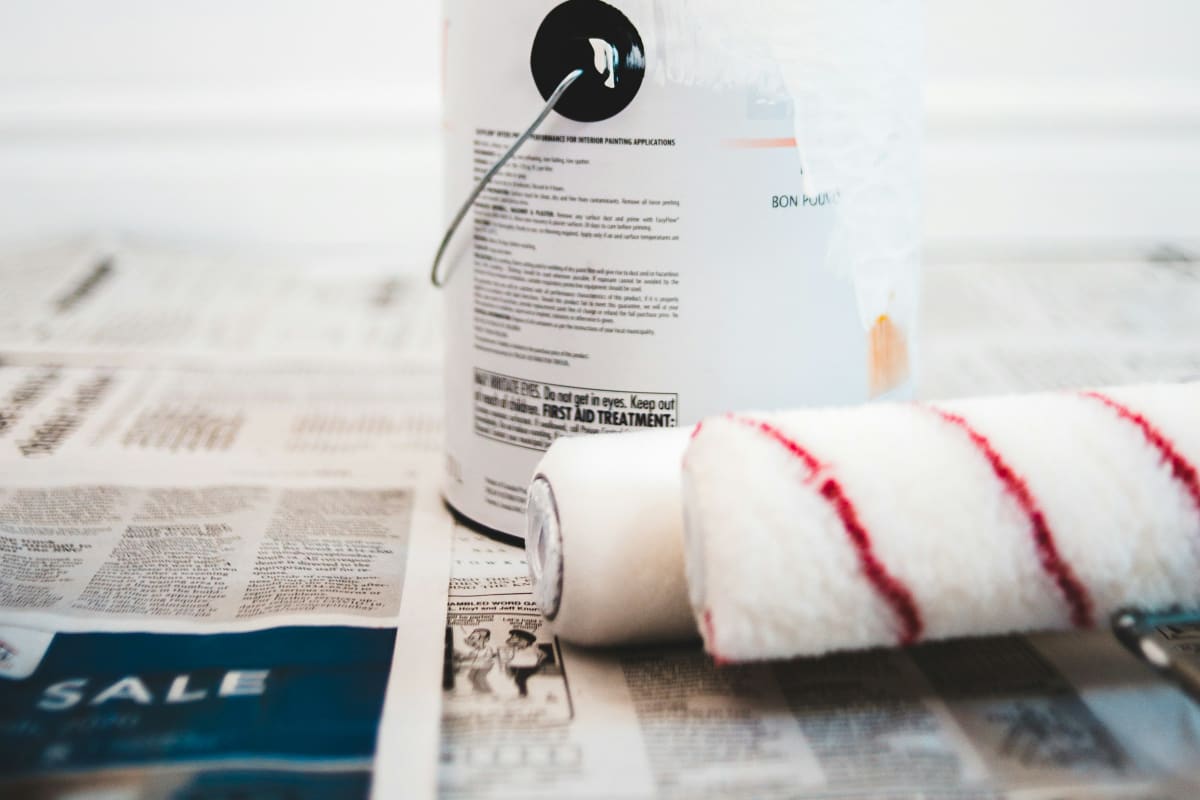
Pick the cover by the sheen on the paint can. A knit cover has an open, looped backing that picks up and releases more paint, which suits flat, eggshell and satin paint and stain. Gloss and semi-gloss show every stray fiber, so use a shed-resistant woven cover. Its fibers are double-locked into the backing, and the paint goes on nearly lint-free. A woven cover also gives a finer finish in flat or satin on a wall that has to look its best.
Choose the nap by the texture of the surface: 3/8” for smooth drywall and trim, longer for rough surfaces. The Super Doo-Z 4” x 3/8” is a shed-resistant mini cover for doors, trim and small walls. For cabinets, doors and other smooth surfaces, use a microfiber or foam cover, like the Jumbo-Koter Micro Plush microfiber or the Pro Foam mini, and sand with 220 grit between coats.
Before the first dip, pat a new cover all over with painter’s tape to lift loose fibers. Those mini covers ride on the Jumbo-Koter frame, and the mohair mini is the one for a glass-smooth finish in gloss enamel.
On ceilings, a Sherlock GT extension pole means one trip up the ladder to cut in and none for the rolling.
On the deck, the lambswool stain pad lays stain on evenly and fast, which matters when a Montana summer gives a deck only so many dry, warm days in a row.
Silver Tip and Alpha brush sizes
| Line | Filament | Style | Widths |
|---|---|---|---|
| Silver Tip | Soft 100% CT polyester | Thin Angle Sash | 1” to 2½” |
| Silver Tip | Soft 100% CT polyester | Angle Sash | 1½” to 3” |
| Silver Tip | Soft 100% CT polyester | Flat Sash | 2” to 3” |
| Silver Tip | Soft 100% CT polyester | Flat | 1” to 3” |
| Alpha | Firm nylon-polyester blend | Thin angle sash | 1½” to 2½” |
| Alpha | Firm nylon-polyester blend | Angle sash | 2” to 3” |
| Alpha | Firm nylon-polyester blend | Flat sash | 2” to 3” |
| Alpha | Firm nylon-polyester blend | Flat | 1½” to 3” |
| Alpha | Firm nylon-polyester blend | Extra-thick flat | 3” |
Frequently Asked Questions
Is Wooster a good paint brush?
Yes, and a big part of the reason is how the head is built. Wooster sets its bristles in FOSS-SET cement, which it developed to hold them permanently, so you’re not picking loose bristles out of fresh trim paint. If your brush takes hard use day after day, Chinex FTP is the line Wooster builds for durability.
How do I choose between Wooster paint brushes?
After you match the brush to the paint, pick the stiffness. Ultra/Pro comes in three: Soft for a smooth finish, Firm in the middle, and Extra-Firm when you want the most control on a cut line. When you don’t know what paint is coming next, Softip handles both latex and oil.
What Wooster roller cover should I use for semi-gloss?
A shed-resistant woven cover, like the Super/Doo-Z. Gloss and semi-gloss show every stray fiber, and the woven fabric is double-locked into the backing so the paint goes on nearly lint-free. Use 3/8” nap on smooth drywall and trim.
Ready to Get Started?
Our paint & finish specialists can help you find the right Wooster products for your project.