

A Werner ladder is the step ladder you open for painting and ceiling work, or the extension ladder you lean on the house for gutters, siding and roofs. Werner says its ladders are on more trucks and job sites than all other ladders combined, and that’s the reputation you’re buying: a ladder built for daily trade work. Homeowners and trade crews buy the same ones, and every Werner is built to meet or exceed ANSI and OSHA code requirements.
The Werner Ladder Company goes back to 1922, when Richard D. Werner founded R. D. Werner Co., Inc. It turned to aluminum ladders after World War II, pioneered fiberglass pultrusion in 1963 and introduced fiberglass ladders to the climbing industry, and today holds over 600 patents. Werner is based in Itasca, Illinois, as part of ProDriven Global Brands, and runs its own manufacturing from start to finish.
Pick the height first
Werner sizes a ladder by what it lets you reach, so start with the height you need to work at. On a step ladder, the highest you can stand is two steps below the top cap, which puts your safe reach about 4 feet above the ladder’s height. A 6 ft step ladder reaches a 10 ft ceiling, an 8 ft reaches 12 ft, a 10 ft reaches 14 ft and a 12 ft reaches 16 ft. Buying a 6 footer for a 12 ft ceiling is how people end up standing on the top cap.
An extension ladder should run 7 to 10 feet longer than the highest point it rests on, because the sections overlap and the ladder leans. A single-story eave at 12 ft takes a 20 ft ladder, and a two-story gutter line at 18 ft takes a 28 ft.
Then the duty rating, by rail color
The duty rating is the total load on the ladder: your weight plus boots, clothes, tool belt and whatever you carry up. Add up the gear before you pick, because a roofer carrying a bundle of shingles weighs a lot more than the bathroom scale says. Since 2023 Werner colors its core ladders’ rails by duty rating, so you can read a heavy-duty ladder from across the yard.
| Duty rating | Load | Usual Werner fiberglass rail | Built for |
|---|---|---|---|
| Type IAA | 375 lb | Yellow | The toughest jobs, every day |
| Type IA | 300 lb | Orange | Pro work |
| Type I | 250 lb | Blue | Most projects and jobs |
| Type II | 225 lb | Green | Simple projects |
Type III, rated 200 lb, is the light-duty ladder for occasional use around the house.
For anyone who climbs for a living, Type IA is where to start, and the yellow Type IAA is the ladder that lives on the truck. A Type II or III is fine for a homeowner changing a bulb, but it’s the wrong ladder for someone carrying tools and material up every day.
Aluminum or fiberglass
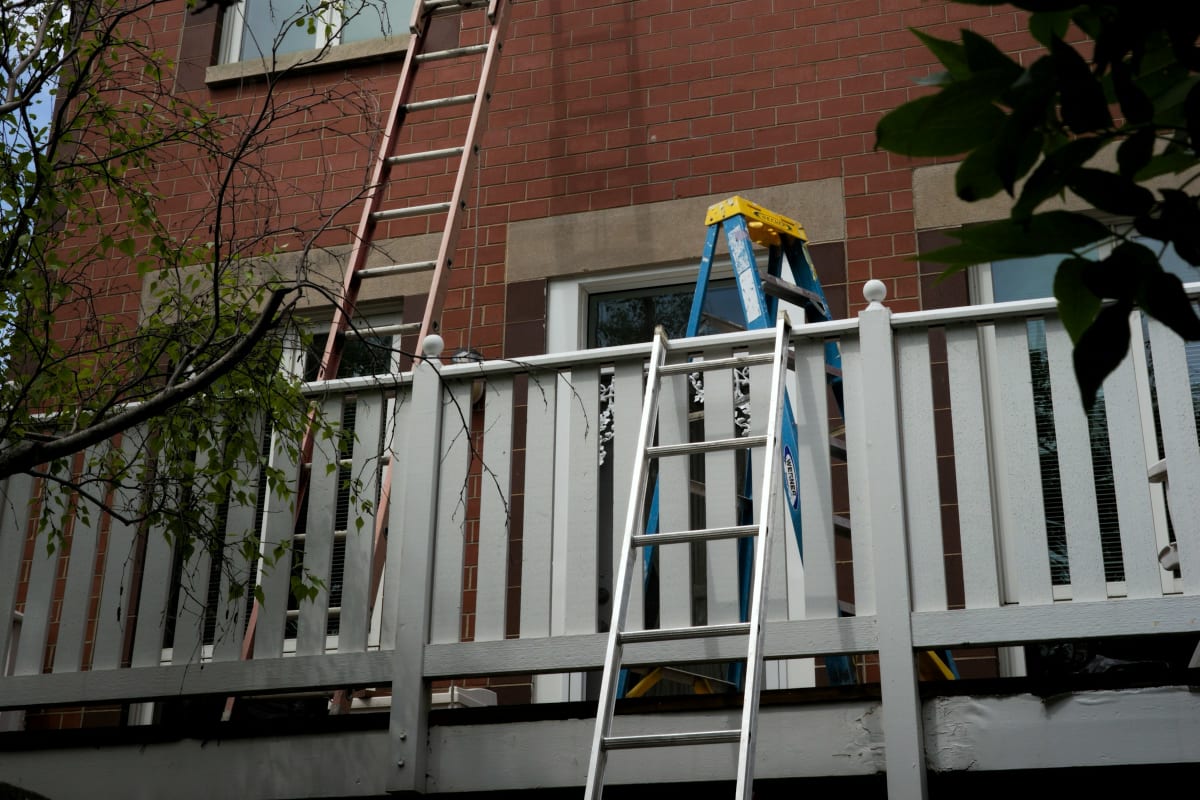
Aluminum is lighter, and you’ll feel that on an extension ladder you carry around the house alone. Fiberglass rails are non-conductive, which matters any time the work is near a service drop, a panel or an overhead line. Fiberglass is also heavier and stiffer, which keeps it steadier at full height. If there’s a wire anywhere near the work, buy fiberglass.
Step ladders, twin steps and the Podium
Werner step ladders have a multi-functional top that holds tools and a paint can, which takes the place of a pail shelf in most cases. Werner’s Lock-In accessories, including a utility bucket, fit its most popular fiberglass step ladder series and keep your hands free for the rails.
A twin-step ladder is built for two people, one on each side, which makes it the ladder for two painters working the same wall. The Podium ladder gives you a platform to stand on and lets you face any direction without moving the ladder, so you get more done from one setup. For low work, a Werner twin-step work stand gives you a platform-height step you can climb from either side. Keep a standard step ladder open on its feet; Werner’s LEANSAFE series is the one designed to lean against a wall, stud, corner or pole.
Extension ladders
The fair question about any big-name ladder is whether the name gets you anything you can see. On a Werner extension ladder, look at where the rungs meet the rails. Werner’s patented ALFLO rung joint makes a stronger rung-to-rail connection for what Werner calls Twist Proof performance, and a ladder that doesn’t twist stays rigid under you at full height. The rungs are D-shaped, so your boot stands on a flat surface instead of a round bar.
In Montana the extension ladder comes out in April, when the gutters, downspouts and soffits show what the winter’s ice dams did, and the ground at the foot of the wall stays soft with snowmelt for weeks. Set the feet on firm footing, 1 foot out from the wall for every 4 feet of height to the upper support point, so an eave at 16 ft puts the feet 4 ft out. On a sloped lot, and there’s no shortage of them around Whitefish, the LEVELSAFE Pro leveler adjusts up to 8.5 inches so you’re not shimming a foot with a block of wood. Check that both rung locks are hooked before you climb, run the ladder far enough past the eave that you can step off holding the rails, and stop four rungs from the top.
Multi-position ladders
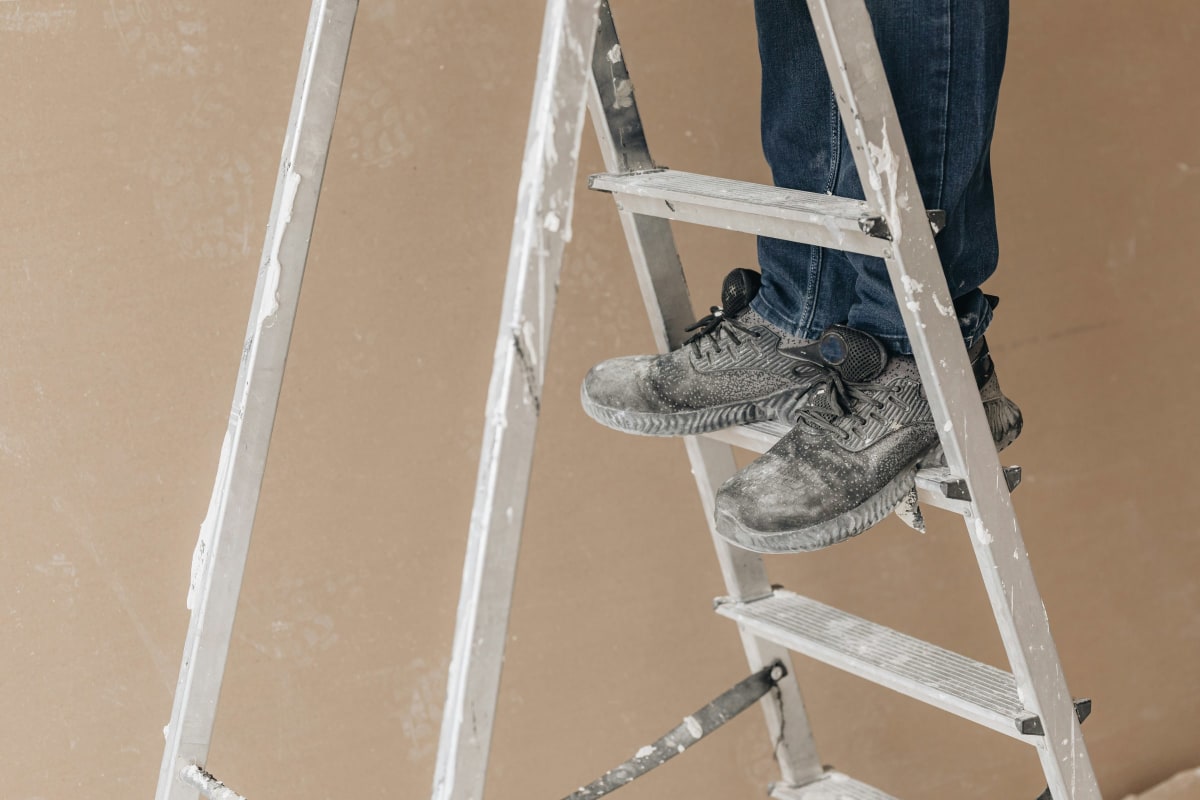
Werner’s telescoping multi-position ladders come in lengths including 17, 22 and 26 ft, and one ladder changes length and shape to fit the job. The telescoping ladder carries a 300 lb duty rating, ANSI certification and reinforced rail-to-rung connections. It works as a step ladder in the shop and an extension ladder on the house, and its stairway setting stands level on the steps, which a regular step ladder can’t do. If you have a stairwell to paint, that’s the reason to own one.
Roof work
For roofing, Werner’s K211 roofing safety system puts a harness, a 50 ft lifeline with a shock-absorbing lanyard and a temporary roof anchor in one bucket, built to OSHA and ANSI requirements. Fasten the anchor into the framing before the first course goes on.

Keep it climbing
Inspect the ladder before every use: rails, rungs, feet, locks and labels. A bent aluminum rail or a cracked fiberglass rail retires the whole ladder. The wear parts are replaceable, so a worn-out foot doesn’t mean a new ladder: on a step ladder that’s labels, foot assemblies and spreaders, and on an extension ladder it’s labels, foot assemblies, ropes, pulleys, locks and lock flippers. OSHA requires labels on ladders, so replace worn ones.
Frequently Asked Questions
Are Werner ladders good?
Yes. Werner has been in business since 1922, has built aluminum ladders since the years after World War II and fiberglass ones since 1963, and the details show where a ladder takes its beating. THE EDGE Professional Bracing reinforces and protects the rails, an integrated rail shield guards them when the ladder comes off the truck, and oversized feet and foot pads keep it steady while you work. On the extension ladders, the ALFLO rung joint keeps the rungs from twisting in the rails. A ladder that rides a rack every day usually gets retired for a dinged rail long before the rungs wear out, and that’s the part Werner protects.
Where are Werner ladders made?
Werner runs manufacturing, warehousing and distribution in the United States, Mexico, Canada, China, Vietnam, Australia and the United Kingdom, and controls the manufacturing process from start to finish. Its customer care is in Greenville, Pennsylvania, and its headquarters in Itasca, Illinois.
How do you open a Werner step ladder?
Pull the front and back apart and push both spreaders down until they lock flat, with all four feet on firm, level floor. A wobble almost always means a spreader isn’t locked or a foot is on a rug edge. Never climb a step ladder folded and leaned against the wall unless it’s a LEANSAFE, which is built for it.
How do you raise and lower a Werner extension ladder?
Brace the base against the house, walk the ladder up until it stands straight, then pull the rope hand over hand to raise the fly section. Stop when you reach your height and both locks drop onto a rung. To bring it down, lift the fly just enough to clear the locks and let the rope out steadily. Werner’s GLIDESAFE fiberglass extension ladders are up to 50% easier to extend and have built-in lowering assist, so the fly comes down smoothly without slamming or rope burn.
Ready to Get Started?
Our paint & finish specialists can help you find the right Werner products for your project.