

A Weber grill is the kettle, gas grill or portable you cook on in the backyard or at camp. It fits the cook buying a first good grill and the one keeping an old Weber lit. The hose and regulator are built to be easy to replace, so a tired Weber usually needs a part, not a new grill.
George Stephen Sr. made the first Weber kettle in 1952 by cutting a metal buoy in half and adding air vents and legs. He held that cooking on a rounded bowl with the lid down was the key. By the end of the 1950s, he had bought out Weber Brothers Metalworks and renamed it Weber-Stephen Products. Weber is headquartered in Palatine, Illinois, and BDT Capital Partners bought all of its remaining stock and took it private.
The Go-Anywhere gas grill
The Go-Anywhere is Weber’s small gas grill for the tailgate, the campsite and a small patio. It started out in the early 1980s as the Hot Shot Table Top Gas Grill and carries the Go-Anywhere name today. If you want a second grill for trips, this is the one to get. The mistake people make most is packing it up warm. Let it cool and wipe the grease out before it goes in the vehicle.
Rust is the worry with any small grill. On the Go-Anywhere, the cookbox and the lid are each warranted for 10 years against rust-through and burn-through, and that coverage leaves out salt air, chlorine and lack of maintenance. Empty the grease, let it dry and store it under a roof between trips.
Lighting and cleaning a Weber gas grill
Open the lid before you light. On a Spirit, each burner lights separately with a one-handed push and turn of its knob, so bring them up one at a time. When a Weber won’t light, runs low or burns with an uneven flame, clean it before you shop for parts. Many of those problems go away with cleaning and basic maintenance.
Clean it hot. Run it on high with the lid shut for 10 to 15 minutes, brush the grates, then scrape the bars and the inside of the cookbox down toward the grease tray. The drip channels George Stephen Sr. designed in carry grease to the tray to cut flare-ups, so empty that tray every few cooks. If the flame looks lazy, clear the burner ports with a thin wire.

Replacing the hose and regulator
Weber recommends replacing the hose and regulator every five years. Sun and weather wear the hose out, so check one that sits uncovered on a deck every spring. If the hose is damaged in any way, don’t use the grill until the replacement is on. Where local law sets a different replacement schedule, go by the law.
Hose kits fit certain model families, so read the model and serial number off the label on the grill’s frame before you choose one.
| Step | What to do |
|---|---|
| 1 | Disconnect the regulator from the propane tank. |
| 2 | Loosen the hose connections with two open-end or adjustable wrenches. |
| 3 | Fit the new hose and regulator by reversing the removal steps. |
| 4 | Once the new hose is tight, check every joint for gas leaks. |
Some Weber hose connections use a left-handed thread that loosens clockwise. That’s the fitting people round off by cranking it the usual way. For the leak check, open the tank valve and brush soapy water on each joint. If you see bubbles, tighten or refit that joint before you light the grill.
Smoker box, planks and the tank adapter
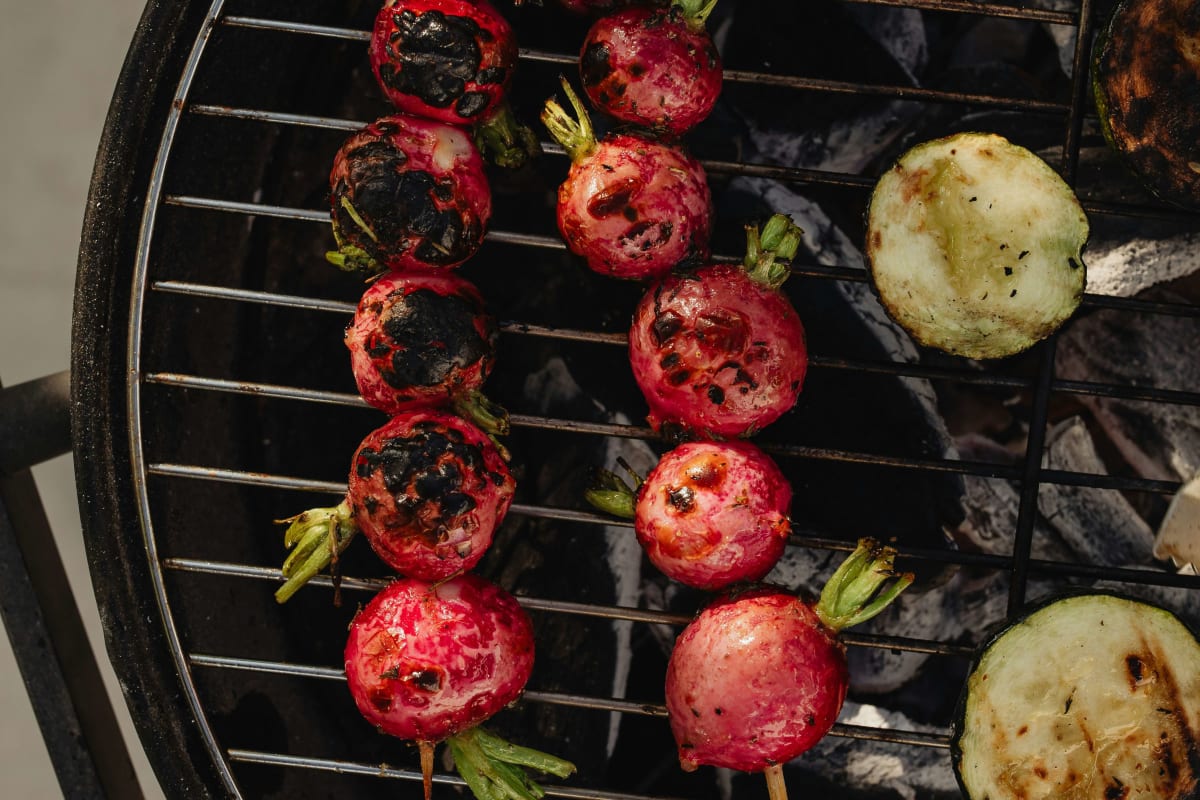
The stainless smoker box turns a gas grill into a light smoker: fill it with soaked wood chips, set it on the grates over a burner running high until it smokes, then turn the heat down for the food. Cedar planks go on the grates under salmon or vegetables; soak the plank in water for at least an hour so it smolders instead of catching fire, and keep a spray bottle handy. The Q LP adapter hose lets a small portable grill run off a standard 20-pound tank instead of the little 1-pound cylinders, which pays for itself over a summer of cooking at home.
Picking a new Weber
Weber builds grills at its plant in Huntley, Illinois, with parts sourced in the U.S. and around the world. For a new grill, choose by how you cook. The charcoal kettle is the original, and an add-on turns it into a smart grill. The Spirit is Weber’s best-selling gas grill, with a Sear Zone designed to reach 750°F. With an insert that replaces the cooking grates, any Spirit or Genesis turns into a full-size griddle. Searwood pellet grills run 180°F to 600°F and SmokeFire runs 200° to 600°, so one cooker both smokes and sears. Slate griddles need no seasoning and get above 500°F in as little as 10 minutes. The Q portables are for tailgates, picnics and small patios. Weber also makes a stainless smoker box, cedar grilling planks, a grill brush, a barbecue mitt and a Q LP hose adapter.
Frequently Asked Questions
How do you turn on a Weber Genesis or other Weber gas grill?
Open the lid first. Then open the propane tank valve all the way, or on a natural gas hookup open both the inside and outside shut-off valves fully. Newer Genesis grills have the knobs up front and electronic ignition, and Genesis II models use Infinity ignition, so you don’t need a match; light one burner and let it catch before you turn the next. When you’re done, turn off the knobs and close the tank or both gas valves so gas doesn’t stay in the line.
How do you clean a Weber charcoal kettle or pellet grill?
On a kettle, wait until the coals are cold and work the One-Touch cleaning system to sweep the ash through the bottom vents into the catcher. Damp ash left sitting in the bowl is what rusts the bowl out. The SmokeFire sends ash and grease into a removable drawer, and the Smoque sweeps ash into the same catch as its grease, so neither one needs a shop vacuum. Empty that catch after every long smoke.
How can you tell which Weber grill you have?
The grill itself gives you clues. On the older Genesis Silver, Gold and Platinum grills, the side tables show the tier: thermoset on Silver, porcelain on Gold and stainless steel on Platinum. A Genesis II has its propane tank sitting outside the frame, and a current Spirit hides the tank behind a cabinet door. Figure out the family before you order parts, because hose kits and grates only fit certain lines.
Is a Weber a good grill?
You can judge it by how it’s built. The Spirit has a cast aluminum cookbox and a stainless-steel handle, and the Genesis II S-310 uses stainless steel for the lid, grates, Flavorizer bars and heat deflectors. The angled Flavorizer bars spread heat more evenly, and the hose and regulator are designed to be easy to swap out. A worn part is usually something you can fix yourself without replacing the grill.
Ready to Get Started?
Our landscape & concrete specialists can help you find the right Weber products for your project.