
The blue-and-yellow can of WD-40 frees stuck bolts, drives water out of wet parts, lubricates and keeps rust off bare metal. When the job needs a coating that stays put, the WD-40 Specialist cans take over: Penetrant, Silicone, Gel Lube and White Lithium Grease. Both lines are made for trade pros, farms, shops and heavy DIYers.
WD-40 Company is based in San Diego, California. Norman B. Larsen, Gordon Dawson and John B. Gregory founded it there as Rocket Chemical Company on September 23, 1953, and the team worked out its water-displacing formula on the 40th try, which is where the name Water Displacement, 40th formula comes from. Aerospace contractor Convair was the first commercial user, spraying it on the outer skin of the Atlas missile to keep off rust and corrosion. The company was later renamed after that product, trades on the NASDAQ as WDFC and also markets 3-IN-ONE, Lava and Solvol.
The Multi-Use can: loosen, dry, lube, protect
The original formula does four jobs from one can: it penetrates stuck parts, displaces moisture, lubricates, and protects metal from rust and corrosion. Plenty of people figure it’s only a degreaser, or a silicone spray. Its main components are C9 to C14 alkanes and mineral oil. The light solvent carries it into rust and cuts grime, and the mineral oil is what lubricates, so it does both jobs. When a job calls for silicone, that’s the Specialist Silicone can.
The mistake with this can is using it as the last coat on a joint that’s meant to stay lubricated. On a greased joint, the solvent cuts away the grease that’s already there, and on a door hinge the light film wears off and collects dust. Follow the order WD-40 lays out for maintenance: prep and clean with the blue can, then lube and protect with a Specialist product. It’s the right can for drying out wet ignition parts and tools, freeing a sticky mechanism, and filming bare steel before storage. The Smart Straw can keeps its straw attached and sprays a pinpoint stream or a wide spray depending on how the straw is set.
Specialist Penetrant for rusted bolts
The blue can will break loose a lightly stuck part. For a bolt that’s rusted solid, use WD-40 Specialist Penetrant, a proprietary blend made to free rusted bolts and stuck parts fast. It wicks by capillary action into threads, seams and tight crevices and breaks the bond holding the parts together. Soak the threads, give it a few minutes, tap the bolt head with a hammer to crack the rust, then put the wrench on it.
Specialist Silicone for rubber, locks and cold
WD-40 Specialist Silicone leaves a clear lubricating film that resists water, protects against wear and corrosion and has no sticky residue, so it picks up less dirt than an oily film. That’s the can for rubber: the film holds moisture in door seals, weather stripping and rubber hoses, so they stay flexible instead of drying out and cracking. It also goes on cables, pulleys, guide rails, valves, linkages, hinges and locks. Test a small spot first on any surface you’re unsure of.
Through a Montana winter, this is the can to keep in the truck. Spray it inside truck and vehicle locks to keep them from freezing, and coat a snowblower’s exit chute to keep slush from clogging it. It lubricates down to -100°F.
Specialist Gel Lube for door tracks, chains and hinges
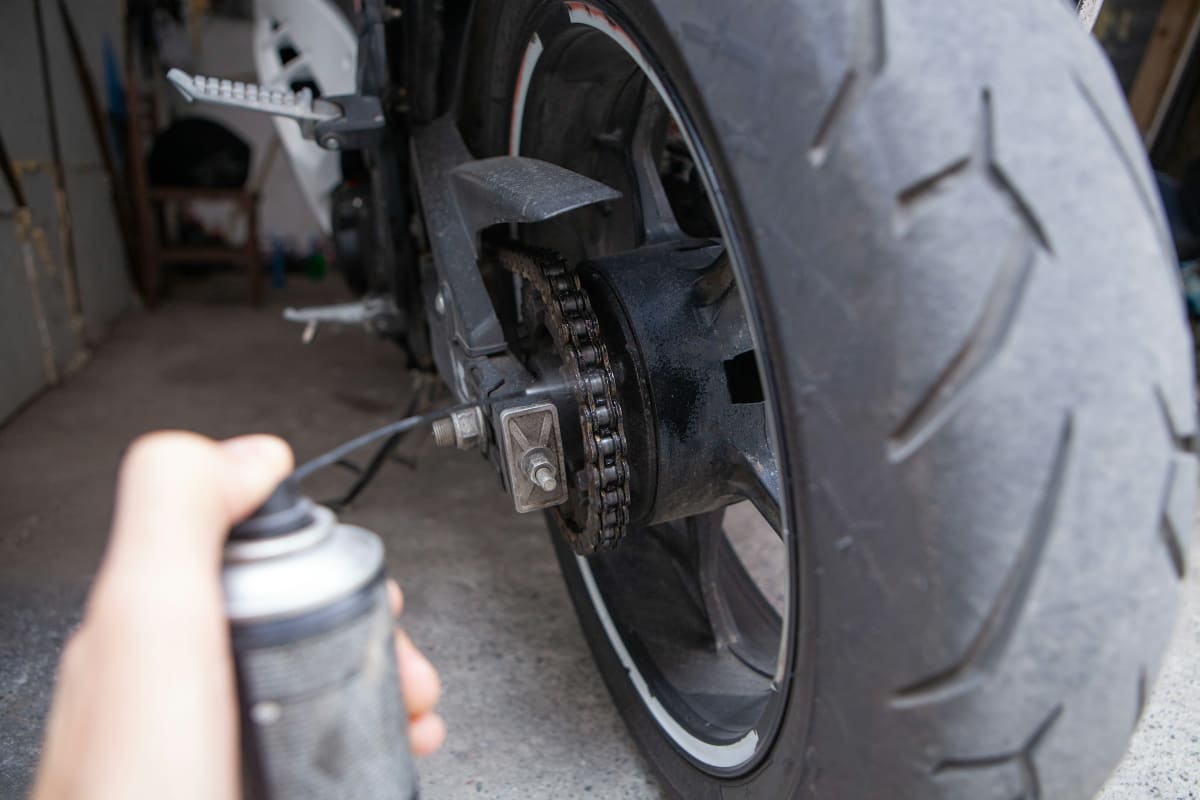
Gel Lube sprays on as a gel coating that clings, even on vertical surfaces, and resists dripping and fling-off. That makes it the fix for a hinge the blue can left dusty and a shop or garage door that sticks: put it on the tracks, wheels and rollers. It also covers gears, cables and chains, holds up under heavy loads and resists water. After the blue can cleans a chain, Gel Lube is the coat that stays on it. On a farm it goes on roller chains, choppers, feeders and door rollers. According to WD-40, it prevents rust for up to one year, with results varying in extreme conditions, so spray it on vehicle hinges and the undersides of doors ahead of a rough winter.
Specialist White Lithium Grease for loaded metal pivots
WD-40 Specialist White Lithium Grease sprays on as a liquid and sets into a thick protective coating for long-lasting lubrication and corrosion protection. The spray gets grease into a hinge pin, latch or pivot a grease gun can’t reach. Use it on metal-on-metal parts that move under load, like gate hinges, hood latches and implement pivots. Spray the pin, then work the joint through its full swing a few times to carry the grease into the pivot.
3-IN-ONE oil
The same company makes 3-IN-ONE Multi-Purpose Oil, the drip can for hinges, fan motors, sewing machines, bike chains and tools that need a few drops of real oil rather than a spray. The drip spout puts it on the pivot and nowhere else. Wipe off what runs out so it doesn’t collect dust.

The rest of the WD-40 lineup
Specialist Dry Lube dries fast to a film that resists dirt and dust, for spots that have to stay clean. Low Odor is the classic formula with less smell, meant for indoor jobs. The Multi-Use formula also comes as Trigger Pro, a non-aerosol sprayer that controls rate and amount; Big Blast, with a wide nozzle for large surfaces; One Gallon, for soaking parts; and the Precision Pen, for pinpoint application. For food plants, Food-Grade Lubricant & Penetrant is NSF H1, and the Food-Processing Facility Electric Contact Cleaner is made for circuit boards, controls, switches and precision instruments.
WD-40 specs
| Item | Spec |
|---|---|
| Multi-Use main components | C9 to C14 alkanes and mineral oil |
| Multi-Use hydrocarbon content | 45 to 50% low-vapor-pressure aliphatic hydrocarbon (isoparaffin) |
| Multi-Use propellant | 2 to 3% carbon dioxide |
| Specialist Silicone temperature range | -100°F to 500°F |
| Specialist Silicone surfaces | Most metals, plastics, rubbers and vinyl, used as directed |
| Specialist Silicone wear claim | At least 50% more wear protection than the competition, per WD-40’s own ASTM D4172 testing |
| Specialist Silicone listings | NSF Nonfood Compounds H2 (#146863); 50-state VOC compliant; no California Prop 65 warning required |
| Specialist Silicone applicator | Smart Straw, sprays 2 ways |
| Specialist Gel Lube temperature range | -50°F to 500°F |
| Specialist Gel Lube surfaces | Most metals and plastics, used as directed |
| Specialist Gel Lube applicator | Smart Straw, sprays 2 ways |
Frequently Asked Questions
Is WD-40 a lubricant or a grease?
The blue can is a lubricant, but it’s a thin oil film carried in a light solvent, not a grease. It suits a sticky mechanism or a quick fix better than a joint that has to stay lubricated for months, because that film wears thin. For a joint that has to stay lubricated, pick from the Specialist lubricants and greases by the job: a clinging coat, a dry film or a thick grease.
Is WD-40 a silicone spray?
No, the original formula is mineral oil and light hydrocarbons, with no silicone in it. Specialist Silicone is the silicone can, and it’s non-staining, so it works on sliding doors, windows and door frames without leaving a mess. It also keeps seals on refrigeration units and hydraulic systems from drying out, and it keeps conveyor belts in cold storage running smoothly at low temperatures.
Can you use WD-40 as a degreaser?
The blue can cuts grime on small parts, but degreasing is only one of the jobs it’s built for. For real degreasing, the Specialist line has Degreaser & Cleaner EZ-Pods, which hold a degreasing and cleaning concentrate designed to be portable and customized to the job. Clean the part with the degreaser first, then lube it and put on a protective coat.
Does WD-40 dry, or does it stay wet?
The blue can leaves a light oily film behind, and that film holds dust. If you need a lubricant that dries, use Specialist Dry Lube. It gives long-lasting corrosion protection with no sticky residue, so it’s the one for parts that have to stay clean.
What is the WD-40 pen for?
The Precision Pen puts the classic formula exactly where you point it, with no spray drifting onto the parts around it. It’s portable, so it fits in a pocket or a toolbag, and it works on a small lock, a switch or a hinge pin inside finished trim.
Ready to Get Started?
Our tool specialists can help you find the right Wd 40 products for your project.