
Visqueen is the word most builders use for polyethylene plastic sheeting, the rolls that go under a concrete slab, over crawlspace dirt, across a doorway to hold back dust, or over a lumber pile before the rain. Homeowners and contractors buy it by thickness, color and roll size. Picking the right one comes down to how long it has to last and whether anything will walk on it.
Visqueen started out as a brand name for polyethylene film and turned into the everyday word for plastic sheeting in the United States. The Visqueen brand itself now belongs to British Polythene Limited in England, which makes engineered construction membranes for the UK market. The poly sheeting sold by the roll here is general-purpose polyethylene film, sold by thickness in mils, where one mil is a thousandth of an inch.
4 mil or 6 mil
Thickness decides what the sheet can take. Use 4 mil for short jobs where nothing heavy lands on it: drop cloths when painting, a dust wall across a doorway during a remodel, a cover over furniture or a stack of drywall. It tears easily under boots and ladder feet, so it’s a one-job product.
Use 6 mil for anything that stays in place or takes traffic. Under a concrete slab, the International Residential Code calls for a 6-mil polyethylene vapor retarder between the gravel base and the concrete, with the joints lapped at least 6 inches. The same thickness is the usual minimum for a crawlspace ground cover. If people will crawl across it to reach plumbing or wiring, a heavier reinforced crawlspace liner holds up better than plain poly.
Clear or black
Clear sheeting lets light through. That makes it the pick for a temporary window cover, a cold frame over early garden beds, or a dust wall where you want to see who’s on the other side.
Black sheeting blocks light. Laid over a garden bed or a patch of weeds, it shades out the growth underneath, and under a slab or in a crawlspace the color doesn’t matter to the concrete or the dirt, so many crews use black there too. The carbon black that colors it also helps it hold up in sunlight longer than clear, although no general-purpose poly is made to last outdoors for years. Left in the sun, it turns brittle and splits.
Under a slab
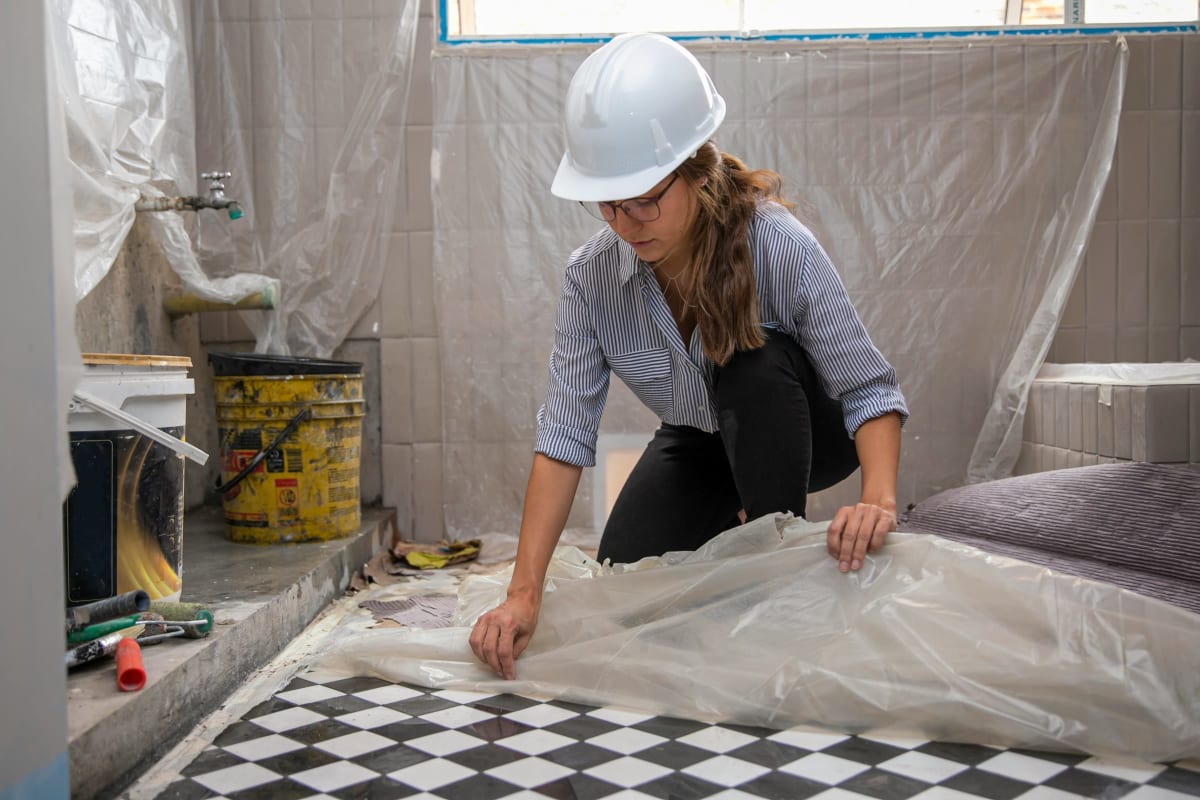
Lay the poly on a compacted, smooth base with no sharp rock poking up, because a puncture under the slab is a spot where ground moisture comes straight through. Run the sheets so they lap at least 6 inches, tape the laps with a poly sheathing tape, and carry the sheet up the inside of the forms. Where a pipe comes through, cut an X, push the sheet down over the pipe and tape around it. Walk on it as little as you can during the pour, and patch any tear with a piece of the same sheet taped on all four sides.
In a crawlspace
Cover all the exposed dirt, lap the seams at least 6 inches, and run the sheet a few inches up the foundation walls and piers. Tape the seams and hold the edges to the wall so the sheet doesn’t pull loose the first time someone crawls across it. A crawlspace floor with no cover lets ground moisture rise into the floor framing all year.
Radon
The Flathead Valley is in radon Zone 1, the highest-potential zone on the EPA’s map. Radon-resistant new construction starts with the same parts: a gas-permeable gravel layer under the slab, 6-mil sheeting over it with the seams lapped and sealed, the slab cracks and penetrations sealed, and a vent pipe from under the slab up through the roof. The sheeting slows gas coming up through the soil, and the vent pipe gives it a way out. Test the house once it’s finished, because the sheet alone is not a radon system.
Roll sizes
Poly comes in rolls sized by width and length, like 10 x 100 feet or 12 x 100 feet, folded so it opens out to full width. Measure the area, add the laps and the run up the walls or forms, then pick the width that covers the space with the fewest seams. Every seam is a spot to tape and a spot that can leak.
Frequently Asked Questions
Is Visqueen the same as plastic sheeting?
In the U.S., yes. Visqueen began as a brand name and became the common word for polyethylene sheeting, the way people say Sheetrock for drywall. What matters on the job is the thickness in mils and whether it’s clear or black, not the name.
What thickness of plastic should go under a concrete slab?
Use 6 mil. That’s the minimum the International Residential Code names for a polyethylene vapor retarder under a slab, with the joints lapped at least 6 inches. Heavier sheeting is fine, and it survives a busy pour better, but don’t go thinner than 6 mil.
Can you leave plastic sheeting out in the sun?
Only for a short time. General-purpose poly breaks down in sunlight, turns brittle and tears, often within a season. Black lasts longer than clear, but for a cover that has to stay outdoors, use a tarp or a sheeting made for long UV exposure.
Ready to Get Started?
Our building materials specialists can help you find the right Visqueen products for your project.