

Trusscore PVC wall panels are for finishing the walls and ceilings of garages, barns, basements and laundry rooms, the rooms where drywall gets wet, dented and dirty. The panels shed water and don’t swell, degrade or grow mold. They go up finished, with no tape, mud, sanding or paint, and one person can hang them.
Trusscore is a material science company headquartered in Palmerston, Ontario, founded in 2013. It grew out of MSW Plastics, which made extruded plastic panels for livestock designed to keep animals from passing viruses like swine flu. Co-founders Steve Bosman, chief manufacturing officer, and Joel Koops run manufacturing and distribution, and Dave Caputo is CEO. The name comes from the truss structure inside nearly every product the company makes.
Wall&CeilingBoard in garages, barns and basements
Wall&CeilingBoard is the main panel, and the job gets planned around it. The core is mostly hollow with trusses running through it, which is why a half-inch panel stays stiff and still weighs less than drywall. The surface resists scratches, dents and damage, and it’s non-porous and antimicrobial, so grease, mud and spills wipe off with a rag.
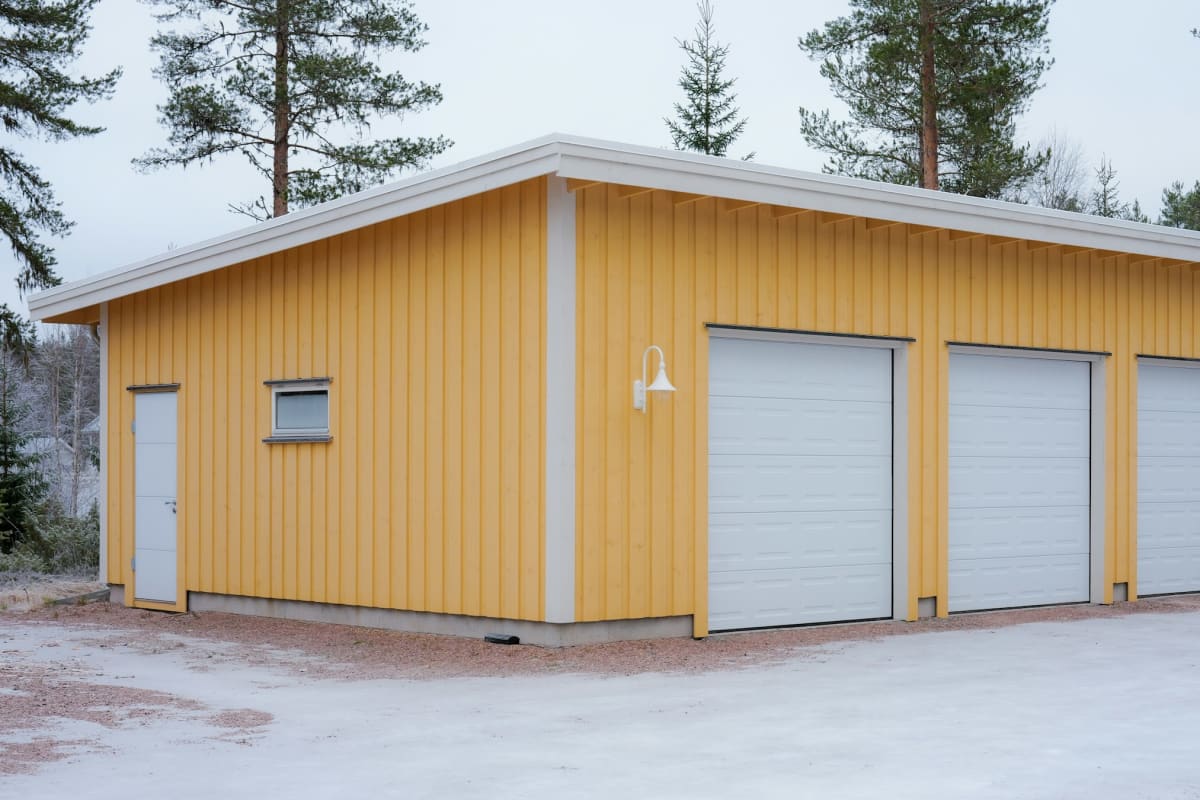
Garages are the strongest case for it: temperature swings, humidity, tools and bumpers hitting the wall, and a floor that never stays clean. High traffic plus occasional water is what wears standard drywall out fastest. For barns, milk rooms and processing space, the panels are CFIA, USDA, FDA and cGMP compliant for food processing and commercial agricultural facilities. On a garage wall shared with the house, code may call for fire-rated drywall behind any finish, so settle that with the building department before ordering panels for that wall.
Paying more than drywall
Per square foot, the panels cost more than drywall sheets. The fair comparison is drywall plus tape, mud, sanding, primer, paint and the labor for all of it, because the panels go up finished. The bigger answer is water: Wall&CeilingBoard doesn’t swell or degrade when it gets wet, and drywall does. Snowmelt off a truck or a leaking washer wicks up the bottom edge of gypsum until the fix is cutting out the bottom foot of the wall.
In moisture-prone garages, basements and laundry rooms, waterproof panels often give better long-term value. In dry living spaces like a bedroom or den, standard drywall is the cost-effective choice.
Wall&CeilingBoard and SlatWall both carry a 20-year standard warranty that becomes lifetime when the product is registered within 90 days of purchase. A claim gets replacement product or a refund of the purchase price; labor to tear out and reinstall stays with the owner.

Hanging the panels
Decide on vertical or horizontal before ordering, because direction sets how many panels and which lengths you buy. Run horizontally, a 20-foot garage wall goes up in full-length panels with no end joints. Any wall longer than the panel needs H trim where the ends meet, so count those joints up front.
Do the ceiling first, then the walls. Each panel locks into the one before it, so you fasten along the edge and the next panel covers the screws. The panels are light enough for one person even overhead, though a T-brace or two holds the far end of a long ceiling run while you fasten.
The common mistake is a first panel that isn’t plumb or level. Every panel after it follows the first, and by the far corner the gap is wider than trim can hide. Snap a level line for the first course and check it every few panels.
Trims
Trusscore Trims give the panels clean edges, and panels, SlatWall and trims are built to work as one system. Before ordering, walk the room and count linear feet of every inside corner, outside corner, door and window opening, ceiling line and the full length of the floor. The floor line and door openings are the two most often left off the list.
SlatWall
SlatWall is the storage wall of the system: hooks, shelves and baskets hang in the slots, so tools come off the floor and the layout changes whenever the job does. A plain Wall&CeilingBoard wall is enough in a laundry room or basement. A garage or shop with bikes, rakes, cords and hand tools calls for SlatWall on at least one wall, behind the workbench and wherever the heavy gear hangs.
Everything on it pulls on the fasteners, so drive every course into studs. Snap a level line for the bottom course, because a crooked slat shows on every hook.
Rebuilding a flooded basement in Libby
In Kootenai Country, repairs from the December 2025 atmospheric-river flood, water damage included, will run for years, and a basement that flooded once can take water again. That is the plainest case for waterproof panels over drywall on a lower level. In a house built before 1990, leave any vermiculite insulation undisturbed while walls and ceilings are open.
Wall&CeilingBoard specifications
| Spec | Wall&CeilingBoard |
|---|---|
| Type | Interlocking PVC panel for interior walls and ceilings |
| Thickness | ½ in, inner truss core |
| Width | 16 in |
| Lengths | 8, 10, 12, 14, 16 and 20 ft |
| Colors | White, gray |
| Fire rating | Class A |
| Flame spread index | 10 |
| Smoke developed index | 380 |
| Recyclability | 100% recyclable, reground into new material in manufacturing |

Trusscore Trims
| Trim | Use | Part numbers |
|---|---|---|
| Snap-In J Trim | Caps cut panel edges at doors, windows and ceiling lines | TCT12J10K, GTCT12J10K |
| Snap-In H Trim | Joins two panel ends on a run longer than one panel | TLT58WTC10K, GTLT58HC10K |
| Snap-In Inside Corner Cove | Finishes inside corners | TCT12IC10K, GTCT12IC10K |
| Outside Corner | Finishes outside corners with a square edge | TCT12OC10, GTCT12OC10 |
| Outside Corner Rounded | Finishes outside corners with a rounded edge | TCT12IO10, GTCT12IO10 |
| Base Trim | Finishes the bottom edge along the floor | TCT12BT10, GTCT12BT10 |
| F Trim | Finishes a panel edge against a ceiling or another surface | TCT12F10, GTCT12F10 |
| 45° H Channel | Joins panels meeting at a 45-degree angle, such as a sloped ceiling | TCT124510, GTCT124510 |
Frequently Asked Questions
How much does Trusscore cost for a whole room?
The total depends on three things: the square footage of walls and ceiling, whether the panels run vertically or horizontally, and how many linear feet of trim the room needs. Direction changes which lengths you buy and how many H joints you need, so price the room both ways before settling on one. Prices vary from region to region, so work from a local quote and a full trim count, not a national per-foot figure.
How do you install Trusscore wall panels in a garage that isn’t heated?
PVC grows and shrinks with temperature, and a Montana garage can go from well below zero to summer heat. Leave a small gap at each panel end where it tucks into the trim, and snug the screws without driving them tight so the panel can move. Cut with a fine-tooth blade, and if you can, let the panels sit in the garage for a day before hanging so they start at the room’s temperature.
Do Trusscore trims go on before or after the panels?
Trims that catch a panel edge, like J trim at openings, inside corners and the base along the floor, go up before the panel that slides into them. Outside corners and pieces that cover a finished edge go on last. Match the trim color to the panels when ordering, because each trim profile comes in two versions.
Can Trusscore PVC panels be taken down and reused?
Yes, Wall&CeilingBoard is built to be reused and recycled. Since each panel covers the screws of the one before it, take the wall apart in reverse: start with the last panel hung, back out its screws, and work back toward the first. Pull the trims first and store the panels flat so they stay straight for the next wall.
Ready to Get Started?
Our building materials specialists can help you find the right Trusscore products for your project.