

Torx is the six-point star recess on deck screws, construction screws and a lot of hardware, and a Torx bit or key is what drives it. The lobes let the bit push straight into the screw at full torque instead of riding up and out the way a Phillips does, so screws drive without stripping as long as the bit matches the recess.
The Torx drive was developed in 1967 by Camcar Textron, and the name is a trademark now held by Acument Global Technologies. Screws are sized by T-number, from tiny T5s on electronics up to T40 and beyond on structural screws; most deck and construction screws take a T20, T25 or T30.
Standard Torx bits for driver work
Insert bits are the everyday choice. They ride in a bit holder or magnetic guide and swap out in seconds. Power bits give you reach for screws set down in a recess and lock straight into the quick-change chuck on an impact. Run the exact size the screw calls for, because a T25 in a T27 recess feels snug and rounds the lobes by the second screw. Bits wear out, so pull any bit once the corners on its lobes have gone round.
A bit that fits right
The worry with any star bit is one that cams out and strips the first screw you lean on. The Torx recess only holds the bit at full torque when the bit is cut to size and hardened right. A soft bit twists at the tip, an overhardened one snaps, and an undersize one rides up and chews the recess until the screw has to be drilled out. Keep the bit pushed straight into the screw, and when a bit starts slipping, swap it before it ruins the next screw.
Torx keys and folding key sets
Keys handle the hand work: final snugging, screws a driver can’t reach, and breaking loose a screw you don’t want to strip with an impact. Put the short arm in the screw when you need torque and the long arm when you need reach. A folding key set keeps a run of sizes in one handle, so the right size rides in the tech’s pocket instead of sitting back in the truck.
Torx Plus
Torx Plus is its own recess, with flatter, squarer lobes that put more of the tool against the screw so it takes more torque. Check the head before you pick up a tool: squared-off lobes mean Torx Plus, rounded points mean standard Torx. A Torx Plus bit won’t seat properly in a standard Torx screw, so keep Torx Plus tools for Torx Plus screws and store them apart from the standard bits.
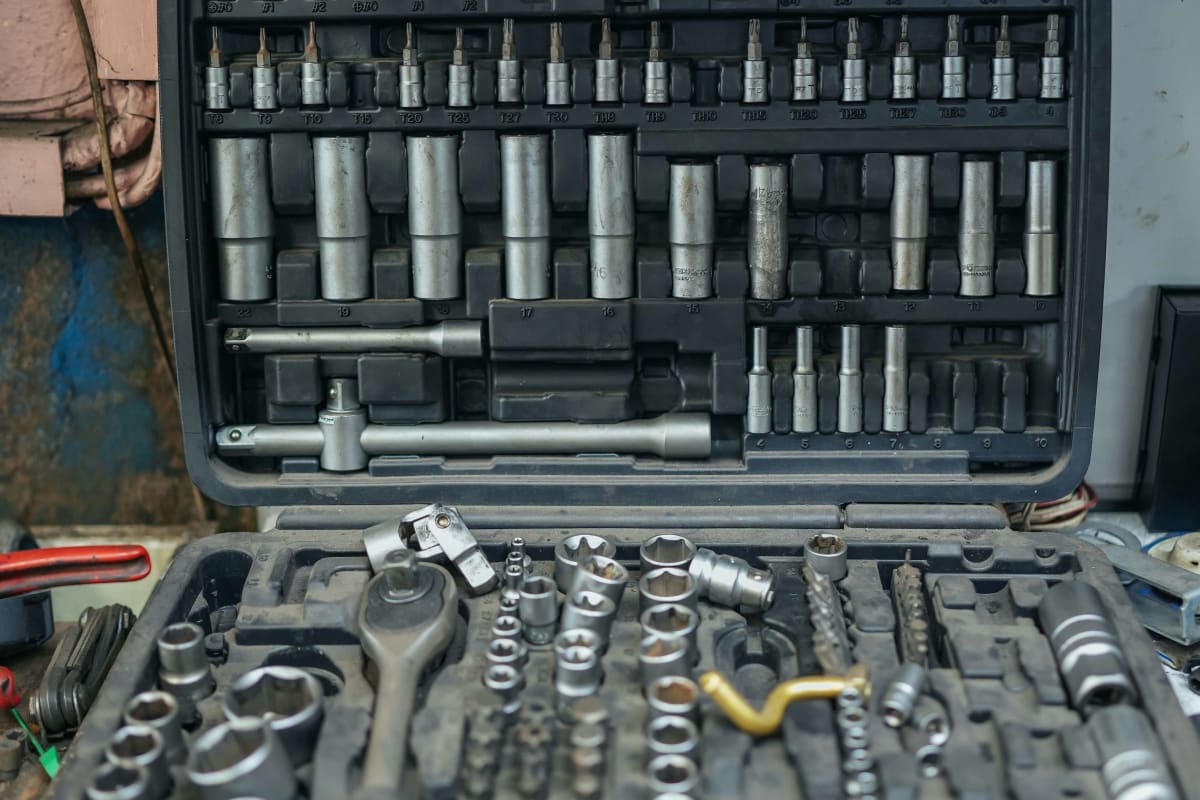
Tamper-resistant bits and keys
Tamper-resistant Torx screws have a pin in the center of the recess that keeps a standard bit out. The tamper-resistant bits and keys have a hollow tip that fits over the pin. These screws show up on restroom partitions, signs, equipment covers and anything else in a public space someone might try to take apart. The small sizes wear fastest, so check the tip around the hole and replace the bit when the lobes start to round.
Screwdrivers
A Torx screwdriver is the tool for hand driving and for small screws on hardware and appliances, where an impact would strip the head. Keep one in each of the sizes you drive most.
The line at a glance
| Line | What it is | Use it for |
|---|---|---|
| Torx 1-inch insert bits | Short bits for a bit holder or guide | Everyday driving of standard Torx screws |
| Torx 2-inch power bits | Longer bits that lock into a driver chuck | Screws set down in a recess |
| Torx keys | L-shaped hand keys | Final snugging and tight spots |
| Torx folding key sets | Several key sizes in one folding handle | Carrying a full run of sizes |
| Torx Plus | Tools for the Torx Plus recess | Torx Plus screws |
| Torx tamper-resistant bits and keys | Bits and keys with a hollow tip | Pin-in-center security screws |
| Screwdrivers | Torx hand drivers | Hand driving |
Frequently Asked Questions
Can you use a Torx Plus bit on a regular Torx screw, or a regular Torx bit on a Torx Plus screw?
The Torx Plus bit won’t go into a regular Torx screw, but the other way around catches people out. A standard Torx bit will slip into a Torx Plus screw because its rounded lobes fit inside the squarer recess, yet it only touches the lobes at their tips, so if you lean on it with an impact you’ll round off both the bit and the screw. Use a standard bit only to get a light screw moving when it’s the only thing you have, then finish the job with the matching Torx Plus tool.
Ready to Get Started?
Our building materials specialists can help you find the right Torx products for your project.