

Stanley tape measures and utility knives are the working core of the brand, built for tradespeople and serious do-it-yourselfers who build, repair and tear things out. One knife cuts drywall, roof shingles, flooring and packaging, and the tapes run from a pocket tape to long fiberglass reels. Behind them sits the rest of a working kit: FUBAR bars and FATMAX hammers, handsaws, chisels, screwdrivers, chalk lines and staple guns. Pick the tape by length and the knife by how you cut.
Frederick Stanley founded the Stanley Works in New Britain, Connecticut, in 1843, making bolts, hinges and door hardware. His cousin Henry Stanley founded the Stanley Rule & Level Company in 1857, and the two later merged into the Stanley that makes the tools on this page. Stanley introduced the first steel tape rule in 1931, followed later by the PowerLock and FATMAX tapes, and has made utility knives since 1936. On March 12, 2010, Black & Decker merged with the Stanley Works to form Stanley Black & Decker.
Tape measures: pick by the length of the work
For framing and general work, carry a 25-foot PowerLock or LeverLock. It reaches across a room and down a wall and still rides on your hip all day. The 12-foot PowerLock is the pocket tape for trim, cabinets and punch lists, and the 16-foot FATMAX with its wider blade sits between the two for shop and remodel work. The day you measure a 14-foot joist with a short tape, you’re hooking twice and adding in your head, and that’s where bad cuts come from.
The FATMAX 40-foot Classic is for one person running long layouts: wall plates, subfloor, a slab. The case is bigger and heavier, so for work inside rooms it’s more tape than the job needs.
Past 40 feet, go to fiberglass. The POWERWINDER long tapes and the open-frame fiberglass reel handle fence lines, foundations and site layout. Fiberglass won’t kink the way steel does, wet grass doesn’t hurt it, and the open frame sheds mud and rinses clean, which matters when the foundation gets laid out in a Montana April and the site is half mud and half frozen ground.
The hook on a steel tape is supposed to slide. It moves its own thickness so inside and outside measurements both read true, so leave it alone. What wears a tape out is letting the blade rip back and slam into the case, which loosens the hook rivets and tears the blade end. Feed it back with a finger.
Utility knives: pick by how you cut
The Classic 99 retractable is the knife most people should own. The blade slides back into the handle so it rides in a pocket or bag, spare blades wait in the handle, and there’s nothing complicated on it to break. If you change blades all day hanging drywall, the 6-3/8-inch Quick Change retractable is built for faster swaps.
For roofing and heavy cutting, use a fixed-blade knife. There’s nothing in the nose to wiggle or collapse when you bear down on a shingle, and in a Montana shoulder season, when a cold morning leaves the shingles stiff until the sun has been on the roof for an hour, bearing down is what the cut takes.
Snap-off knives are for thin, clean cuts in vinyl, wallpaper and membrane, where a sharp point matters every time. Snap off the dull segment and the edge is new again. The 18mm is the everyday size, in the standard knife or the FATMAX version. Snap-off blades are thin, so never pry with one.
Blades and what the warranty covers
Stanley warrants its tape measures against defects in material and workmanship for as long as the original buyer owns them. Blades of every kind are consumables the warranty excludes, along with failures from excessive wear, misuse, abuse or alteration.
That makes blades a running purchase, like screws. The most common mistake with any utility knife is forcing a dull blade through drywall; that’s when the knife jumps and someone gets cut, so change blades sooner than feels necessary. If you cut every day, buy the heavy-duty utility blades by the hundred or in the 50-pack dispenser. Hook blades are for shingles and carpet, where the hook pulls through from the top without dragging a point across the deck or pad underneath. Snap-off knives take 18mm replacement blades.

FUBAR bars, hammers and the rest of the kit
For tear-out, the FATMAX FUBAR is the bar to own. It’s a one-piece forged steel bar that pries, splits, bends boards and strikes, with a jaw sized to grab 2x lumber and a beveled slot for pulling nails, and its heat-treated striking face resists chipping. The 30-inch is the heavy one, and that weight is what does the work when you swing it into a stud wall; the 15 and 18-inch versions fit where the long one won’t. For lighter prying and pulling trim without chewing it up, the Wonder Bar and the nail pullers do the job.
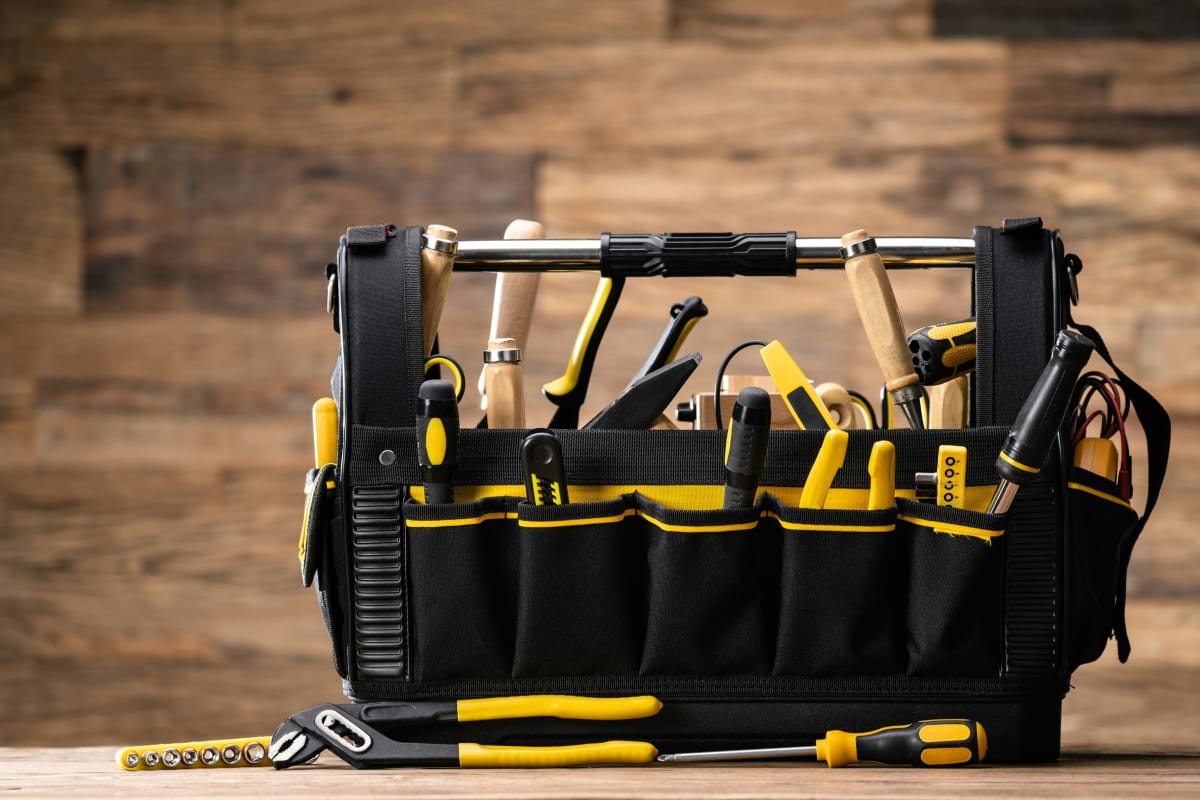
FATMAX steel and graphite hammers cover framing and general work, and the fiberglass-handle claw and rip hammers are the everyday choice. The screwdriver sets, handsaws, SharpTooth saws, drywall and jab saws, wood chisels, Surform planes and shavers, and chalk line reels fill out the box.
The staple guns and hammer tackers run on Stanley’s heavy-duty staples, from 1/4 inch up to 9/16 inch. The hammer tacker is the fast one for housewrap, underlayment and insulation facing, where you’re setting hundreds of staples and a squeeze gun would wear your hand out. The squeeze guns place each staple exactly where you aim, which is what screen, fabric and wire work want. The TR45 is the light-duty squeeze gun for screen and fabric, the TR250 is the heavy-duty gun that drives staples and brads for trim and cabinet backs, and the TRE550Z is the electric stapler for a long run of insulation or underlayment. Buy the staple length for the material and keep a box of the next size up; staples are consumables the warranty doesn’t cover.
The Stanley stud finder rounds out the kit for anyone hanging cabinets, a TV mount or a shelf that has to carry weight, and it is the tool that keeps a lag screw out of the empty bay between studs. Stanley also makes door hinges, pulls, gate latches and closet hardware.
Stanley tapes, knives and bars at a glance
| Tool | Size or count | Best for |
|---|---|---|
| PowerLock Tape Measure | 12 ft or 25 ft | Trim and cabinets; framing and everyday carry |
| FATMAX Tape Measure | 16 ft or 40 ft | Shop and remodel; long layouts working alone |
| POWERWINDER Fiberglass Long Tape | 100 ft or 300 ft | Fence lines, foundations, site layout |
| Open-frame fiberglass long tape | 200 ft | Muddy sites, rinses clean |
| Classic 99 Retractable Utility Knife | Retractable | Everyday carry |
| Quick Change Retractable Utility Knife | Retractable | Frequent blade changes |
| Fixed-blade utility knife | Fixed | Roofing and heavy cutting |
| Snap-off blade knife | 18 mm | Vinyl, wallpaper, membrane |
| Heavy-duty utility blades | 5-pack, 50-pack or 100-pack | Occasional use to daily cutting |
| Hook blades | 5-pack or 50-pack | Shingles and carpet |
| FUBAR utility bar | 15, 18 or 30 in | Demolition and tear-out |

Frequently Asked Questions
Does Stanley have a lifetime warranty?
For the tapes, yes. Stanley tape measures are covered against defects in material and workmanship for as long as the original buyer owns them. Blades, staples and chalk are consumables and aren’t covered.
What is Stanley FATMAX?
FATMAX is a Stanley product line built for jobsite work, and it started with the FATMAX Tape Rule and the FATMAX Anti-Vibe. A FATMAX tape has a wide, stiff blade that reaches farther than a standard tape before it folds. That’s why one person can run it across open joists or a subfloor without a helper holding the end.
How can I tell if my Stanley tape measure is still accurate?
Stanley inspects and tests its tape measures before they ship, so a new one reads true, and what throws one off later is a bent hook or loose rivets. To check yours, hook the end over one edge of a known length, such as the blade of a framing square, and take a reading. Then butt the hook against the same edge from the inside and read again. If the two numbers don’t match, retire the tape, because bending the hook back rarely gets it right.
How do you use the Stanley stud finder?
Hold it flat against the wall in a spot you know is open, press and hold the button until it finishes calibrating, then slide it sideways along the wall without lifting it. It lights and beeps at the edge of the stud; mark that spot, come back from the other side, mark the second edge, and the stud is centered between the two marks. Start from a corner or an outlet, because studs run 16 inches apart from there, and calibrate on plain wall, not over a stud, or it reads the whole wall as solid.
How do you load a Stanley staple gun?
On the TR45 and the other squeeze guns, press the latch at the back of the gun, pull the pusher rod straight out, drop a strip of staples into the channel with the points down, and slide the rod back in until it latches. Use the staple size marked on the gun, because a strip that is too tall jams the channel. On the TRE550Z electric, unplug it first, then load the same way.
Do I need the 100-foot or the 300-foot long tape?
The 100-foot POWERWINDER covers a house foundation, a shop footprint or a driveway in one pull, and it’s lighter to carry and faster to wind. Go to the 300-foot for fence lines, pasture corners or anything laid out across Montana acreage, where the corner posts on a twenty-acre parcel sit farther apart than a hundred feet ever reaches, where moving a shorter tape three times adds error at every reset. Either way, wipe the blade as it winds in so grit doesn’t wear off the markings.
Ready to Get Started?
Our tool specialists can help you find the right Stanley products for your project.