
In 1955 Square D brought out the three-quarter-inch circuit breaker that did away with removable fuses, and it has been building the breakers in Montana panels ever since. Between its two lines, QO and Homeline, there’s a Square D breaker for every circuit in the box, from a 15-amp bedroom circuit to a 100-amp main, with GFCI, arc-fault and tandem versions to match, and a Square D load center for when the panel itself is the job.
Square D is an American electrical-equipment maker. Bryson Dexter Horton and James B. McCarthy founded it on December 15, 1902, and the name comes from its logo, a capital D for Detroit set inside a square. It’s known for safety switches and breakers, and Horton is credited with inventing the safety switch. Paris-based Schneider Electric bought the company in 1991 and runs it as a subsidiary, which is why the Schneider Electric name is on the box now.
QO or Homeline
Homeline is the everyday whole-house line. Square D builds it for value, easy installation and reliable protection, the breakers plug straight onto a Homeline load center, and it covers everything from a two-space box on a well house to a 200-amp panel for the house. For most homes, garages and shops, Homeline is the one to buy.
QO is the line to pick when you want the most out of the panel. QO breakers have Visi-Trip, a clear flag that shows which breaker tripped, so on a cold night with the furnace out there’s no flipping handles in the dark to find it. QO breakers are anchored securely to the bus bar, and at three-quarters of an inch they fit more circuits in less panel. If the panel already in the wall is QO, stay with QO; if it’s Homeline, stay with Homeline.
Match the breaker to the panel
Square D’s Homeline and QO are separate breaker lines, and each panel takes the line printed on the label inside its door. QO breakers are three-quarters of an inch wide and Homeline breakers are an inch, which is why the two never trade places. The most common mistake is grabbing a breaker because it says Square D and looks close; a QO won’t seat properly in a Homeline panel. The same label answers whether a GE or other panel will take a Square D breaker, and which spaces accept a tandem. A 120-volt circuit for lights and outlets takes a single-pole breaker; a 240-volt load like a range, dryer, water heater or well pump takes a two-pole. Size the breaker to the wire, never up: a 20-amp circuit that keeps tripping needs its load split, not a 30 dropped in its place.
Reading a load center model number
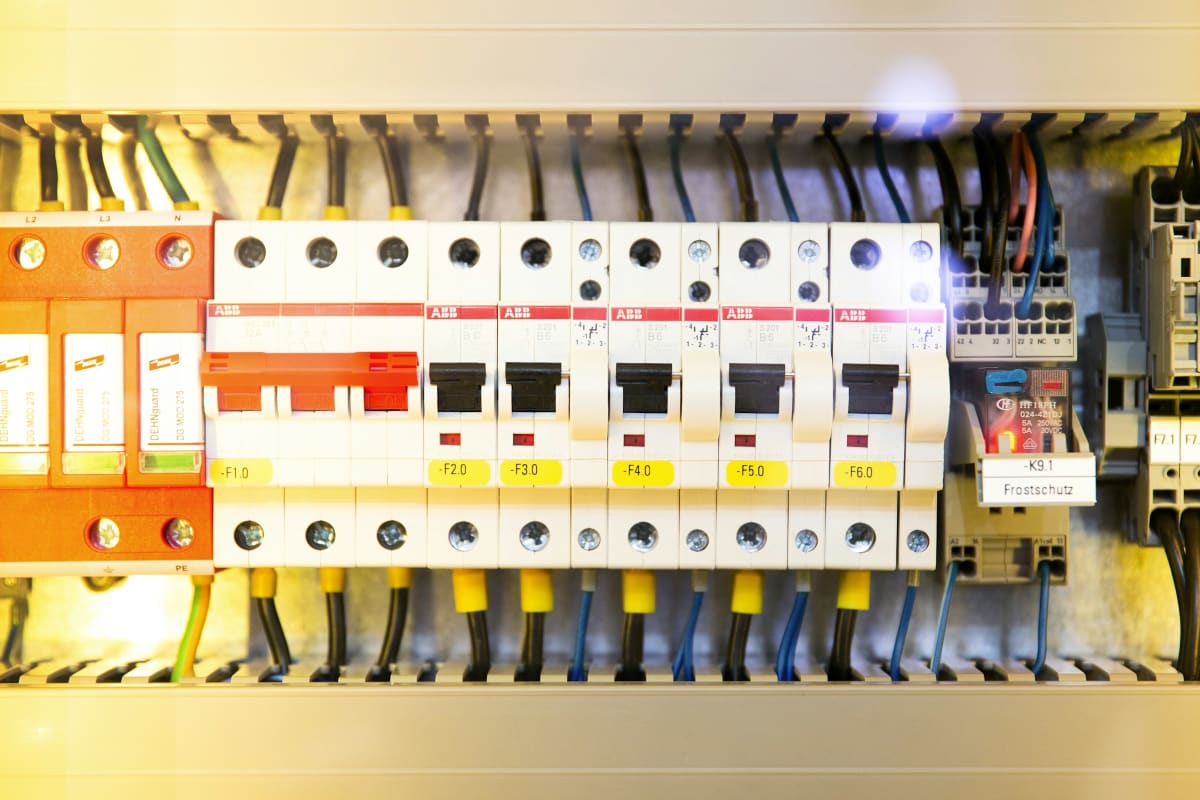
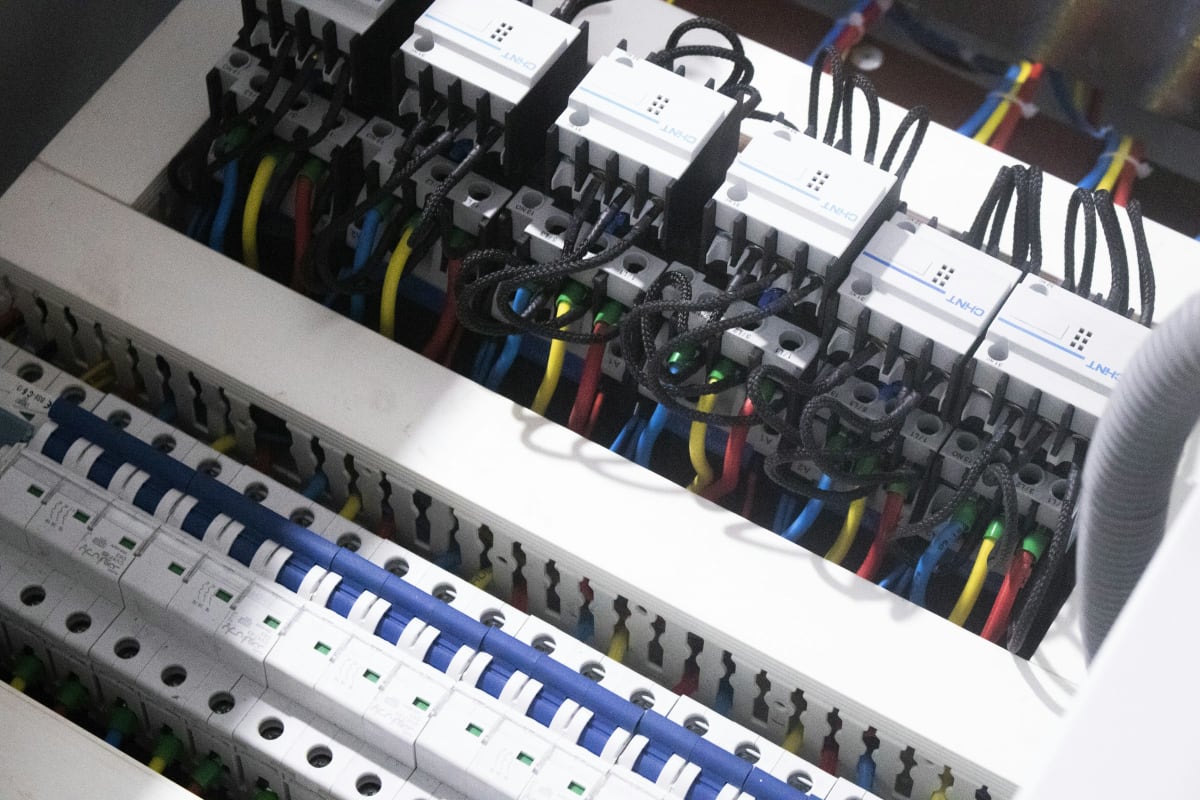
Square D spells out a load center in its model number. In HOM3060M200, HOM is the Homeline line, 30 is the number of breaker spaces, 60 is the most circuits it can hold with tandems, M means it has a main breaker and 200 is the amp rating; QO612L100 is a QO panel with 6 spaces, 12 circuits, main lugs and 100 amps. Homeline load centers run from a 70-amp, two-space box for a well house or a small outbuilding, through 100- and 125-amp panels for a garage or shop, up to 200-amp panels with 30 or 40 spaces for a whole house, and the QO line has its own panels to match its breakers. Buy more spaces than you need today, because a panel with open spaces takes a new shop, heat or well circuit later without a subpanel. Spare filler plates close any open slot in the cover, and a grounding bar kit adds terminals when the bar that came in the box runs out.
GFCI and arc-fault breakers
Square D puts the protection right in the breaker, so it goes in at the panel and covers the whole circuit. Homeline has 20-amp GFCI and 15- and 20-amp arc-fault breakers, and QO has a 20-amp GFCI. A GFCI breaker protects people from shock on a circuit where water is around, and it’s the easy answer when the first outlet on the run is hard to reach or the load is hard-wired, like a hot tub or a heated floor. An arc-fault breaker watches for the sparking of a damaged cord or a loose connection and trips before it starts a fire, and current code calls for arc-fault protection on most living-space circuits.
Safety switches
A safety switch is a lockable disconnect in its own enclosure, set near the equipment so the power can be shut off where the work happens: a 60-amp disconnect beside the air conditioner or heat pump outside, so the service tech has a shutoff right at the condenser, or a 30-amp indoor switch next to a shop machine.
Frequently Asked Questions
Will a Square D breaker work in a GE panel?
Only if the GE panel’s label lists it. A breaker the panel wasn’t tested with can snap in and still grip the bus bar loosely, and a loose connection arcs and heats until the bus is scorched, which usually means replacing the whole panel instead of one breaker. Inspectors check breakers against that label, so the wrong brand can also hold up a final inspection.
Which is better, Square D QO or Homeline?
Both protect a circuit the same way; the difference is in the features and the panel. QO adds the Visi-Trip flag that shows a tripped breaker at a glance and fits a circuit in three-quarters of an inch. Homeline is the value line for a whole house. The panel decides it: a QO panel takes QO breakers and a Homeline panel takes Homeline.
What size Square D panel does a house need?
Most houses built or rewired today go 200 amps. Square D’s Homeline 200-amp load centers come with 30 spaces (60 circuits with tandems) or 40 spaces (80 circuits), and the 40-space panel leaves room for a shop, a heat pump or an electric vehicle charger later. A garage or outbuilding usually runs off a 100- or 125-amp panel fed from the house.
Can I add a tandem breaker to a full Square D panel?
A tandem fits two single-pole circuits in one space, but only in the spaces the panel label allows, and the label also caps the total number of circuits the panel can hold. When the panel is full and the label allows no more tandems, a subpanel is the clean fix.
Ready to Get Started?
Our building materials specialists can help you find the right Square D products for your project.