Spartashield is Dunn-Edwards’ 100% acrylic exterior paint for repainting the outside of a house, a shop or a commercial building. It’s built to reach full hide when you roll it, so the old color disappears in fewer coats, and on block, brick and stucco it resists efflorescence, the white salt bloom that pushes up through masonry. For a contractor repainting a rental or a homeowner redoing the siding, it’s the exterior paint that gets the job done in fewer trips up the ladder.
Dunn-Edwards Corporation makes Spartashield. Frank “Buddy” Dunn started the business in Los Angeles in 1925 as a wallpaper store, partnered with Arthur C. Edwards, a former painting contractor and pigment salesman, and the company went on to make its own paint. It’s headquartered in Commerce, California, makes its coatings in a LEED Gold-certified plant, and is now part of Nippon Paint Holdings.
Coverage in fewer coats
The worry on most repaints is covering the old color without going three coats. Spartashield is made so its maximum hide comes when the paint is rolled, which is why the job takes fewer coats. Roll it, or spray it and back-roll it, because the roller pass is where that hide comes from. A big color jump, like dark brown to pale cream, still calls for two coats.
It goes on easily and balances sag resistance with flow and leveling, so it hangs on a vertical wall without running and still dries to a smooth, uniform finish without lap marks. The mistake to avoid is rolling it thin to stretch a gallon, which gives away the hide. Load the roller fully, keep a wet edge, and stop only at a corner or a trim line.
Why 100% acrylic matters outside
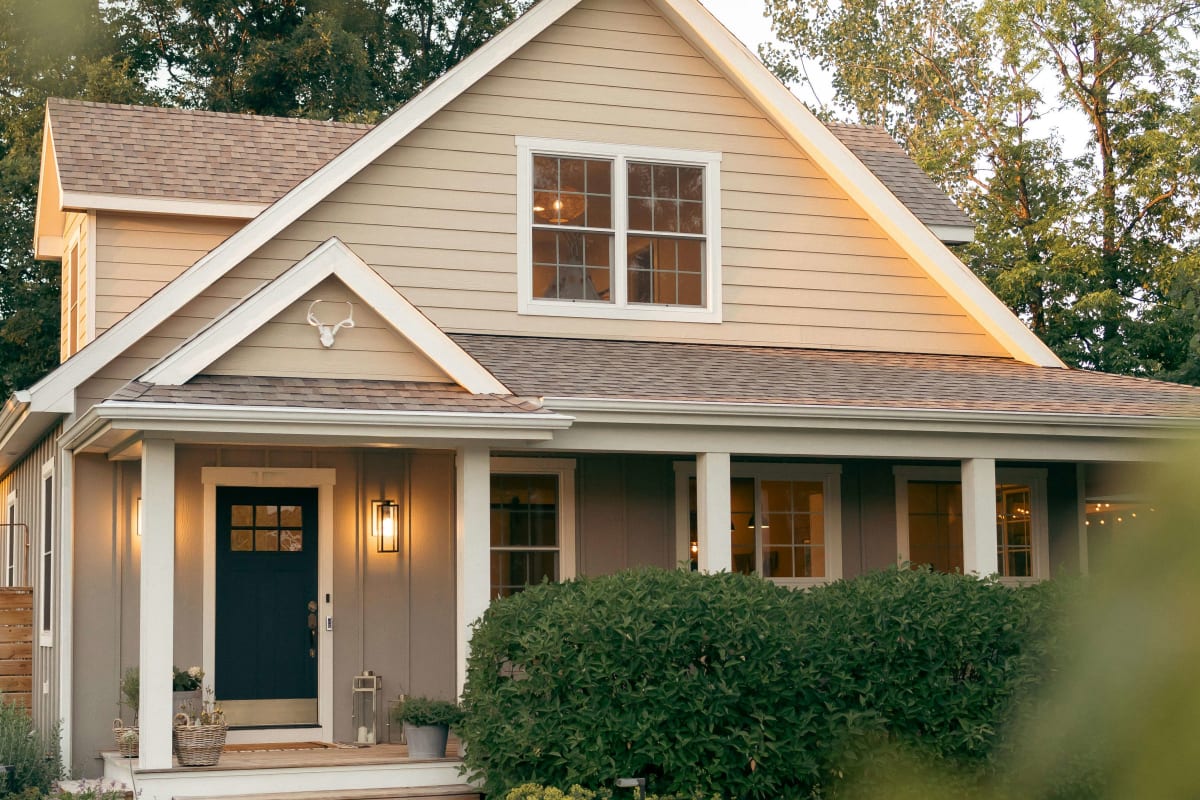
Acrylic is the resin you want on an exterior. It stays flexible as siding and stucco swell and shrink, so it keeps its grip where a cheaper vinyl-acrylic blend gets brittle and lets go. In Montana, where a south wall can swing from a subzero morning to a sunny afternoon in the same day, that flexibility is what keeps the paint on the house. Spartashield is also ultra-low VOC with very low odor, so the family inside, or the tenants next door, aren’t living with paint smell while the crew works.
Block, brick and stucco
Water moving through masonry carries salts to the face, and when the wall dries those salts are left as a white bloom that pushes through paint. Spartashield resists efflorescence, so a painted block wall, brick foundation or stucco face looks newer longer. Dunn-Edwards lists it for plaster and stucco, concrete block, brick and poured or tilt-up concrete. Fix the water source first, like a failed gutter or a flower bed banked against the wall, then scrub off the existing salts with a stiff brush and prime before painting.
Texture changes the finish. Spartashield’s gloss can shift with surface texture, porosity and the weather it dries in, so the same can reads flatter on split-face block than on smooth stucco. Roll a test patch on the actual wall before settling on a sheen for the whole building.
Sheens, tint bases and sizes
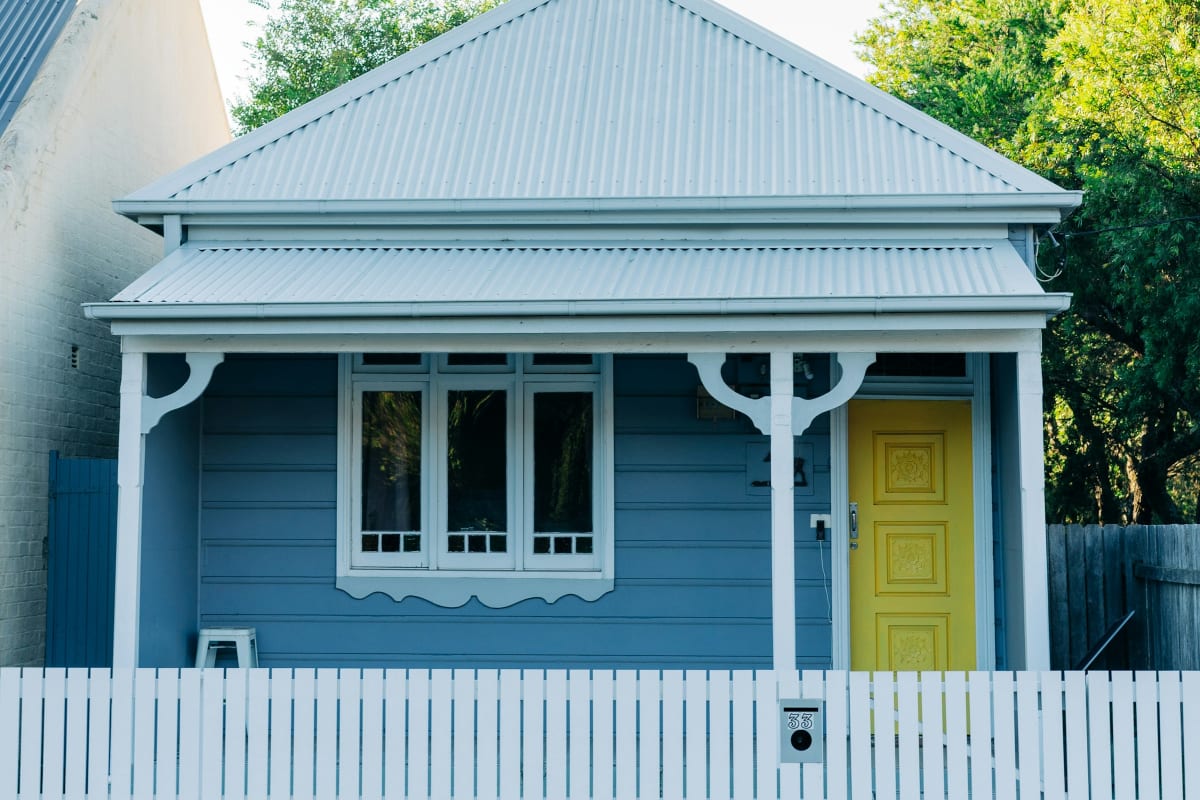
Spartashield comes in Low Sheen, Velvet and Semi Gloss. Low Sheen and Velvet go on the body of the building, where a softer sheen hides patches and wavy siding. Semi Gloss goes on trim, doors, soffit, fascia, garage doors and gutters, the places you’ll want to wash.
The color formula picks the base: Light Base for whites and pastels, Medium Base for mid-tones, and Ultra Deep Base for the darkest colors. Deep colors carry less hiding pigment, so plan a second coat when the body color comes out of Ultra Deep Base. Gallons cover trim and touch-up; for a full body color, buy five-gallon pails and box them together so every wall matches. Spartashield tints to the colors of Dunn-Edwards’ Perfect Palette system, 1,996 of them, so matching a color chip is rarely the problem.
Once the job is done, Dunn-Edwards recommends looking the exterior over at least every six months, washing off dirt and touching up as needed. A quick check each spring after the snow melts catches a chipped corner before water gets behind it.

Frequently Asked Questions
Is Dunn-Edwards Spartashield a good exterior paint?
Spartashield is a premium, 100% acrylic, ultra-low VOC exterior paint built to hide in fewer rolled coats, resist efflorescence on masonry and flow out to a smooth finish. The acrylic stays flexible as the house moves through the seasons, and the flow and leveling let brush and roller marks lay down instead of drying as ridges, which shows on smooth trim and doors.
What surfaces can Spartashield go on?
Dunn-Edwards lists it for plaster and stucco, concrete block, brick, poured and tilt-up concrete, plus soffit, fascia, eaves, garage doors and gutters. Prime anything bare, patched or chalky before the topcoat, since painting straight over bare substrate is where most peeling on a repaint starts.
What sheens does Spartashield come in?
Low Sheen, Velvet and Semi Gloss. Use Low Sheen or Velvet on the walls and Semi Gloss on trim, doors and gutters.
Who makes Spartashield paint?
Dunn-Edwards Corporation, a paint maker founded in Los Angeles in 1925 and headquartered in Commerce, California. It is part of Nippon Paint Holdings.
Ready to Get Started?
Our building materials specialists can help you find the right Spartashield products for your project.