

Southwire makes the wire that goes into the walls, under the yard and through the conduit: Romex for the house, gray UF for buried runs, SIMpull THHN/THWN-2 for pipe, and the cords and work lights that run the job while it all goes in. When a homeowner is adding a circuit to the garage or an electrician is wiring a new shop, a Southwire reel covers the job from the panel to the last box.
Southwire Company, LLC is based in Carrollton, Georgia. Roy Richards Sr. founded it on March 23, 1950, with three used machines and 12 employees, to help bring electricity to rural Carroll County, and it’s still owned by the Richards family. Southwire invented the SCR system, which casts copper and aluminum rod continuously, so Southwire controls its copper from the rod to the reel.
Romex for inside the walls
Most house wiring is cable, not single wires in pipe, and Romex NM-B is the cable for dry locations inside walls, floors and ceilings. The jacket color tells you the gauge at a glance: white is 14, yellow is 12, orange is 10, and black is 8 and 6. Match the gauge to the breaker: 14 on a 15-amp circuit, 12 on 20 amps, 10 on 30 amps. The number after the dash counts the insulated conductors, with a bare ground on top, so 12-2 feeds an ordinary 20-amp outlet circuit and 12-3 is what a three-way switch run or a 240/120-volt circuit needs. The heavy black 8 and 6 gauge Romex feeds a range, a subpanel or a big shop heater.
UF-B for buried and wet runs
The common mistake is running Romex anywhere wet: through a crawlspace that floods, in an outdoor conduit or buried in the yard. That’s what gray UF-B is for. It’s rated for wet locations and direct burial, so it’s the cable for a run to a detached shop, a well pump or a yard light. In Montana, dig to the depth your inspector calls for and sleeve the cable in conduit where it comes up out of the ground, because frost heave will work a bare cable loose at the surface over a few winters.
SIMpull THHN/THWN-2 for conduit
When the wire runs in conduit, pull single conductors. SIMpull THHN/THWN-2 puts the THHN dry rating and the THWN-2 wet-or-dry rating, both at 90°C, on one conductor, so the same reel works for dry runs inside and wet runs outside. That matters because any conduit outdoors or underground fills with condensation, which makes the inside of the pipe a wet location. The nylon jacket with SIMpull Technology is made to pull without lubricant, so you skip the soap bucket on every run.
Solid 14, 12 and 10 gauge lands clean under a device screw and holds its shape folded into a box. Use it on straight pulls, and go to stranded when the run is long or has several bends. SIMpull is sunlight resistant in #8 AWG and larger, so on exterior runs keep the smaller gauges inside the conduit, with no tails left in the sun at a disconnect. Bare copper ground wire in 6 and 4 gauge handles the grounding electrode run to the rod.
Cold-weather extension cords
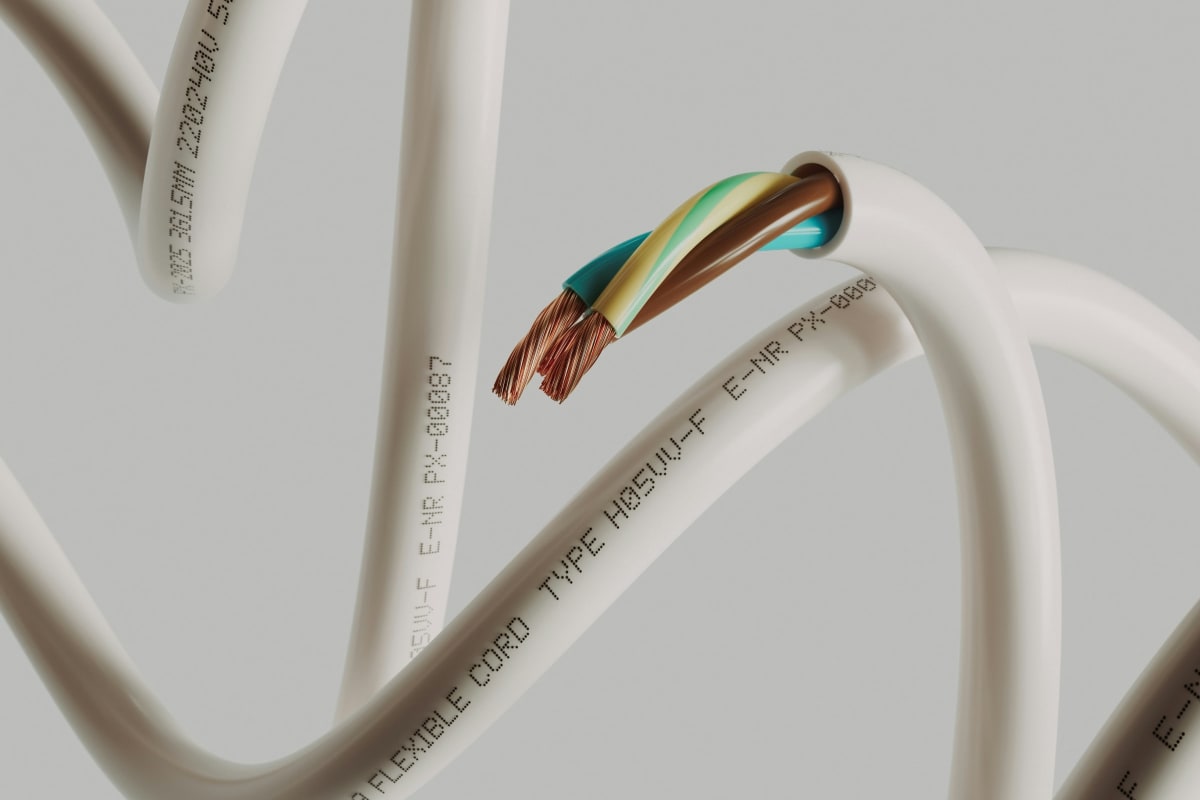
Pick an extension cord by gauge and length. The lower the gauge number, the heavier the wire: a 12/3 carries a saw or a compressor on a long run, while a 16/3 is for a lamp or a charger. A long, light cord drops voltage, and the motor at the end runs hot and trips breakers.
The yellow Polar/Solar cords are the ones to own in Montana. Southwire rates them from -58°F to 221°F and builds them to stay flexible in extreme cold, so they coil and uncoil on a January job site or run out to a block heater at 20 below, where an ordinary cord goes stiff and cracks. The three-outlet version runs three tools off one cord, and the lighted plug shows at a glance that the cord is live.
Boxes, conduit and work lights
Southwire also makes the pieces that finish the run, so the box, the conduit and the wire can all be one brand. Gray weatherproof PVC junction boxes, extension rings and in-use covers handle outdoor receptacles and GFCIs. Liquidtight and aluminum flexible conduit feed a condenser, a pump or a motor where rigid pipe can’t make the turn, and aluminum armored MC cable goes where the wiring stays exposed in a shop or basement. Thermostat and doorbell wire cover the low-voltage runs.
For light before the fixtures are live, Southwire’s CEP line makes the halogen tripod, the LED H-stand and the two-head telescoping tripod, plus the clamp socket light that clips to a stud or a ladder rail. In finished rooms and tight spaces, use the LED H-stand, because a halogen lamp gets hot enough to burn a hand or scorch fresh paint.
Frequently Asked Questions
Is Southwire THHN also rated THWN?
Yes. SIMpull carries THWN-2 on the same conductor as THHN, and the “-2” is the part to look for, because it lets the wire run at 90°C in a wet location. Read the print on the jacket and make sure THWN-2 is on it before you pull it into an outdoor or buried conduit.
What’s the difference between Romex and UF wire?
Romex NM-B is for dry locations inside the house. UF-B has a solid gray jacket rated for wet locations and direct burial, so it’s the one for a buried run to a shop, a pump or a yard light.
What gauge Romex do I need for a 20-amp circuit?
12 gauge, the yellow jacket. Use 14 gauge (white) on 15-amp circuits and 10 gauge (orange) on 30-amp circuits.
Do Southwire cold-weather extension cords work in extreme cold?
Yes. Southwire rates its Polar/Solar cords from -58°F to 221°F and builds them to stay flexible in extreme cold, which is why they’re the cord to leave on a winter job site or a block heater.
Where is Southwire made?
Southwire is based in Carrollton, Georgia, where Roy Richards Sr. founded it in 1950, and it also builds wire and cable at its plant in Hawesville, Kentucky. Its Proof Positive copper carries a unique ID code on the center strand to help fight copper theft.
Ready to Get Started?
Our building materials specialists can help you find the right Southwire products for your project.