

Simpson Strong-Tie connectors, screws and anchors are for framing connections and anchoring jobs, whether you’re framing houses or building your own deck. Wood connectors, fastening systems, and mechanical or adhesive anchors cover several parts of the work, with installation illustrations, spacing diagrams and load tables organized by application.
Simpson Strong-Tie is a structural connector, fastener and anchor company founded by Barclay “Barc” Simpson in 1956. It is a subsidiary of Simpson Manufacturing Company. Its first innovation was a joist hanger.
Choose the connection before the hardware
Start with how the force moves through the joint. A joist bearing in a hanger, an angled connection and a strapped joint work differently. The fasteners and the wood receiving them are part of the connection, so choose the hardware from its documented use and load capacity.
For a joist hanger, match the hanger to the framing members and the connection detail. Seat the joist as the installation drawing shows, then follow that hanger’s fastening schedule for both the joist and the supporting member. Have the specified fasteners ready before you set the hanger.
Match the screws to the connector
The screw is part of the connection. Simpson Strong-Tie requires fasteners to be compatible with the metal connector hardware, and offers stainless-steel connector screws for use with its stainless-steel connectors. Follow the selected connector’s fastening schedule and material requirements together.
With treated lumber, get the treatment chemical and retention information before choosing the connector and fasteners. Wood treatment and exposure affect corrosion risk. Use the selected product’s coating requirements with the lumber supplier’s corrosion recommendations.
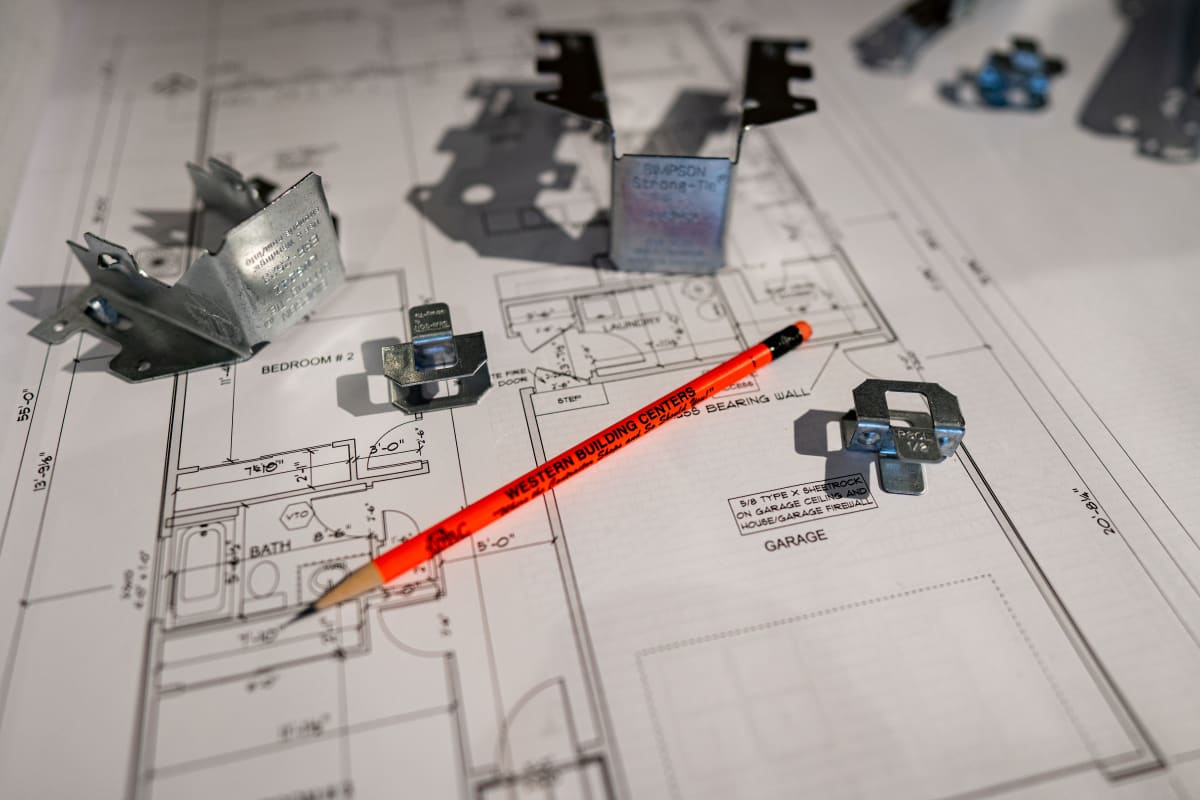
Work out post bases and stair connections early
Settle the post location, support and bracing before drilling for a post base. The base transfers forces between the post and what’s beneath it, so its anchorage belongs in the connection design. Each intended use of Simpson Strong-Tie hardware requires review and approval by qualified professionals; include the post’s support and bracing in that review.
For stair stringers, the stair slope and the framing at the landing determine how the attachment comes together. Work out the stringer layout before cutting, then match the attachment detail to the connector’s documented use. Check where its fasteners land in both the stringer and the supporting framing.
Plan anchoring and fastening around the installation
Simpson Strong-Tie offers mechanical and adhesive anchors. The base material, the force being transferred and the installation conditions decide which fits. Resolve that choice before drilling because the selected anchor determines hole preparation and installation. For adhesive anchoring, plan the work around the specified cleaning procedure and cure requirements.
For powder-actuated fastening, identify the exact tool before selecting accessories. The tool, pin, load and base material work together. Follow the tool’s instructions for the attachment and accessory combination.
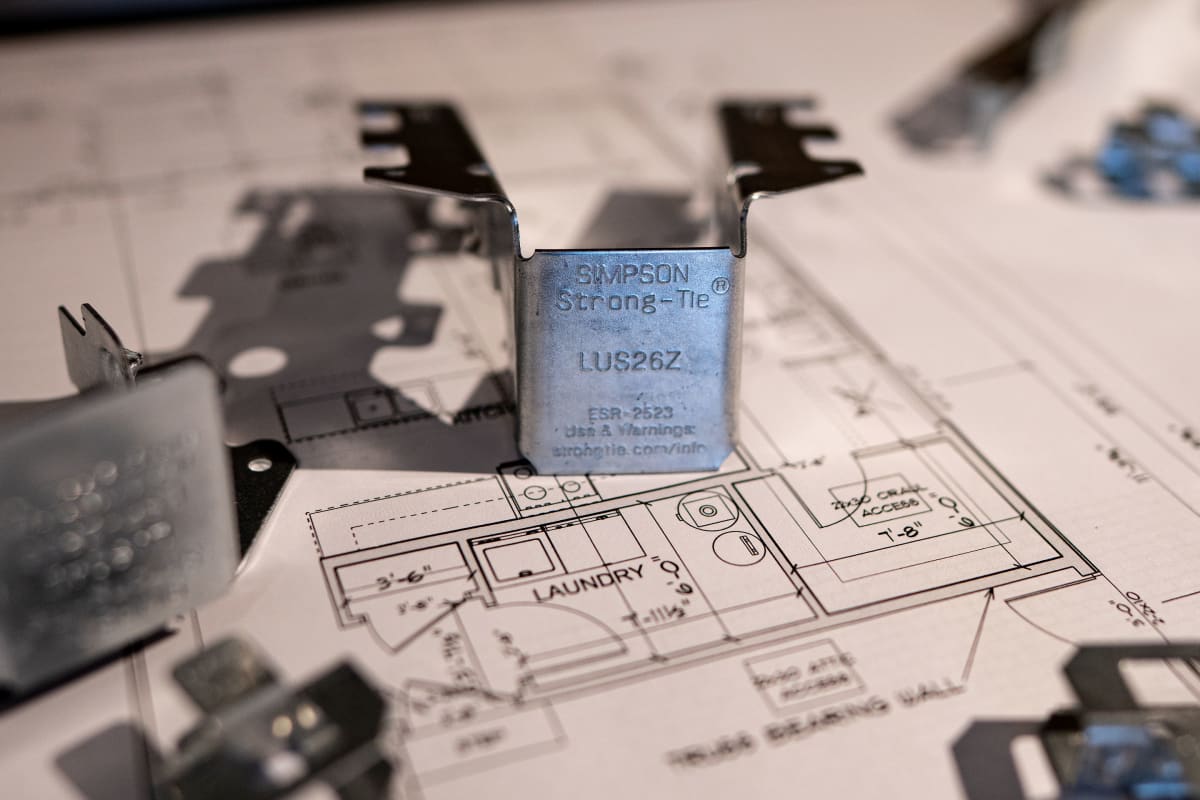
Leave room to install visible hardware
Outdoor Accents Essentials is intended for projects including pergolas, patio covers, fences and elevated decks. Settle the structural connection before choosing decorative hardware, then keep the fastener heads accessible while laying out the trim.
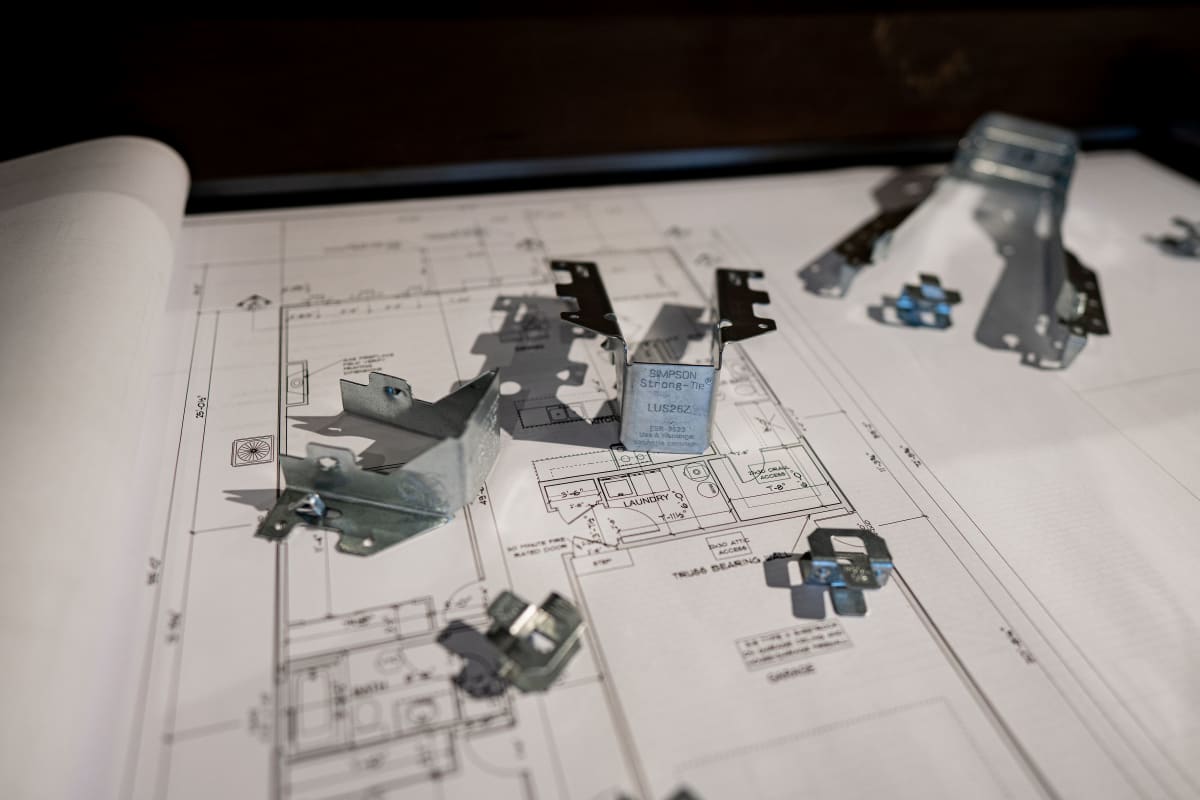
Materials and fastener details
| Material or fastener | Documented use or characteristic |
|---|---|
| ZMAX galvanized steel | Provides corrosion resistance. |
| Hot-dip galvanized products | Offered for corrosion-resistance needs. |
| Stainless-steel products | Offered for corrosion-resistance needs. |
| Stainless-steel Strong-Drive SD Connector screws | Offered for use with Simpson Strong-Tie stainless-steel connectors. |
Frequently Asked Questions
How do you install a Simpson Strong-Tie post base?
Post size alone doesn’t settle the installation. You need the selected base’s anchorage detail and a plan for supporting and bracing the post before you lay out the holes. The base is part of the structural connection, so its intended use needs review and approval by a qualified professional.
How do you install Simpson Strong-Tie joist hangers?
Match the hanger to your framing and follow its installation drawing, including the fastener requirements for both the supported joist and the supporting member. Don’t assume every hole takes the same fastener; the fastening schedule tells you what belongs where. The listed load capacity applies to the documented connection, so changing the fasteners changes what you can rely on.
What screws should you use with Simpson Strong-Tie connectors?
Use the screws specified for your particular connector. A screw that fits the hole isn’t automatically suitable for the connection, and corrosion resistance alone doesn’t establish structural suitability. Stainless-steel connector screws are offered for stainless-steel connectors, but you still need to match the selected connector’s fastening requirements.
How do you attach a stair stringer with Simpson Strong-Tie hardware?
Work from an attachment detail that matches your stringer layout and the supporting framing. Check the required fastener locations before cutting, because the finished stringer needs enough wood where those fasteners go. A connector that physically fits isn’t proof that the connection has the capacity your stairs need.
Ready to Get Started?
Our building materials specialists can help you find the right Simpson Strong-Tie products for your project.