

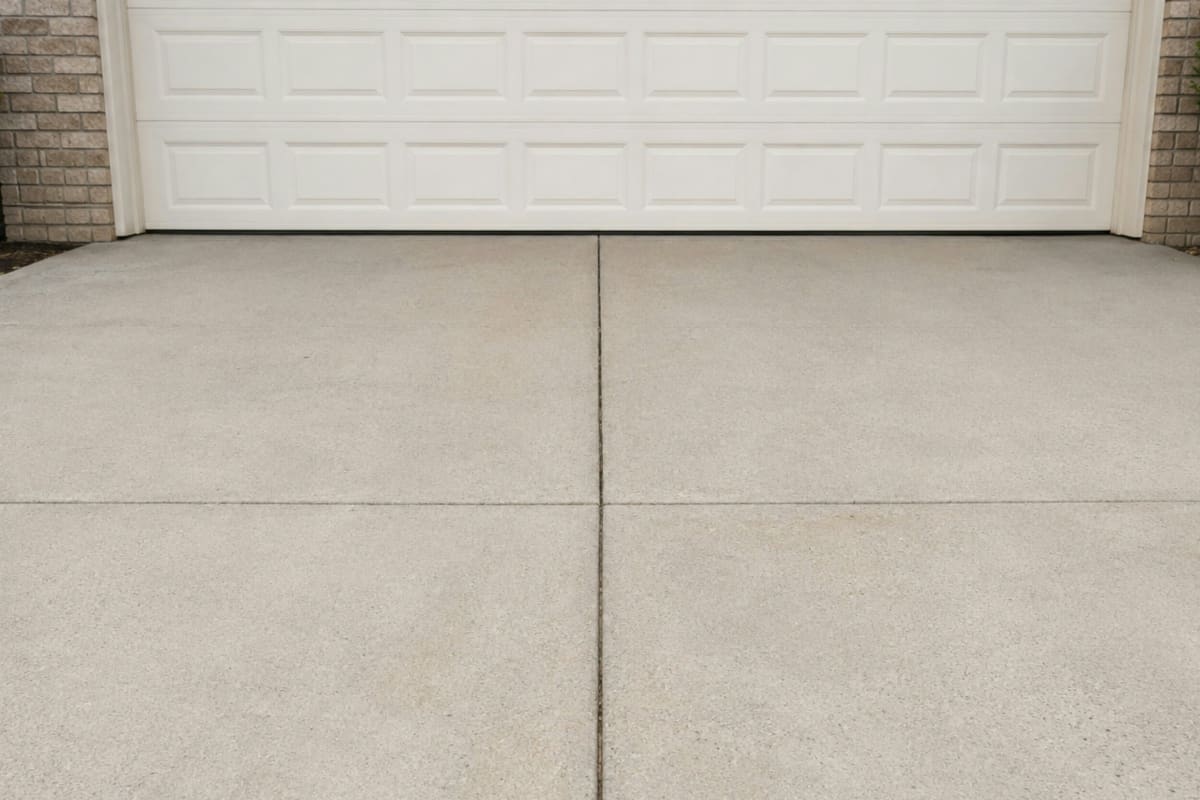
Sikaflex self-leveling sealant is the polyurethane you pour into the flat expansion joints of a concrete slab, like a driveway, a garage floor or the gap where a patio meets the foundation, to keep water out. It comes straight from the cartridge with no mixing, and it levels itself in the joint. Homeowners and contractors use it to seal slab joints.
Sikaflex is made by Sika, the Swiss specialty chemical company Kaspar Winkler founded in 1910 as Kaspar Winkler & Co. The company’s breakthrough came when the Swiss National Railways waterproofed 67 tunnels with Sika. Sika AG, publicly traded on the Swiss stock exchange, has been the holding company since 2002. Sika sums up its work as sealing, bonding, damping, reinforcing and protecting.
What Self Leveling Sealant is for
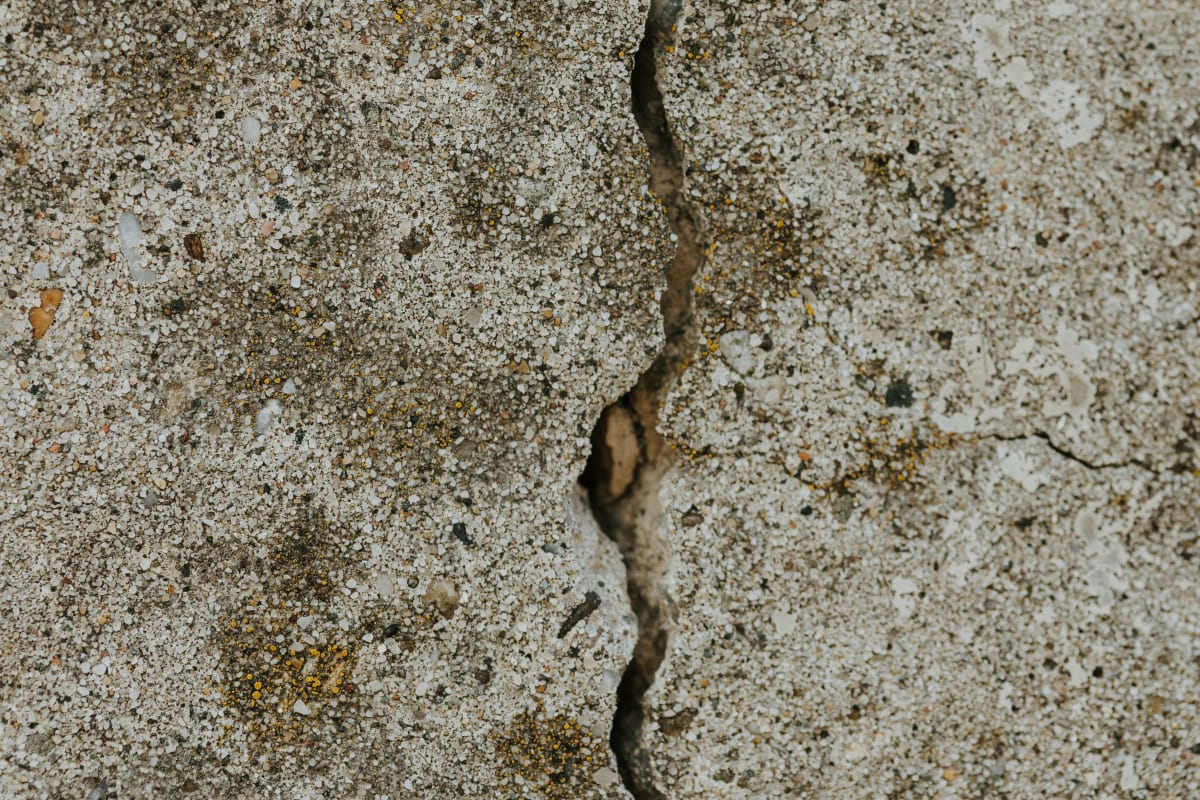
Sikaflex + Self Leveling Sealant is a one-part polyurethane made for horizontal expansion joints in concrete and cementitious slabs. You gun it into the joint, it flows out flat, and it cures into rubber that keeps water from getting under the slab or running down along the foundation. The finish is smooth and made for joints. For random cracks in the same slab, use the textured Sikaflex Crack Flex, which is built for cracks. It runs to the lowest point it can reach, so a joint that climbs a wall or runs steeply downhill needs a non-sag sealant.
How to fill a slab joint
Start with the joint walls. They have to be sound, clean, dry, frost-free, and free of oil and grease. Grind or wire-brush out old sealant and loose concrete, then blow out the dust. If the slab has been rained on or hosed off, wait at least an hour after the water stops and check that the walls are dry.
Push closed-cell backer rod into the joint to set the depth, using rod slightly wider than the gap so it holds. The rod saves sealant. It also keeps the sealant from bonding to the bottom of the joint. Sealant stuck to three sides can’t stretch, and it tears the first time the slab pulls apart. Most concrete takes the sealant without primer, and you only need primer if testing shows it. To test, run a short bead, let it cure and pull on it. If it peels clean off the concrete, prime the whole run.
The most common mistake is overfilling. The sealant keeps moving after it leaves the nozzle, so a joint filled flush spills over both edges. A one-inch joint ends up as a smear two or three inches wide, and scraping off the extra leaves a film in the pores of the concrete. Tape both edges, fill in one slow pass to just below the surface, and let it finish leveling before you add more. On a slab that slopes, dam the low end or fill in short sections. Clean tools with xylene or MEK while the sealant is still soft, and wear gloves and keep air moving, because both are strong solvents.
When the slab moves
Concrete slabs open and close their joints with every change in temperature. The usual worry is that a sealant pulls loose after one season. Self Leveling Sealant meets ASTM C-920 Class 25, the rating for a sealant that stretches and compresses 25 percent of the joint width and stays bonded. It stays elastic for good. That rating covers movement in both directions only if the sealant starts in the middle, so install it when the joint is at the midpoint of its expected movement, on a mild day and not in the heat of a summer afternoon or during a cold snap.
Size and paint
The 29 fl. oz. cartridge covers a driveway or a long patio joint and needs a bulk-size caulk gun. The 10.1 fl. oz. cartridge fits a standard gun and handles a few feet of joint. If neither color matches the slab, paint the sealant with water-based, oil-based or rubber-based paint after it reaches final cure. Taped lines and a coat of gray paint also tidy up a joint that ran over, and you don’t have to cut it out. Never skim concrete patch over cured sealant, because patch won’t bond to polyurethane and it pops off.
Other Sikaflex lines
Sikaflex + Construction Sealant is the non-sag, gun-grade urethane for joints in concrete, masonry, wood and metal, for window and door perimeters, and for roofing details like flashing and fastener heads. It fits joints no deeper than 1/2 inch, takes ±35% movement, and goes over backer rod or bond breaker tape. It’s urethane-based and suggested by the EPA for radon reduction, so it’s also the one for basement and foundation joints. Sikaflex-2c SL is a two-part self-leveling sealant, mixed with a drill, for working joints at least 1/4 inch deep, and it takes ±50% movement.
Sikaflex + Self Leveling Sealant specs
| Spec | Sikaflex + Self Leveling Sealant |
|---|---|
| Catalog number | C432297 (Gray, 29 fl. oz.) |
| Type | One-part, self-leveling, pourable polyurethane |
| Standards | ASTM C-920, Type S, Grade P, Class 25; Federal Specification TT-S-00230C, Type 1, Class A |
| Cartridges | 10.1 fl. oz. (299 ml) and 29 fl. oz. (858 ml), 12 per case |
| Colors | Gray (10.1 and 29 fl. oz.); Sandstone (29 fl. oz. only) |
| Peel strength on concrete | Above 28 pli, 0% adhesion loss |
| Final cure | 3 to 5 days |
| Weathering | Resists aging and weathering |
Frequently Asked Questions
How do you use Sikaflex self-leveling sealant so the joint comes out right?
Set the backer rod so the Self Leveling Sealant ends up about half as deep as the joint is wide, because a thin skin tears and a deep plug is too stiff to stretch. In cold weather, keep the cartridges somewhere warm overnight so the sealant flows out flat and doesn’t sit in a ridge. Keep tires and heavy loads off the joint until it’s fully cured, which takes days, not hours.
How do you use Sikaflex Construction Sealant?
Store Sikaflex + Construction Sealant between 40 and 95 °F, and bring the cartridges to 65 to 75 °F before you use it so it comes out of the gun smooth. On new concrete, wait 24 hours after the concrete cures and cut control joints at least 8 hours before you seal them. If the concrete got wet, clear off any standing water and let it dry for at least 60 minutes, then allow 4 to 7 days for final cure at 73 °F and 50% humidity, and longer in a cold Montana fall.
Can Sikaflex be used underwater, like in a pond or fountain?
Yes. Sikaflex + Construction Sealant is used in submerged joints such as ponds and fountains, and it stands up well to water, diluted acids and diluted alkalines. For bigger submerged work like canal and reservoir joints, the listed product is Sikaflex-2c SL, which also holds up to residential sewage.
Can you use Sikaflex on a roof?
Sikaflex + Construction Sealant is used for common roofing details: edges, gutters, fastener heads and flashing. It bonds to most construction materials without primer and doesn’t stain. Once it has cured, you can paint it with water-, oil- or rubber-based paint to match the trim or the gutter.
Ready to Get Started?
Our building materials specialists can help you find the right Sikaflex products for your project.