Sharpie is the permanent marker that lives in every tool bag, junk drawer and shop apron, and for good reason: the ink goes down on glass, wood, stone, plastic, metal and paper, dries fast and stays put. The Fine Point handles most of the marking a homeowner or a crew does in a week, the Extra Fine Point handles the small stuff, and the Mean Streak marking stick takes over when the stock is wet, oily or too dark for ink to show.
Sharpie goes back to Sanford Manufacturing Company, founded in Worcester by Frederick W. Redington and William H. Sanford, Jr. to make ink and glue. The company moved to Chicago, became Sanford Ink Company in 1940 and later turned to markers. Its Fine Point black became the first pen-style permanent marker. Sharpie calls Shelbyville, Tennessee its home today, and the brand sells under Newell Brands.
Fine Point: the one to keep in every drawer
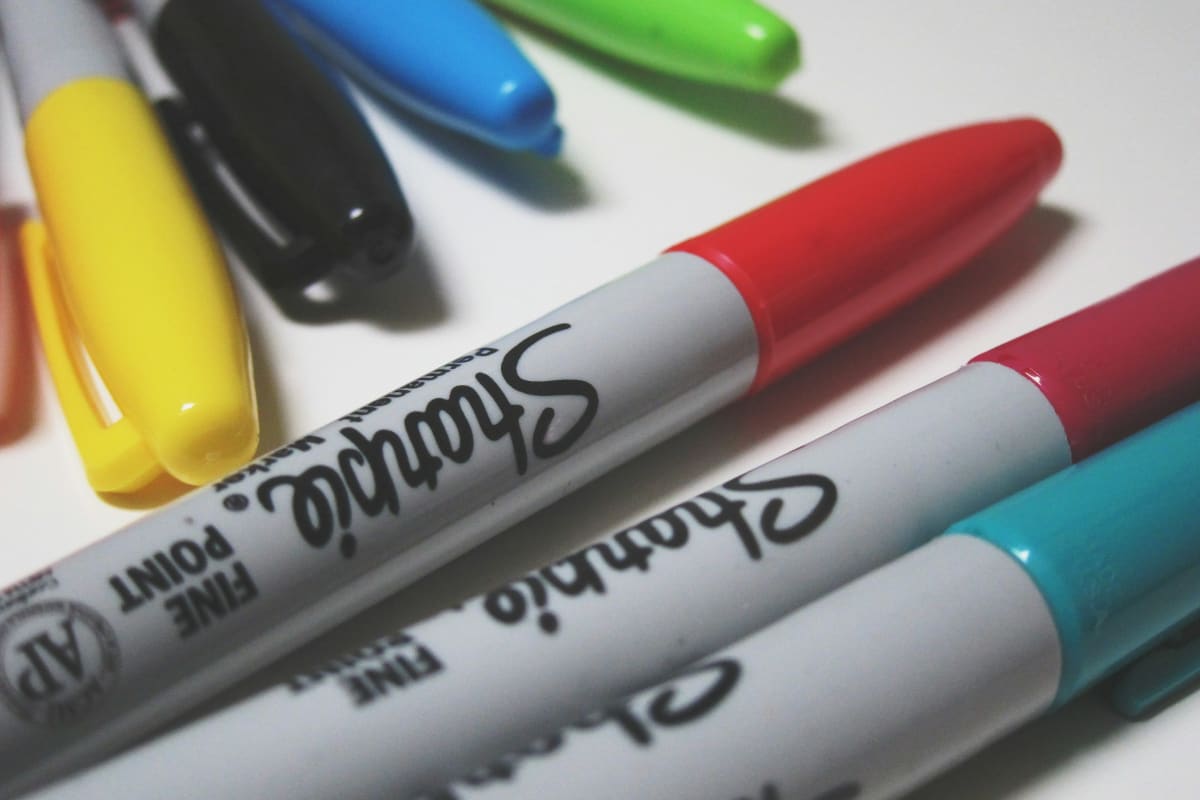
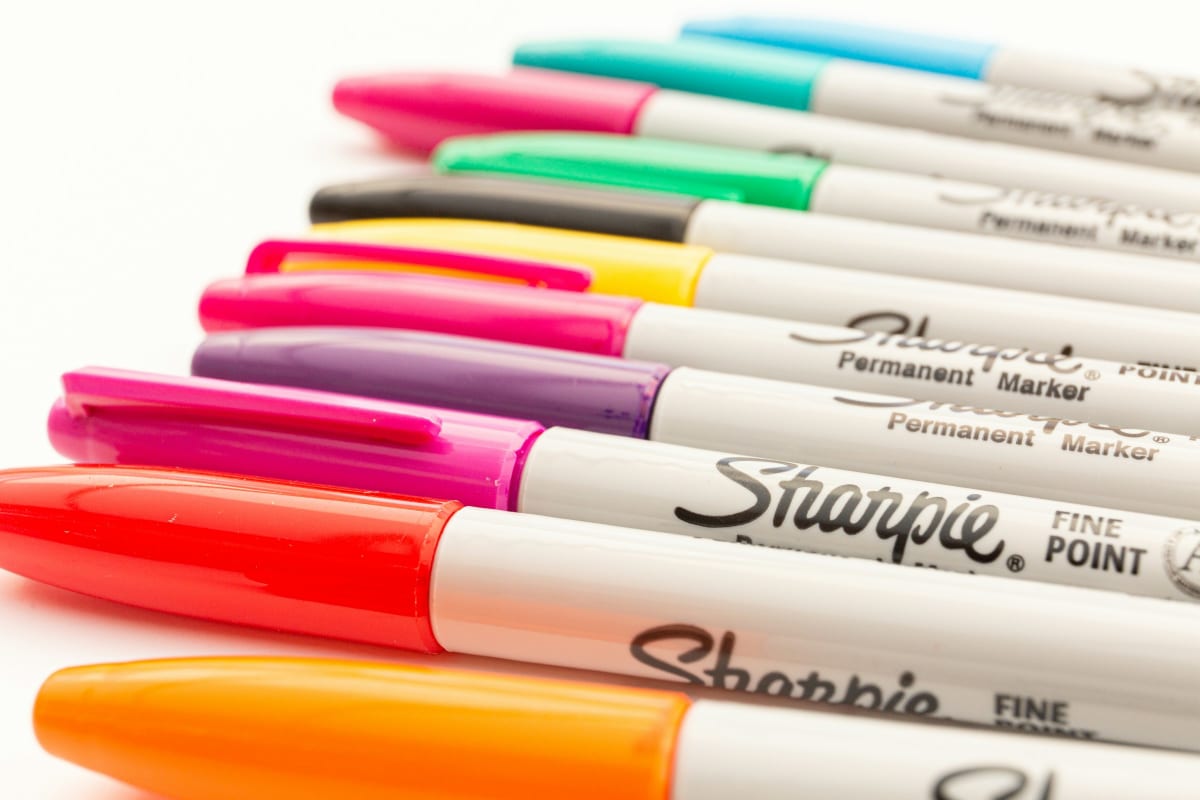
The Fine Point is the Sharpie most people picture, and it’s the one to buy first. The line is thin enough to write a name on a tape measure and bold enough to read a cut length on a 2x6 from across the garage. It writes on wood, metal, glass, plastic, stone and paper, so the same marker labels the breaker panel, the paint cans, the storage totes and the shelf edges in the shop.
Buy black when the mark just needs to be read. It shows on white paper, kraft cardboard, raw lumber and clear plastic, and a two-pack puts one in the truck and one on the bench. Buy the assorted colors when color is doing the sorting: one color per circuit, per kid, per bin or per job. Wipe the surface clean and dry first, because sawdust and oily fingerprints keep the ink from grabbing, and snap the cap on every time you set it down, since an uncapped tip is a dry tip by morning.
Extra Fine Point for tight spaces and small print
The Extra Fine Point puts the same permanent ink through a finer tip, so handwriting stays sharp at a size where a Fine Point blurs. It marks paper, plastic, metal and most other surfaces, dries quickly, and resists fading and water. That makes it the pick for the jobs where space runs out: the tag on a shutoff valve, a charger cord, the lid of a spice jar, the little drawers of a fastener organizer, or a part number on the side of a filter housing.
Mean Streak for wet, oily and dark surfaces
Felt-tip ink has limits, and the Mean Streak is Sharpie’s answer to them. It isn’t ink at all: it’s a solid paint stick of pigment blended with waxes and resins, twisted up like a glue stick, with an extra-bold bullet tip built for industrial use. Sharpie makes it to write on virtually any surface, even wet or oily ones, and the opaque mark stays visible on dark stock where black ink disappears.
That’s the marker for the jobs that beat a regular Sharpie: cut lines on oily steel, numbers on pipe, marks on rough lumber, and anything that’s been sitting out in the weather. In a Montana spring, when the lumber pile is wet from snowmelt and a felt tip just skips across the boards, the Mean Streak keeps writing. The mark dries quickly and resists water, fading and smearing, so it lasts through the job. Because the formula is wax-based, paint may not stick well over it; scuff the mark or use a primer made to bond to waxy marks if it has to be painted over.
Which Sharpie to grab
| Job | Sharpie |
|---|---|
| Everyday labeling on wood, metal, plastic, glass and paper | Fine Point, black or assorted colors |
| Small lettering, tags, cords and tight spaces | Extra Fine Point |
| Wet, oily, rough or dark surfaces | Mean Streak marking stick |
Frequently Asked Questions
Are Sharpie markers permanent and waterproof?
The Fine Point and Extra Fine Point use Sharpie’s permanent ink, which dries quickly and resists fading and water once it’s down. The Mean Streak goes further, laying a solid paint mark that resists water, fading and smearing and stays put even on wet or oily surfaces.
What surfaces does a Sharpie write on?
A Fine Point writes on glass, wood, stone, plastic, metal and paper. Clean, dry surfaces take the best mark. For surfaces that are wet, greasy, rough or dark, the Mean Streak marking stick is the better tool.
What’s the difference between a Sharpie Fine Point and Extra Fine Point?
The Extra Fine Point has a narrower tip for small, precise writing, while the Fine Point lays a bolder line that reads from farther away. Keep a Fine Point for boxes, lumber and bins, and an Extra Fine Point for tags, labels and anything with little room to write.
Which Sharpie works on dark or oily metal?
The Mean Streak. Its opaque paint stick shows up on dark surfaces and writes through oil and moisture that make a felt tip skip.
Can you paint over Sharpie Mean Streak?
Yes. The Mean Streak formula is wax-based, so lightly scuff the mark or use a primer made to bond to waxy or oily marks before painting.
What company makes Sharpie?
Sharpie started with Sanford Manufacturing Company, which became Sanford Ink Company in 1940 and later introduced the Sharpie. The brand is now part of Newell Brands and calls Shelbyville, Tennessee its home.
Ready to Get Started?
Our tool specialists can help you find the right Sharpie products for your project.