Seymour inverted marking paint is the upside-down spray can for marking utility locates, dig lines and layout on the ground. The valve sprays with the tip pointed down, so you walk a line standing up instead of stooping over a regular can, and the paint dries fast, lays vivid marks, doesn’t clog and is safe for grass. Contractors, landscapers, fence builders and homeowners use it to lay out a job before the first shovel goes in.
Seymour of Sycamore, commonly known as Seymour Paint, began in 1949 in Sycamore, Illinois, when Ed Seymour devised a novelty spray can to demonstrate an aluminum paint he’d created for steam radiators. The company credits Ed Seymour with inventing aerosol paint and says it’s the largest family-owned, privately held aerosol paint maker in the United States. It makes automotive, industrial, marking and specialty aerosols in its own U.S. plants, and its paint goes down on roads, highways and athletic fields, surfaces that take traffic, cleats and weather all season.
Why an inverted can for ground work
A regular spray can held upside down pulls propellant through its dip tube instead of paint, sputters, and quits with paint still inside. An inverted can is built the other way around, so it feeds paint pointed straight at the dirt until the can is empty. Seymour makes its inverted ground marking paint for utility locating, surveying, construction, golf courses and landscaping layouts, and it sprays by hand or from the Z-605 marking gun or Z-606 marking wand when there’s a long line to walk.
The colors meet APWA color standards, the same code the utility locators paint by, so a Seymour mark means the same thing to every crew on the site.
| Color | What it marks under the APWA code |
|---|---|
| Red | Electric power lines, cables and conduit |
| Yellow | Gas, oil, steam and petroleum |
| Orange | Phone, cable TV, fiber, alarm and signal lines |
| Blue | Drinking water |
| Green | Sewer and drain lines |
| Purple | Reclaimed water |
| Pink | Temporary survey marks |
| White | Proposed excavation |
Use white or pink for your own layout so nobody on the job reads your fence line as a buried cable, and outline the area you plan to dig in white before the locate crews arrive.
The 9-Series for cold mornings
The 9-Series is the can to grab when the ground is cold. It’s a solvent-based formula that Seymour builds to work well in low temperatures, and it’s dry to the touch in 15 minutes at 35°F, against 5 minutes at 72°F. That spec matters in Montana, where the building season opens in late April and the Flathead’s average last frost doesn’t come until May 19, so spring locates, dig lines and fence post replacements go down on plenty of mornings that start near freezing. One 17 oz can of the 9-Series marks up to 500 linear feet, and it’s VOC compliant. The 3-Series is Seymour’s water-based inverted can for the rest of the season.
Marking the ground
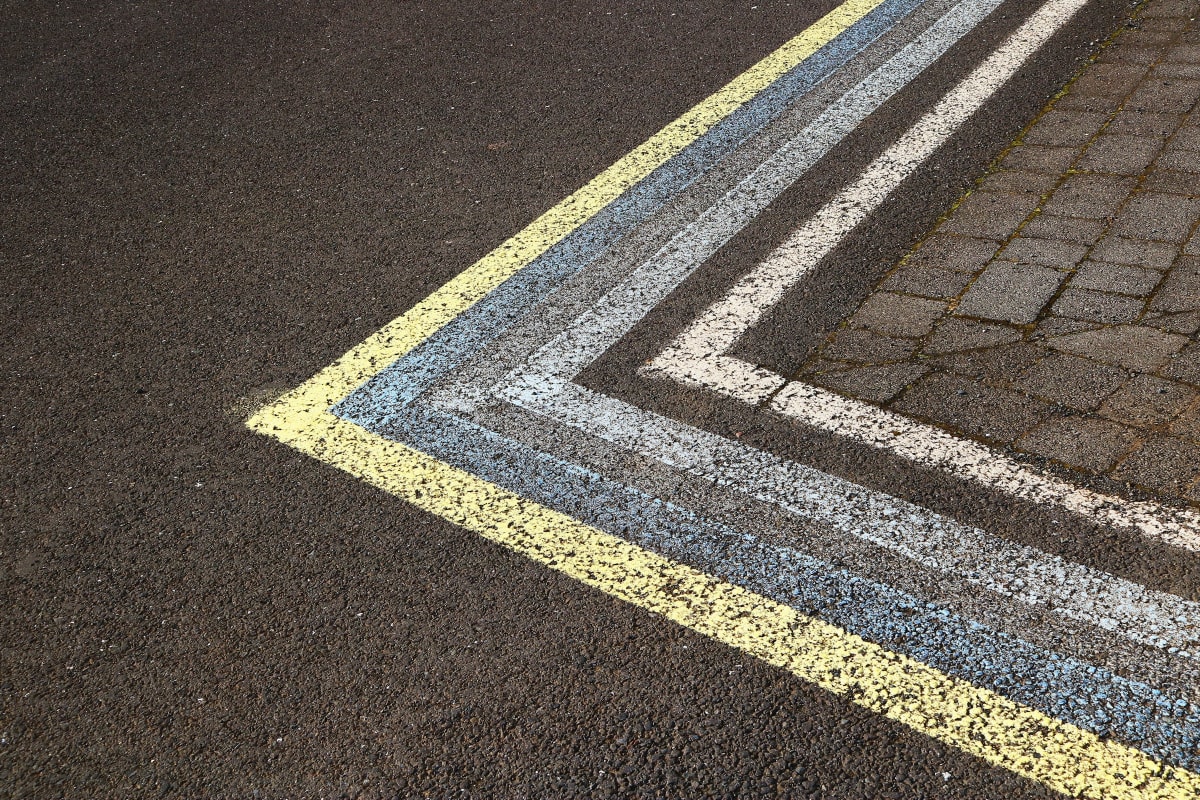
Shake the can until the ball rattles, then a full minute more. Hold the tip a few inches off the ground and walk at a steady pace: short dashes on grass, a solid line on pavement. Marks on grass ride the blade tips and leave with the next mowing, so paint close to the day you dig or set posts, and drive a stake where a mark has to last. When you finish, turn the can right side up and give it a one-second burst to clear the tip.
| Spec | Seymour inverted ground marking paint |
|---|---|
| Spray position | Inverted, tip pointed down |
| Colors | White, yellow, and fluorescent red, orange, blue, green and pink |
| Standards | Meets APWA color standards |
| Formulas | 3-Series water-based; 9-Series solvent-based |
| Dry to touch, 9-Series | 5 minutes at 72°F, 15 minutes at 35°F |
| Coverage, 9-Series 17 oz | Up to 500 linear feet |
| On grass | Safe for grass |
| Application | By hand, Z-605 marking gun or Z-606 marking wand |

Frequently Asked Questions
What is Seymour inverted marking paint used for?
It puts temporary marks on the ground where a regular can won’t spray pointed down, like dig outlines, post holes, trench runs and field lines. On a cold morning, keep the can in the truck cab until you need it, because a chilled aerosol loses pressure and spits instead of laying a clean line. Sweep off frost and loose snow first, since a mark painted on frost goes wherever the frost goes when it melts.
What happened to Stripe inverted marking paint?
Seymour’s Stripe 3-Series and 9-Series inverted ground marking paints now go by the Aervoe name, Seymour’s sister brand, and come in new packaging with the same paint inside. An old Stripe can and a new Aervoe can from the same series mark the same way, so use up the leftover cans before you open new ones. For upright work on stakes and form boards, Stripe Upright Marking Paint still carries the Stripe name.
Which safety data sheet (SDS or MSDS) goes with a Seymour inverted marking paint can?
SDS and MSDS mean the same document, and the one that counts is for the exact product named on the label, so match the brand and series printed on the can. Read the hazards, storage and protective equipment sections before the crew uses it. Aerosol marking paint is flammable, so keep the cans away from open flame and out of a hot, closed cab in summer.
What does Seymour Paint make besides marking paint?
Seymour makes Stripe upright marking paint and traffic paint, Tree & Industrial Marking Paint for timber and yard stock, automotive refinish and touch-up paint from an Automotive Division that dates to the mid-1960s, and Industrial Division protective coatings for equipment maintenance. Its specialty line includes a 316L stainless steel paint suited to roll cages and a 2K spray-on bedliner. For a scratched fender or a chipped implement, an aerosol saves you setting up a spray gun for a small job.
Ready to Get Started?
Our landscape & concrete specialists can help you find the right Seymour products for your project.