

Scotts is the lawn brand a first-timer can buy with confidence, because Scotts does the math for you. Every bag of granular Turf Builder lawn food and Weed & Feed prints the spreader setting for each Scotts spreader, and Turf Builder grass seed comes with its own fertilizer and soil improver in the bag. Pick the seed for the yard, the feed for the problem and the spreader for the job, set the dial where the bag says, and the lawn gets the right amount.
Scotts started in 1868, when Civil War veteran Orlando McLean Scott began selling weed-free seed to farmers from his hardware store in Marysville, Ohio, and the company is still headquartered there. Scotts merged with Miracle-Gro in 1995 to form The Scotts Miracle-Gro Company, and it backs its lawn products with the No-Quibble guarantee: if the lawn doesn’t improve after a proper application, Scotts refunds you.
Turf Builder grass seed
Sun & Shade is the mix to reach for on most Montana lots, because most of them have both: full sun over the driveway and deep shade under the old cottonwoods and pines that the valley towns were built around. Under those trees, where Sun & Shade thins out by the third summer, Dense Shade is the honest answer; it grows on as little as 3 hours of sun a day. The Heat-Tolerant and drought mixes are for the south-facing slope and the yard that turns brown by the Fourth of July when the sprinklers can’t keep up, and the Tall Fescue mix grows the deep roots that get a lawn through August on less water than bluegrass wants. It is the seed for a yard the kids and the dogs run hard. For bare patches, the Patch Mix fixes the spot without reseeding the whole yard, and the Dog Spot Repair mix is made for the burned rings a dog leaves on a lawn: it is a Sun & Shade seed blend sized for those spots, so the ring gets grass again without opening a 7-pound bag.
Turf Builder seed comes with Root-Building Nutrition, a 3-in-1 of seed, fertilizer and soil improver in one bag that helps the new grass set deep roots. Put it down when the soil is between 60°F and 75°F, keep it watered every day for at least three weeks or until the seedlings are 2 inches tall, and hold off mowing until then. On bare ground or a spot where the dog dug, rake in the Scotts All Purpose Premium Top Soil first so the seed has something to root into instead of gravel and clay.
Montana’s short frost-free season is the thing to plan around. Spring seeding waits for the soil to warm, and fall seeding has to go down early, in late summer, so the grass has its three weeks of water and time to root before the first hard frost.
Lawn food and Weed & Feed
Turf Builder Lawn Food is the regular feeding, in bags sized for a 5,000 or 15,000 square foot lawn, and it’s the one to put down every 6 to 8 weeks through the growing season. Here that season is short, roughly May into September, so it is three feedings, not five, and the last one goes down while the grass is still growing, not after it has gone brown for the year. Starter food goes down with new seed, made to feed the new roots while the grass establishes. Green Max adds iron for a deeper green, Turf Builder with SummerGuard feeds while protecting the lawn from insects through the heat, and Turf Builder with Moss Control feeds the grass and knocks back the moss on a shaded, damp lawn.
Turf Builder Weed & Feed, a 28-0-3 feed, kills dandelions and clover in an established lawn while it feeds the grass, in bags for 4,000 to 12,000 square feet. It is a broadleaf weed killer, so it takes out the dandelions, clover and the rest of the flat-leaved weeds; it does not kill crabgrass, which is a grass. Put it down on damp grass while the weeds are actively growing, so the granules stick to the leaves, and keep it off ground you plan to seed soon; the bag gives the wait before seeding. Keep the dog and the kids off the lawn until the granules have dried on the leaves and the bag’s wait time has passed, and store what is left in the bag somewhere cool and dry, out of their reach. For grubs, GrubEx gives season-long control from one application, and MossEX takes care of moss.
For crabgrass, the fix is the 24-ounce Scotts ready-to-spray weed and crabgrass killer on the patches you can see, and in spring a Turf Builder Halts crabgrass preventer down before the soil reaches 55°F, before the seed sprouts. For a lawn that’s easier fed with a hose, Liquid Turf Builder at 29-0-3 and liquid Weed & Feed go on through the 32-ounce hose-end sprayer, and the ready-to-spray crabgrass killer handles the spots between feedings. The liquids have no spreader setting; the rate is on the bottle.

Scotts spreaders
The worry that stops most first-timers is the dial: what number keeps you from burning the lawn or running out halfway. The answer is printed on every bag of granular Scotts product, broken out by spreader, because a number on one Scotts spreader puts down a different amount than the same number on another. Set the dial from the bag in your hand every time, since lawn food, seed and weed and feed all have different granules and rates.
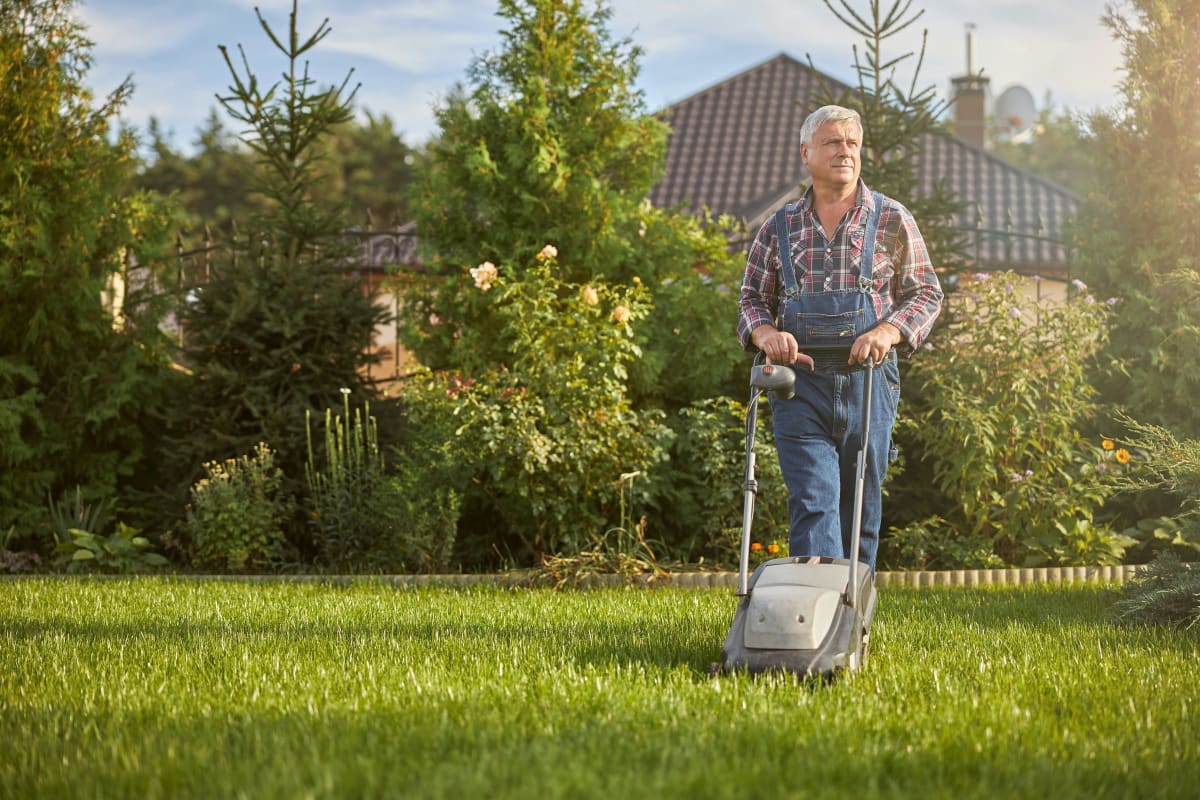
The broadcast spreader throws granules in a wide arc and is the one for a whole lawn of food or Weed & Feed; on a full town lot it covers the ground in half the passes of the mini, and fewer passes means fewer overlaps and stripes. The mini broadcast does the same job for a small yard and stores in less room, which matters in a one-car garage full of snow shovels. The hand-held spreaders are for seeding patches, top-dressing a small area and putting ice melt on the steps in winter; Scotts says many weed-and-feed and weed-control products aren’t meant for a hand-held, so a whole lawn of Weed & Feed goes on with a broadcast. Walk at a steady pace, open the gate once you’re moving and close it before you stop or turn, so a standing spreader doesn’t dump a pile that burns a spot. Empty the hopper before it goes back on the shelf.
Scotts Elite sprayers
For liquid feeds and weed killers, the Scotts Elite sprayers come as 2- and 3-gallon manual pump hand sprayers, a 2-gallon battery-powered hand sprayer, and 4-gallon backpack sprayers in battery and no-leak pump models for a big yard, a fence line or a pasture edge. Mark one sprayer for weed killer only, because a trace of herbicide left in the tank damages the next plants it touches.
Why Scotts
Every Scotts bag is written for a Scotts spreader, and the No-Quibble guarantee stands behind an application done by that bag, so a homeowner who has never fed a lawn can get it right the first time.
Frequently Asked Questions
What setting do I use on my Scotts spreader?
The one printed on the bag of the product you’re spreading, for your model of spreader. Every granular Scotts lawn product lists a setting for each Scotts spreader, and the number changes from product to product, so read it off the bag every time.
Is Scotts Weed and Feed safe for dogs?
The bag answers this, and the answer is to follow it. Keep the dog off the lawn until the granules have dried on the leaves and the wait time printed on the bag has passed, and keep the leftover bag stored where the dog can’t get into it. For the yellow rings a dog leaves behind, the Dog Spot Repair seed mix is the fix.
Does Scotts Weed and Feed kill crabgrass?
No. Weed & Feed kills broadleaf weeds like dandelions and clover, and crabgrass is a grass. Spray the patches with the Scotts ready-to-spray weed and crabgrass killer, and next spring put a crabgrass preventer down before the soil reaches 55°F so it never sprouts.
Does Scotts Weed and Feed kill clover?
Yes. Clover is a broadleaf weed, and Turf Builder Weed & Feed takes it out along with the dandelions while it feeds the grass. Put it down on damp grass while the weeds are growing so the granules stick to the leaves.
When should I put down Scotts grass seed in Montana?
When the soil is between 60°F and 75°F: late May or June once the ground warms, or the second half of August, early enough that the seedlings get three weeks of daily water and time to root before the first hard frost. July seeding here is a waste of seed; the top inch of soil dries out between waterings and the seedlings cook.
Can I use a hand-held Scotts spreader for Weed and Feed?
Scotts says many weed-and-feed and weed-control products aren’t recommended for hand-held spreaders. Use the hand-held for seed patches and small areas, and a broadcast spreader for a whole lawn of Weed & Feed.
Ready to Get Started?
Our landscape & concrete specialists can help you find the right Scotts products for your project.