

Sashco makes caulk for joints that move, and on a house that lives through a Montana year, every joint moves. Big Stretch is the everyday bead for trim, siding and windows. Lexel and Through the Roof are the rubber sealants for cold, wet and roof work. Log Jam, Log Builder, Conceal and Capture stain make up the log home line. Every one of them is built to stretch with the joint instead of cracking out of it, and that is the reason to buy a sealant instead of another tube of cheap latex.
Sashco is a family-owned Colorado maker of caulks, sealants and stains, started in 1936 as the Colorado Steel Sash Company and headquartered today in Thornton. Les Burch, a chemical engineer, has run it since 1973. Sashco builds one product for each job and has no interest in a good, better, best lineup, so choosing one comes down to the joint you’re sealing, not a grade.
Big Stretch: the everyday house sealant
Big Stretch is a water-based acrylic latex elastomeric sealant for trim, siding, windows, doors and the rest of the joints on a house. It stretches up to 500%, so when trim pulls away from the siding in a cold snap, the bead stretches across the gap instead of splitting down the middle, which is exactly where ordinary latex caulk lets go by its second winter. It tools smooth, cleans up with water, and comes in a long run of colors, from clear, tan and almond to redwood, woodtone, slate, ironstone and pine green, so the bead can match the siding instead of standing out white against it.
Because it’s water-based, Big Stretch wants a dry surface, a temperature of 40°F and rising, and no rain or snow for 24 hours. Keep Big Stretch Clear off copper flashing and use a colored Big Stretch or Lexel there instead.
Lexel and Through the Roof: rubber for cold, wet and roof work
Lexel and Through the Roof are co-polymer rubber sealants, and they’re the answer when the weather won’t wait. Both go on anywhere from 0°F to 120°F, and both can be applied to an actively wet surface. That matters on a late-October job in Montana, when the mornings start below freezing and the siding hasn’t dried out since the last snow: Big Stretch has to wait for a warm, dry spell, and the rubber sealants don’t. Wipe any frost off with denatured alcohol first, and go by the temperature of the surface, not the air.
Lexel is Sashco’s flagship, a rubber sealant that seals around nearly anything, inside or out, and in clear it’s the one to use where the bead should disappear. It takes paint once cured, as long as the paint isn’t oil-based, and letting it cure up to 14 days before painting heads off problems. Through the Roof is the rubber sealant made for the roof: flashing, vent pipes, skylights, gutters, downspouts, chimneys and roof jacks. It displaces water, so it seals an active leak in the rain, it’s paintable, and it comes in clear, white and black. Paired with the Cobra lap joint nozzle, it lays a thick, flat bead across a gutter or flashing seam that needs no tooling. It isn’t made for EPDM rubber roofing or silicone.
Mor-Flexx and Slab for masonry and concrete
Mor-Flexx is a mortar-textured sealant for crumbling mortar joints, cracked stucco, stone and faux stone. It blends into the joint around it, stretches like rubber so the repair doesn’t crack again the way a mortar patch does, and comes out of a caulk tube, with no powder, mixing bucket or trowel. It’s paintable, cleans up with water, and comes in gray, white, beige, charcoal and ironstone.
Slab does the same job on concrete. It’s a textured acrylic that fills cracks in driveways, sidewalks, garage floors, patios and expansion joints, flexes as the concrete shifts, and is textured to look like the slab around it so the repair blends in.
The log home line
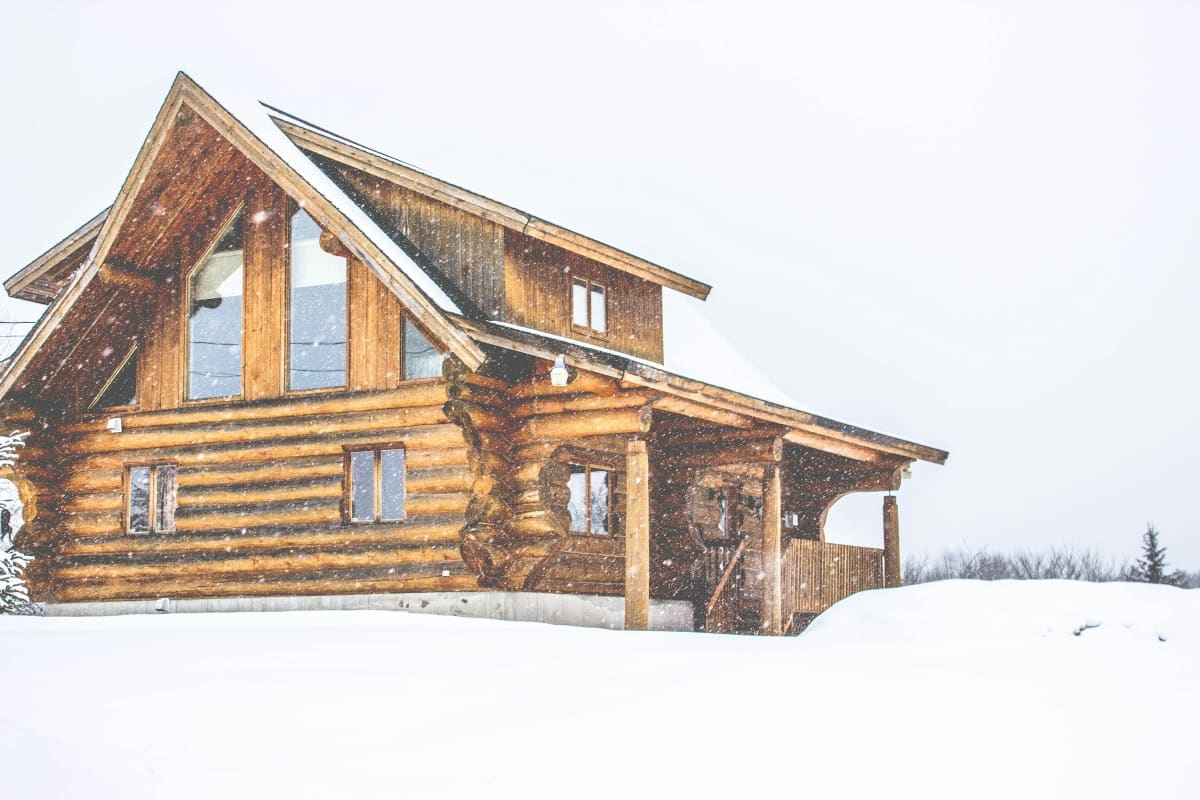
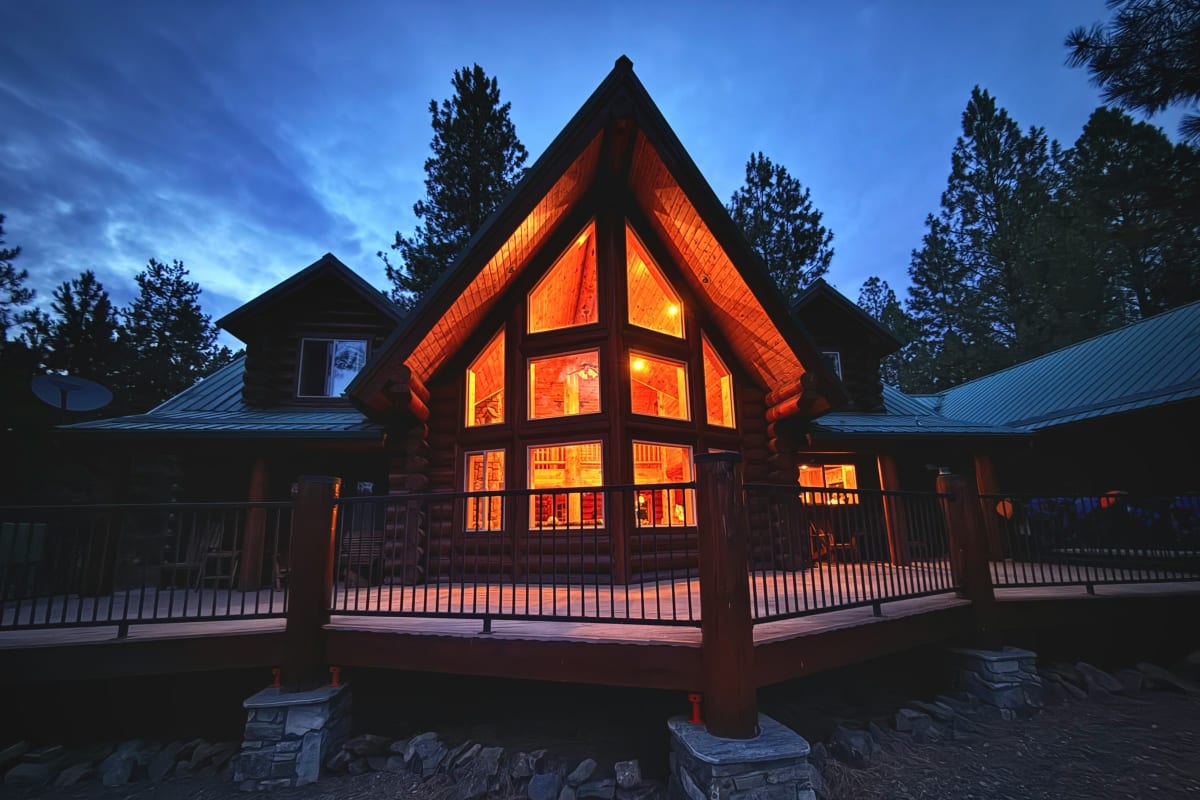
Logs shrink and settle for years after a log home goes up, so anything hard packed between them eventually cracks out. Sashco’s log line is made to move with the wall, and there are enough log homes in Montana that these are some of the most useful tubes Sashco makes.
Log Jam is the chinking for the wide joints between logs. It’s textured to look like old-time mortar, stretches up to 250% as the logs move, works with all Sashco stains, and comes in eight colors, from Mortar White to Dark Brown. It goes on no more than 1/4 to 1/2 inch thick, over backer rod, in cartridges for touch-up and 5-gallon pails for a whole wall.
Log Builder is the smooth, traditional bead for checks, cracks, corners, windows and doors on log walls and wood siding. It stretches up to 500% and stays stuck to the wood, takes paint or stain, and holds up through five freeze-thaw cycles, so a cartridge left overnight in an unheated shop is still good in the morning. Conceal does the same work where the bead needs to disappear: it’s lightly textured to blend with woodgrain, stretches and compresses with the logs, and takes stain over the top, in wood colors like Frontier Gold and Grizzly Brown.
Capture Log Stain finishes the job. It’s a water-based, translucent stain that moves with the logs and timbers without cracking or peeling, lets the grain show through, and comes in 1- and 5-gallon pails in colors like Natural, Bronze Pine and Chestnut.
Filler Rope goes in first
Any joint 1/4 inch wide or more and 1/2 inch deep or more gets backer rod before the sealant. Sashco Filler Rope runs from 1/4 inch to 1 inch, and it sets the bead at the right depth so the sealant can stretch, while costing far less than filling the gap with sealant. Keep closed-cell rod from getting nicked, because a hole in it lets gas out and blisters the bead above it.

Which Sashco to buy
Big Stretch for dry-weather joints on the house. Lexel when it’s cold or wet out, or when the bead needs to disappear. Through the Roof on the roof and gutters. Mor-Flexx for mortar and stone, and Slab for concrete. On a log home, Log Jam between the logs, Log Builder or Conceal in the checks, and Capture over the top. Each one is made to stretch with the joint it’s in, so the bead that goes on this year is still sealing years from now instead of being dug out and redone every spring.
Frequently Asked Questions
Should I use Sashco Big Stretch or Lexel?
Big Stretch is a water-based acrylic latex that cleans up with water and comes in a long list of colors, so it’s the choice for dry, mild-weather work around trim, windows and siding. Lexel is a co-polymer rubber that goes on from 0°F to 120°F and on wet surfaces, so it’s the choice when a fall job might see frost or a damp morning.
Can you caulk in cold weather with Sashco?
Yes, with Lexel or Through the Roof. Both can be applied at temperatures down to 0°F and on actively wet surfaces. Water-based sealants like Big Stretch need 40°F and rising and a dry surface.
What is the difference between Log Jam and Log Builder?
Log Jam is chinking: a mortar-textured sealant for the wide joints between logs. Log Builder is a smooth sealant for checks, cracks and trim joints on log walls. Both stretch with the logs, and many log homes use both.
Can you paint over Sashco Lexel?
Yes. The only paint to keep off a rubber sealant like Lexel is oil-based paint, and letting it cure up to 14 days before painting avoids problems, so caulk early and paint last.
Ready to Get Started?
Our paint & finish specialists can help you find the right Sashco products for your project.