

UA/SAIT 9x11 sanding sheets are aluminum oxide grain on a flexible cloth back, made for hand sanding wood, paint and fiberglass, and they work on steel, iron and copper too. Anyone sanding by hand, from a cabinet refinish to rust on a trailer tongue, gets more out of a sheet of these than a sheet of paper: cloth doesn’t tear at the fold, and these hold up when they get wet.
SAIT Abrasivi S.p.A. is an Italian maker of bonded and coated abrasives, founded in 1953 and headquartered in Collegno, just outside Turin. The company got its start making flexible fiber discs, and its catalog now runs past 90,000 products. United Abrasives of Connecticut is SAIT’s North American partner, and it is the UA in UA/SAIT.
Why a cloth sheet
The sheet is F-weight cloth, the flexible grade, so it folds around a molding profile or a spindle without cracking along the fold the way paper does. The grain is bonded resin over resin, which stands up to heat and moisture, so a sheet can be dipped to keep it cool and clean. The coat is open, meaning the grain is spaced out, and that keeps dust and old paint from packing the sheet solid. When a sheet does load up, slap it against your palm or knock it on the bench to clear it before you give up on it.
Which grit, in what order
The line runs from 36 grit to 320, and the six grits below cover nearly every hand-sanding job. Work up through them, each one taking out the scratches the last one left. Skipping more than one step leaves deep scratches the finer grit can’t reach, and they show the moment stain goes on.
- 60: strip old finish, flatten a rough board, take rust off steel.
- 80: shape and smooth after 60, or start on wood that’s rough but sound.
- 120: the usual last step before paint, and the first step on new, planed wood.
- 180: the last step on bare wood before stain or clear finish.
- 240: scuff between coats of paint or varnish so the next coat bites.
- 320: light sanding between finish coats and knocking down dust nibs.
On a Montana house, where UV at elevation and the temperature swings mean exterior doors and trim need recoating every three to five years, a stack of 80, 120 and 240 is the whole recoat kit: 80 to knock off the failed finish, 120 to smooth it, 240 between coats.
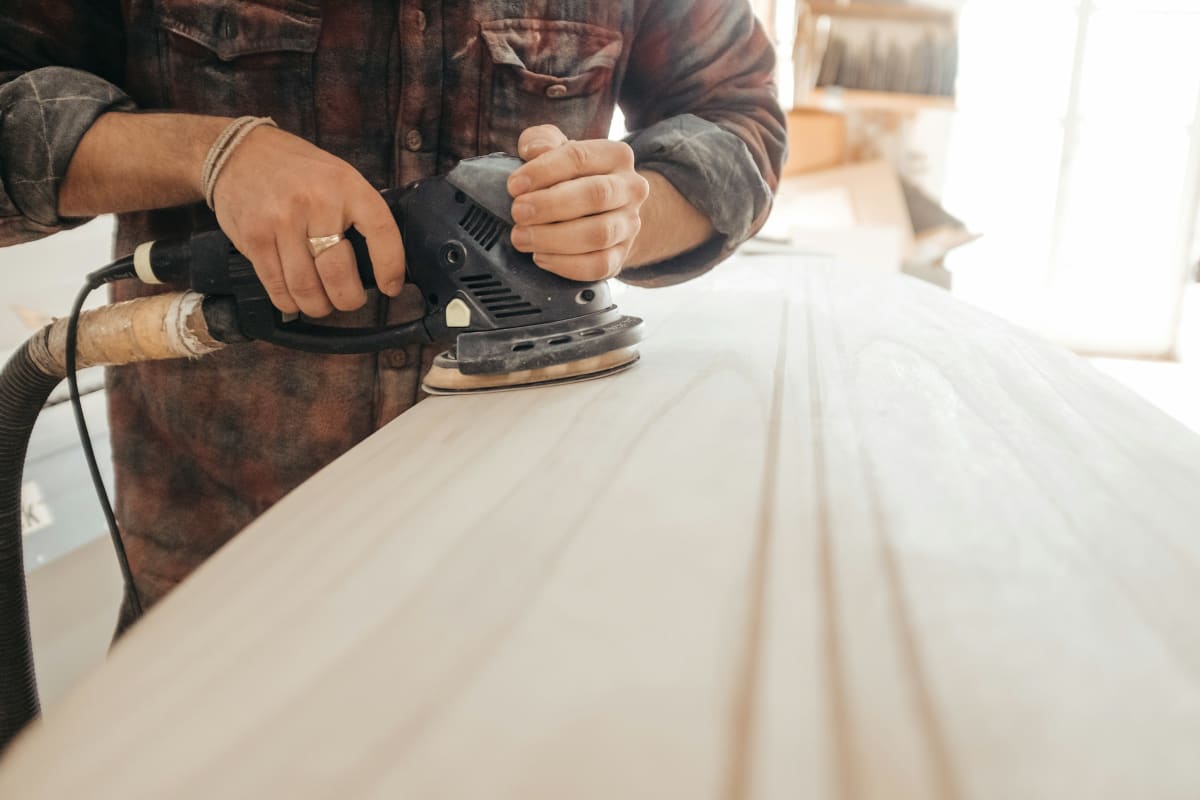
Sand with the grain on wood; cross-grain scratches at 120 still show under stain. Wrap the sheet around a block on flat surfaces so you don’t dish the soft grain.
On metal
On steel, 60 and 80 take off rust and scale, and 120 smooths the surface for primer. Keep one sheet for aluminum and copper only, because steel particles left in the cloth can scratch or stain the softer metal.
The rest of the SAIT line
SAIT is best known in metal shops for its bonded cutting and grinding wheels, fiber discs and flap wheels, with separate lines for stainless steel, cast iron, non-ferrous metals and stone as well as plain steel. On a grinder, the SAIT names to know are its cutoff wheels and flap discs.
Why these sheets
Paper sheets tear at the fold, clog on old paint and fall apart wet. The UA/SAIT cloth sheet folds around a profile, sheds dust through its open coat, and takes water, so one sheet does the work of several paper ones. For anybody who sands by hand more than once a year, that’s the reason to buy cloth.
Frequently Asked Questions
Is SAIT the same company as United Abrasives?
No. SAIT is the Italian manufacturer, and United Abrasives is the Connecticut company that distributes SAIT in the United States.
Can I use these sheets wet?
Yes. The cloth back and resin bond are water resistant, so you can dip the sheet to keep it cool and wash out dust while you work, which helps between coats of finish. Let bare wood dry fully before the next coat, because wet sanding raises the grain.
What is SAIT?
SAIT Abrasivi is an Italian abrasives maker founded in 1953 in Collegno, outside Turin. It makes bonded wheels and coated abrasives for industry, and its products come to North America through United Abrasives as UA/SAIT.
Ready to Get Started?
Our tool specialists can help you find the right SAIT products for your project.