

Rain Bird sprinklers and drip irrigation help you water your lawn, garden beds and individual plants. You can match the spray pattern to the planting area and choose emitter flow rates for plants with different watering needs.
Rain Bird Corporation is a privately held irrigation company based in Azusa, California. It started in 1933. The company makes irrigation products for homes, farms, golf courses, sports arenas and commercial developments.
Match the watering to the planting
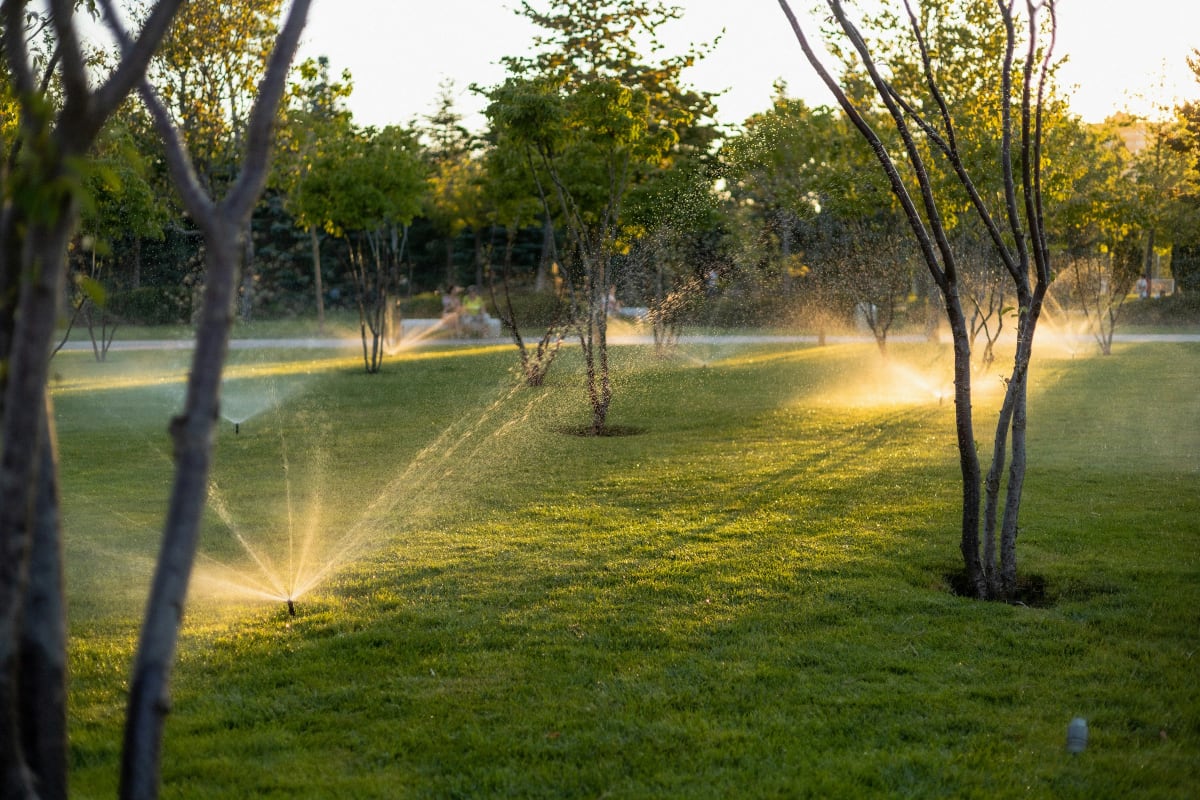
Lawn coverage and watering individual shrubs are different jobs. Start with the shape of the area and where the roots need water. Group plants with similar watering needs so the schedule suits the whole zone.
Can you change spray distance and give different plants different amounts of water? Yes. Rain Bird’s Xeri-Bug and PC emitters can be mixed to provide the flow rates different plants need. Flow and runtime work together, so check the soil around the roots after watering before increasing either.
For small areas with dense plantings, Rain Bird’s square-pattern spray nozzles adjust to either a 2.5-foot or 4-foot throw. For watering below the surface, its subsurface dripline listed in the table is intended for installation beneath turf, shrubs and groundcover.
Adjust or replace a sprinkler head
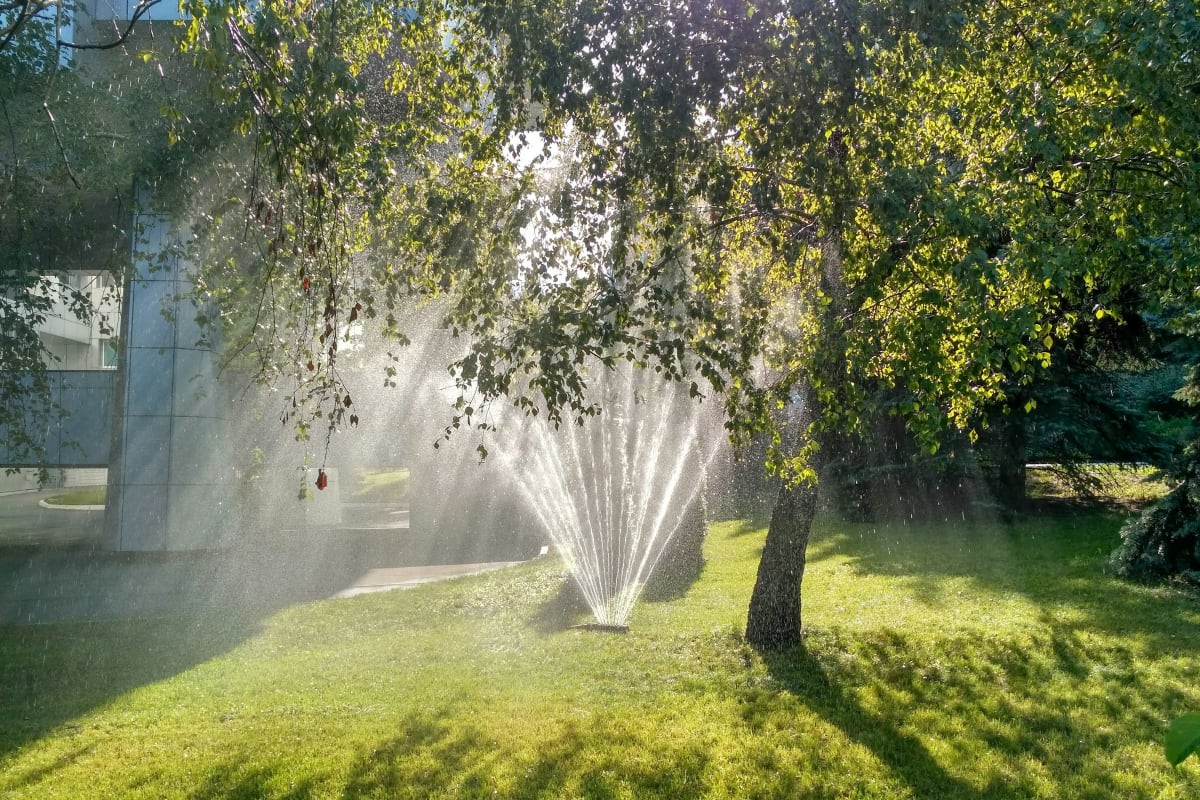
Before adjusting a head, decide whether you’re changing its direction, arc or distance. The arc is the portion of a circle it waters; distance is how far the water reaches. Identify the head, follow its adjustment instructions and run the zone to see where the water lands.
For a replacement, match the connection, operating requirements and coverage to the existing zone. Buying by appearance is a common mistake because heads that look alike can water differently. Shut off the water, uncover the connection carefully and keep soil out of the pipe. Set the replacement at finished grade, backfill and run the zone to check for leaks and coverage.
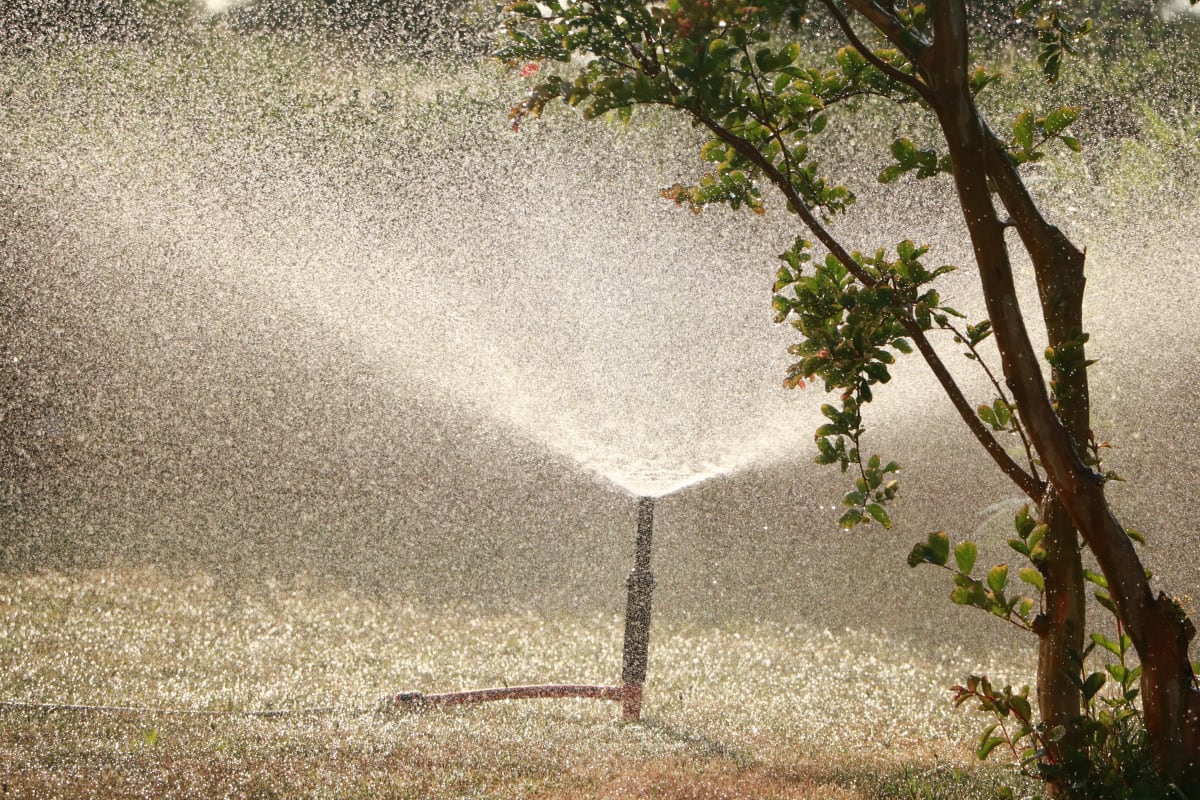
A weak sprinkler calls for a quick comparison with the other heads on its zone. An isolated problem points you toward debris, damage or a leaking connection at that head. If the whole zone is weak, check the supply, valve and piping.
Keep drip connections secure
Blank tubing carries water to the places where you add outlets. Couplings join tubing, elbows change direction and tees branch the run. Match fittings to the tubing’s actual dimensions and connection type. Lay out the route before cutting so each branch reaches its planting area without pulling on a connection.
An emitter at the end of quarter-inch tubing needs particular attention: a dislodged emitter or a cut in that tube causes unregulated flow. Stake the tubing, keep it clear of edging tools and inspect the connections with the water running.
Set the schedule and handle seasonal shutdown
When programming a Rain Bird controller, use the instructions for its exact model to set the clock, watering days, program start time and zone runtimes, then run a manual cycle to check each zone.
Winterizing requires shutting off the water supply and removing trapped water using the procedure suited to the piping, valves and backflow assembly. Have an irrigation professional handle a compressed-air blowout when the equipment limits or procedure are unknown.
Selected irrigation specifications
| Product or line | Watering pattern, flow or application |
|---|---|
| SQ Series Nozzle | Square wetting pattern; adjustable to a 2.5-foot or 4-foot throw; intended for small areas with dense plantings |
| XFS dripline with Copper Shield Technology | Subsurface applications beneath turf, shrubs and groundcover |
| XB-05-PC emitter | 0.5 gallons per hour |
| XB-10-PC emitter | 1.0 gallon per hour |
| XB-20-PC emitter | 2.0 gallons per hour |
Frequently Asked Questions
How do you adjust a Rain Bird sprinkler head?
First check that the head stands straight and clears the surrounding grass. A distance adjustment won’t fix a leaning head or a spray blocked by turf. Use the instructions for your particular head to adjust its arc or reach, then watch the whole watering pattern with the zone running.
How do you program a Rain Bird sprinkler system?
You program the controller, and the steps depend on which controller you have. Pay attention to program start times: on a controller that runs zones in sequence, another start time repeats that sequence rather than assigning a time to the next zone. If your watering cycle keeps starting over, check for extra start times before shortening every zone’s runtime.
How do you replace a Rain Bird sprinkler head?
Match the replacement to the existing zone’s watering requirements and connection, because a head that screws into place can still deliver the wrong coverage. With the water off, keep dirt out of the open connection and position a lawn pop-up at finished soil grade. After installation, run the zone long enough to spot a leak around the base as well as gaps in coverage.
How do you fix a Rain Bird sprinkler head that isn’t working properly?
Watch the head while its zone runs before taking anything apart. If the surrounding heads work normally, you can narrow the problem to that head or its connection; wet soil bubbling around the base points toward a leak. Shut the water off before inspecting it, and follow the head’s cleaning instructions before assuming it needs replacement.
How do you turn off one Rain Bird sprinkler head?
Turning off the controller stops the zone, so it won’t let you shut off just one head while the others keep watering. Whether you can close an individual head depends on its design; an adjustment screw isn’t automatically a shutoff. Permanently removing that watering point requires a compatible closure and a coverage check, since neighboring heads may rely on its overlap.
How do you winterize a Rain Bird sprinkler system?
Turning the controller off doesn’t remove water trapped underground. Your system needs its water supply shut off and trapped water removed using the procedure appropriate to the installed equipment. If that requires compressed air and you don’t know the equipment limits, an irrigation professional should handle the blowout.
How do you turn on a Rain Bird sprinkler system after winter?
Before restoring water, make sure the system’s winterization openings and components are returned to their operating positions according to their instructions. Open the supply slowly, then run each zone separately while you check for leaks and heads that aren’t working. Check the saved watering schedule too, because last season’s settings may deliver more water than the soil needs now.
Ready to Get Started?
Our landscape & concrete specialists can help you find the right Rain Bird products for your project.