
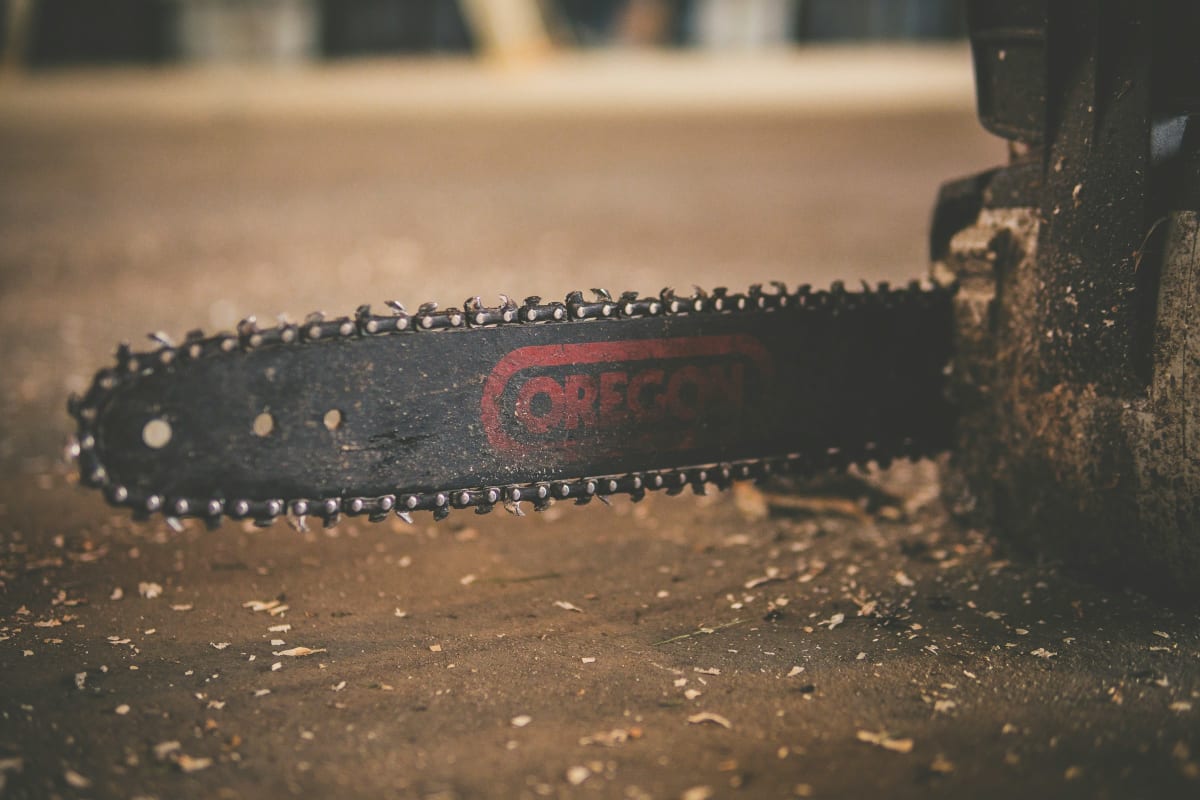
Oregon chainsaw chain, bars and sharpening tools help you keep your saw cutting and its cutters sharp. For homeowners who maintain their own equipment, the range covers replacement parts and the tools for routine upkeep. Keeping a chain sharp makes the cutting easier.
Oregon is a brand of Oregon Tool, Inc. Joseph Buford Cox founded the saw-chain business in 1947. It started with four employees and one product, saw chain.
Match the chain to your saw
Oregon offers chain options for most chainsaws. Its part finder supports searches by equipment brand and model or original-equipment part number, giving you a specific starting point for matching replacement parts. Use the exact equipment version when choosing a chain or guide bar.
Gauge is the thickness of the drive link that runs in the bar groove, and those two have to match. Pitch describes the chain’s spacing and must match the drive sprocket and any bar-nose sprocket. The replacement loop also needs the correct drive-link count. Use the identification stamped on the old chain’s drive link to look up pitch and gauge; wear can make direct measurements unreliable.
Oregon recommends standard chain sequence for general-purpose cutting. Semi-skip and skip sequences serve jobs where chip clearance matters, including larger-diameter wood. For users without training in handling kickback, Oregon recommends low-kickback chain; choose a compatible green-label chain.
Keep the cutters sharp and the bar working
A correctly sized file is a practical way to touch up a chain. Oregon’s sharpening and filing tools support that work. If you’re having to push hard and getting fine dust instead of chips in ordinary crosscuts, check the cutters. Match the file to the chain and follow its sharpening angles.
Dirt in bark and contact with soil can take the edge off quickly. Oregon’s maintenance tools cover cleaning and lubrication as well as sharpening. Support the wood so the chain stays clear of the ground as the cut finishes.
A fresh chain still needs a sound, lubricated bar. Oregon identifies proper tension and guide-bar maintenance as necessary to saw performance. Clean the bar groove and oil passages, inspect the bar for wear, and set tension according to the saw’s instructions.
Equipment upkeep beyond the saw
Oregon’s air filters and fuel filters cover another part of routine equipment maintenance. Match the replacement by equipment model or original-equipment part number, then check its connections against the part being replaced.
Oregon also makes mower blades and belts. For battery-trimmer upkeep, Oregon recommends 1.6-millimeter trimmer line because smaller line creates less drag and demands less power; use that diameter where your trimmer head accepts it.

Chain and bar specifications
| Detail | Oregon specification or guidance |
|---|---|
| Available chain gauges | .043, .050, .058 and .063 inches; chain gauge must match guide-bar gauge. |
| Chain pitch measurement | Distance spanning three consecutive rivets divided by two. |
| Pitch compatibility | Must match the drive sprocket and any applicable guide-bar nose sprocket. |
| Guide-bar length measurement | From the front of the saw to the tip of the guide-bar nose. |
Frequently Asked Questions
How do I choose the right Oregon chainsaw chain?
The right Oregon chainsaw chain has to match your bar’s gauge and your saw’s sprocket pitch. Use the number stamped on the old chain’s drive link to identify pitch and gauge, since wear can make measuring the old chain unreliable. A model name on the package isn’t a guarantee of fit for every version of that saw.
How do you sharpen an Oregon chainsaw chain?
Use a correctly sized file or a compatible sharpener, following the filing angles specified for your Oregon chainsaw chain. Keep the cutters consistent and check the depth gauges too, because they control how much wood each cutter takes. Pressing harder won’t make up for dull cutters.
What is an Oregon bar and chain?
An Oregon bar and chain pairs the guide bar with the cutting chain that travels around it. The bar supports and guides the chain, while the chain’s cutters remove the wood. When replacing the pair, check the drive sprocket for wear too; a fresh cutting setup still depends on the part driving it.
How do you measure an Oregon chainsaw bar?
Measure an Oregon chainsaw bar from the front of the saw to the tip of the bar’s nose while it’s mounted. Measuring the entire removed bar includes the mounting portion and gives you the wrong length for this purpose. When choosing a replacement chain, that length is only a starting point: pitch and gauge still have to match.
Ready to Get Started?
Our tool specialists can help you find the right Oregon products for your project.