
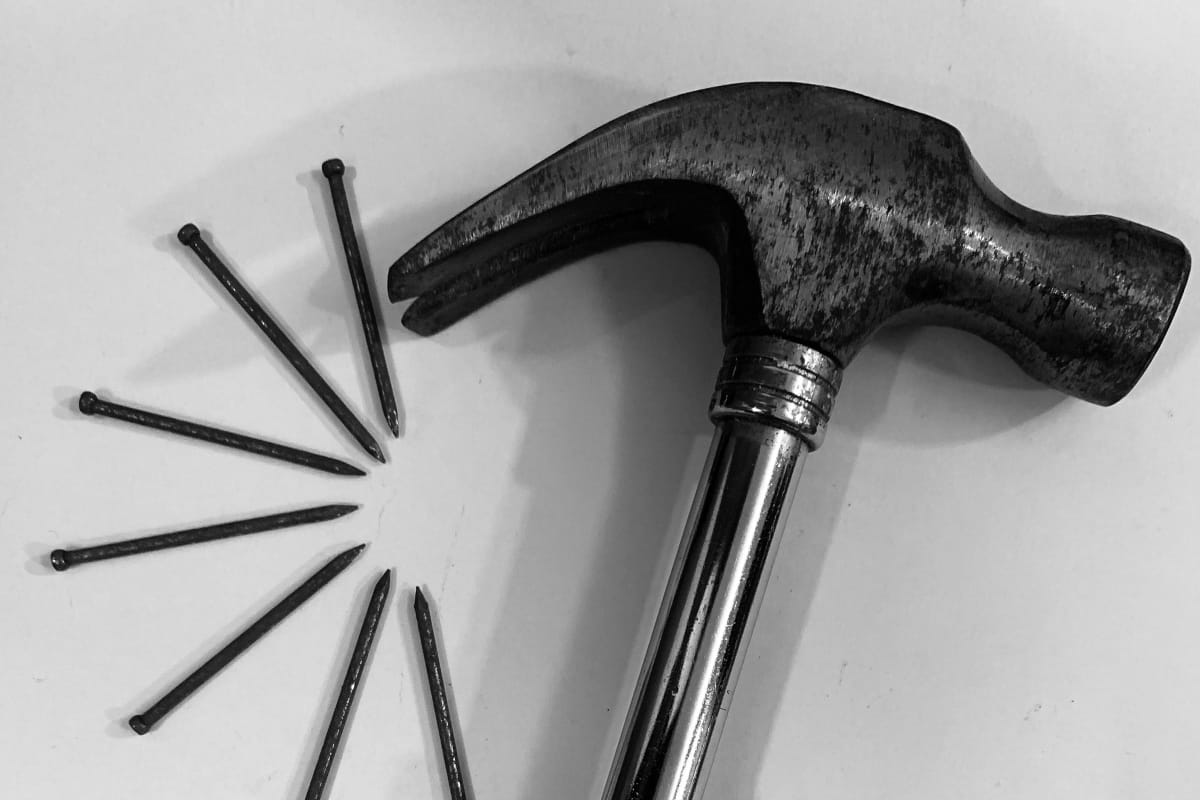
Estwing hammers and pry bars handle nail work and tear-out for carpenters, remodelers and homeowners. Its one-piece, all-steel hammer design eliminates a separate head-to-handle connection. On tools equipped with it, the Shock Reduction Grip is intended to reduce impact vibration.
Estwing Manufacturing Company is a tool manufacturer based in Rockford, Illinois. Ernest Estwing founded the company in 1923. It’s known for hammers with the head and handle forged from one piece of solid steel.
Choose hammer weight and claw for the work
Estwing makes claw hammers, and the useful starting point is the nails you’ll drive and the amount of swinging you’ll do. A heavier head can help drive larger nails, but you’ve got to lift and control it on every stroke. For mixed repairs, accurate placement matters more than extra weight that tires your arm. Choose a weight you can control through repeated swings.
Claw shape changes how you pull and reach. A curved claw gives you a rounded pivot for pulling nails; a straight claw reaches between pieces more readily during framing and tear-out. For a long nail, a wood block under the hammer head gives you a fresh pulling position and helps protect the surface.
Construction, grip and regular use
The one-piece steel construction removes a separate connection between the hammer head and handle. The Shock Reduction Grip addresses a different concern: vibration from impact. That’s worth considering for repeated nail driving. Judge grip comfort by whether you can hold the tool securely without squeezing harder than necessary.
Estwing warrants its all-steel hammers against failure in normal use, with misuse, abuse and wearing out excluded. The Titanium Hammer carries one year of coverage for defects in materials and workmanship.
Pry bars and trade tools
Estwing’s pry bars fit the separating work that comes with remodeling. A bar gives you room to work along a nailed joint. When saving trim, protect the finished surface with a broad scrap and work gradually along the piece.
Estwing also makes axes for woodcutting, along with roofer’s and bricklayer’s tools for those trades. Its nail hammers are specified for driving and withdrawing common unhardened nails. Wear safety goggles when using striking or struck tools, with goggles for bystanders too.
Construction and service details
Judge a used Estwing by its present condition, including the grip, face, claw and handle. Factory service for used striking tools is limited as shown below.
| Detail | Estwing specification or service limit |
|---|---|
| All-steel hammer construction | Head and handle forged from one piece of solid steel |
| Shock Reduction Grip | Intended to reduce impact vibration on tools equipped with it |
| Used striking or struck tools | Factory repair, re-gripping and refurbishment unavailable |
Frequently Asked Questions
Are Estwing hammers good?
Yes, Estwing’s one-piece steel hammer construction is a practical strength: there’s no separate head-to-handle joint to loosen. That doesn’t make a used hammer a good choice regardless of condition. A cracked claw, chipped face or dented handle means it’s time to retire it.
Where are Estwing hammers made?
Estwing’s manufacturing facility is in Rockford, Illinois, about 90 miles northwest of Chicago. That’s the city where the company started in 1923.
How are Estwing hammers made?
Estwing forges its one-piece steel hammers with the head and handle formed together, then heat-treats and finishes them. The company has automated parts of forging, heat treatment and finishing for greater quality control. That steel construction description doesn’t apply automatically to its titanium hammer.
Where are Estwing tools made?
Estwing has its manufacturing facility in Rockford, Illinois, and a commitment to American-made tools. You can’t assume that every tool in the lineup has the same manufacturing origin, though. For a particular tool, its country-of-origin marking matters more than the brand’s address.
Ready to Get Started?
Our tool specialists can help you find the right Estwing products for your project.