

ClosetMaid closet shelving gives DIY homeowners and contractors shelves and hanging space for a closet project. Fixed and adjustable wire systems suit settled layouts or changing storage needs. Start with what you’ll hang and stack; that decides where shelves and supports belong.
ClosetMaid was founded in 1965 and makes closet organization, home-storage, and garage-storage products. Its professional offering, ClosetMaid PRO, is headquartered in Orlando, Florida, and designs and manufactures in Ocala, Florida. ClosetMaid LLC was a wholly owned subsidiary of Griffon Corporation in 2022.
Choose the layout around your clothes
Choose fixed wire shelving when you’ve settled the shelf heights and hanging layout. Adjustable shelving is useful when you expect that arrangement to change. Leave room for the clothes hanging below each shelf, including longer coats and dresses.
If you prefer a solid shelf above your hanging space, ExpressShelf is a prefinished shelf-and-rod alternative to traditional plank-and-pole shelving.
For shelving, cabinets, and accessories, MasterSuite’s Classic and 27th Avenue collections use engineered wood with melamine finishes and solid-wood drawers.
Match the hardware to the shelving
Choose the shelving system before choosing its hardware. A hang track, vertical standard, shelf bracket, and wall clip each have a particular job. The mistake is treating brackets that look alike as interchangeable. Match the shelf, mounting hardware, and supports as a system.
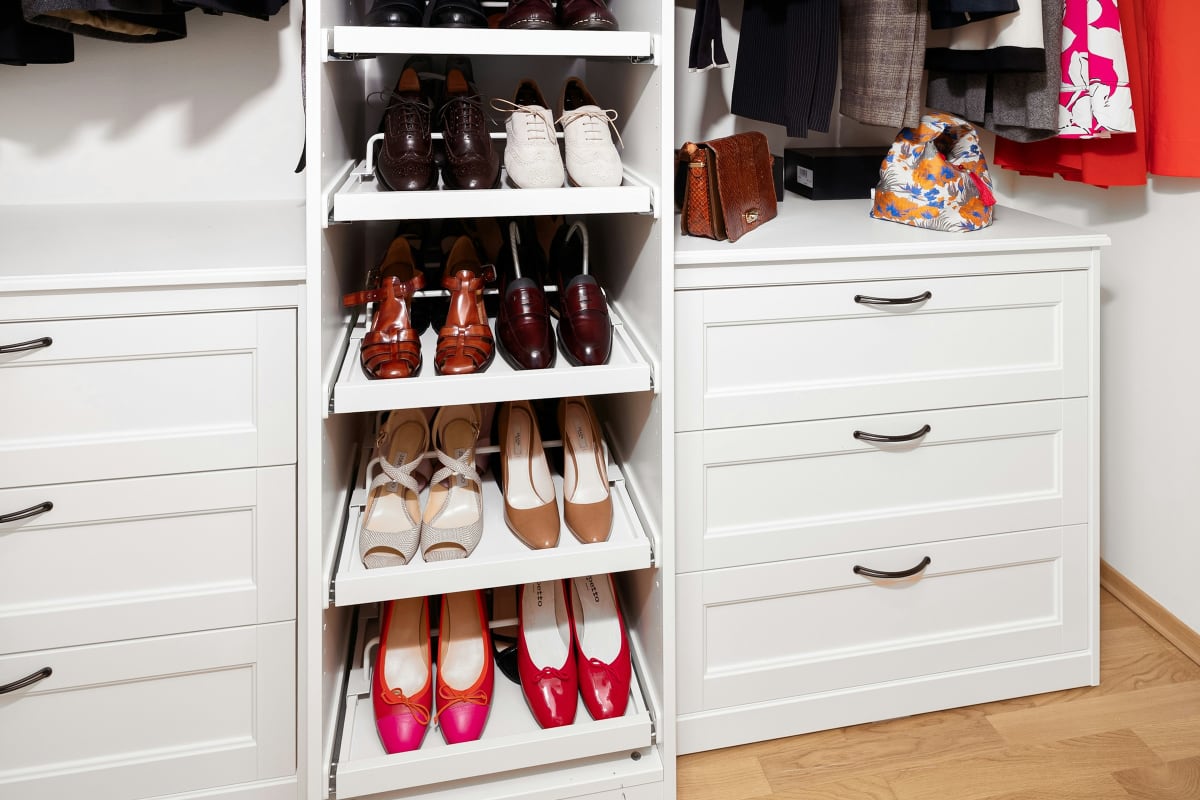
End support depends on whether the shelf meets a side wall or finishes in the open. Include the specified end-support arrangement when you’re counting hardware. For shoe storage, check clearance with your tallest footwear and make sure narrow heels sit securely on the shelf surface.

Lay out the supports before drilling
Start with a level layout, identify the wall construction, and locate the studs. Use the fastening method and support spacing in your system’s installation instructions. Lay out every support before drilling so shelf ends and corners have the support they need.
For a track-mounted layout, establish the hang track’s level line and required attachment locations. Position the vertical standards according to the installation layout, then seat the brackets fully before setting the shelves. Check door clearance and hanging space while the layout is still easy to change.
The useful load rating is for the complete installed arrangement: shelf, brackets, supports, fasteners, and wall attachment. Spread stored weight along the shelf and follow the load limit for that arrangement.
Fit the shelf to the actual opening
Wire shelving can be cut to fit. Measure at the shelf’s actual height because closet walls can taper. Follow the shelf’s cutting instructions, account for end hardware before marking the cut, and finish exposed ends as directed.
When removing an old shelf, empty it and support it while releasing the retaining clips and brackets. Pulling against engaged clips can tear the drywall around them. Once the shelf is free, remove the wall hardware using the method appropriate to its fasteners.
Wire system finishes
| System | Finish shown |
|---|---|
| ShelfTrack | White |
| Fixed Mount | White |

Frequently Asked Questions
How do you install ClosetMaid wire shelving?
First identify whether you’ve got a fixed or adjustable system, because the mounting hardware and support layout depend on it. Mark the shelf height and support locations, then follow that system’s instructions for fastening to your wall. Check that the shelf is secured against lifting out as well as supported underneath before loading it.
How do you cut ClosetMaid wire shelving?
You can cut wire shelving to fit, but measure at the shelf’s finished height and allow for its end hardware before marking it. Follow the shelf’s instructions for the cutting method and covering exposed ends. Cutting a shelf shorter doesn’t replace the need for the specified end supports.
How do you install a ClosetMaid ShelfTrack system?
Start with a level hang track and follow the system’s instructions for attachment and standard spacing. Check that the vertical standards are plumb and the shelf brackets sit at matching heights, with each bracket fully seated. Check alignment across the whole run before setting the shelves; an uneven wall can leave adjacent supports out of line.
How do you remove ClosetMaid wire shelving?
Empty the shelf, support its weight, and release it from the retaining hardware before removing the wall attachments. If a clip won’t release, check how it works before pulling harder, since forcing it can damage the drywall. If you’re replacing the shelving, don’t assume the old mounting holes match the new system’s support layout.
Ready to Get Started?
Our building materials specialists can help you find the right ClosetMaid products for your project.