

Bostitch nail guns, staplers and fasteners are for building professionals doing construction and trim work. Separate tools for brads, finish nails, roofing nails and staples let you match the fastening method to the job. That choice also tells you which refills belong with the tool.
Bostitch is an American fastening-tool company, also known as Stanley Bostitch. Thomas Briggs founded it in Arlington, Massachusetts, in 1896. Owned by Stanley Black & Decker, it is known for nailers, staplers and fasteners.
Match nails and staples to the tool
The exact tool model is the starting point for replacement fasteners. Bostitch separates 18-gauge brads, 16-gauge finish nails, 21-degree plastic-collated framing nails and 28-degree wire-weld framing nails into different tools. Match the refill to the model.
For nails, check gauge or shank diameter, length, head style and collation, which is how the nails are held together for feeding. Angled finish nails also need the correct FN or DA style. For staples, match the staple series, crown and leg length; the crown is the bridge across the legs, and its shape has to suit the magazine and driver.
Fastener fit is half the job. The material you’re fastening also determines the required nail or staple, including its length and suitability for the exposure. For connector work, match the connector’s specified nail with the tool’s accepted fastener.
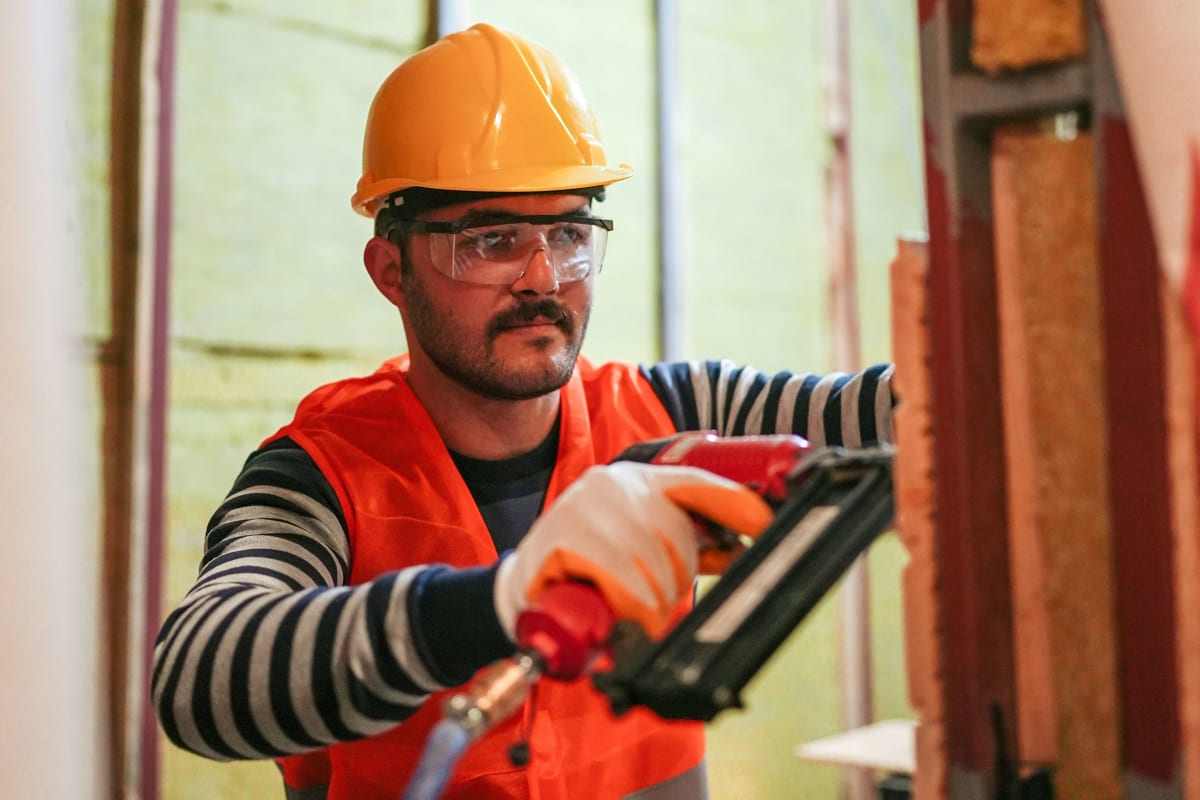
Trim, roofing and specialty fastening
Use brads for light trim where the small hole matters and finish nails where the attachment needs more hold. Bostitch offers both brad and finish nailers for trim work. Set the depth on an offcut of the same trim before fastening the finished piece.
Bostitch’s coil roofing nailers give roofing work its own tool category. Its listed coil roofing nails include a smooth-shank, 15-degree option. Match the refill to both the nailer’s requirements and the roofing material’s fastening instructions.
For staple work, choose the tool around the attachment you’re making. Bostitch’s cap stapler is an 18-gauge tool. Its STRAPSHOT metal connector nailer serves connector work, where the specified nail diameter, head and length matter to the connection.
Bostitch also offers a dedicated coil siding nailer with a listed nail range of 1-1/4 inches to 2-1/2 inches. For flooring, its dedicated staplers and hardwood flooring cleat nailer provide different fastening methods; use the method specified for the flooring.
Loading and keeping the tool feeding
Loading starts with the exact model’s magazine design and accepted fasteners. For a pneumatic Bostitch nailer or stapler, disconnect the air supply before loading or clearing a jam. For a battery-powered tool, remove the battery. Follow the model’s magazine-opening, fastener-positioning and pusher sequence, keeping your finger clear of the trigger.
Bent fasteners and a mismatched refill can interrupt feeding. After clearing a jam using the model’s procedure, check the remaining strip or coil before reloading. Repeated jams with the correct fasteners call for inspection of the feed mechanism and driver.
For an air-powered setup, compare the tool’s air demand with the compressor’s delivered air at the required working pressure. Rapid fastening uses air faster than occasional trim shots. Set the regulator within the tool’s operating range, then test feeding and fastening depth on matching scrap.
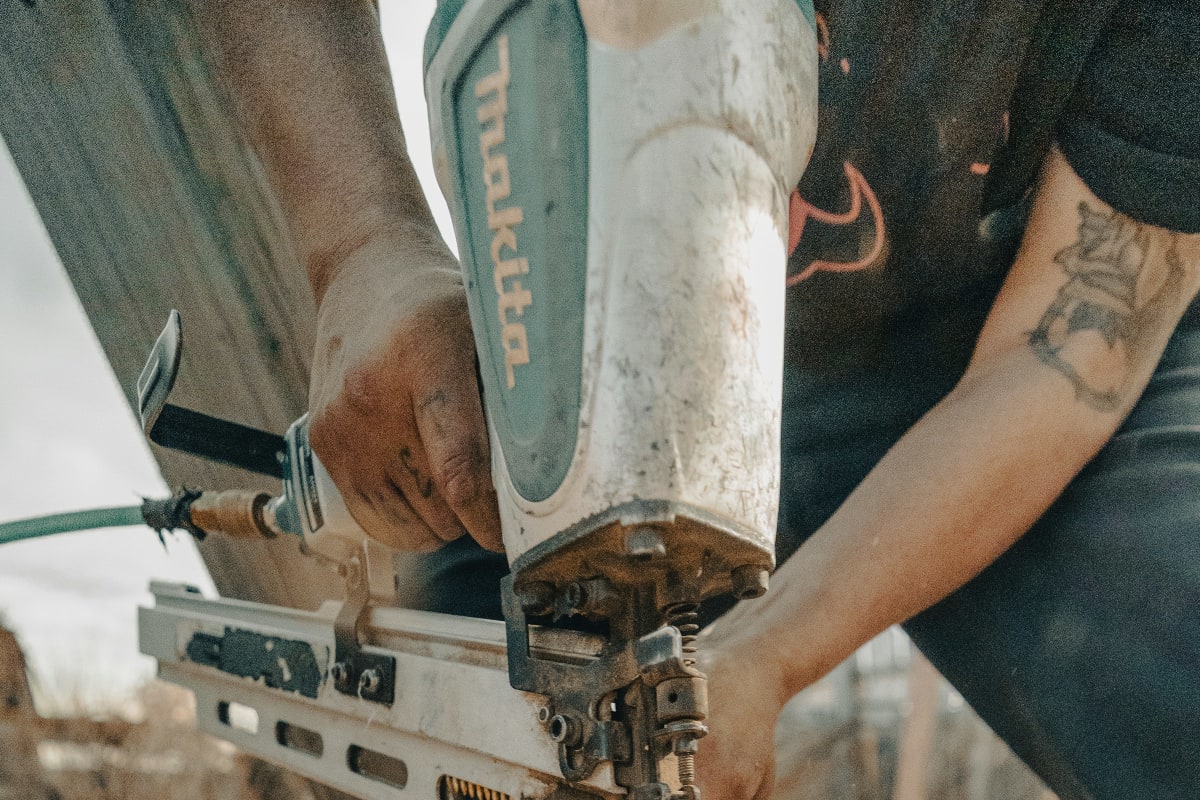
Selected tools and fastener specifications
| Tool or fastener | Model or item number | Format or specification |
|---|---|---|
| Smart Point brad nailer kit | BTFP12233 | 18-gauge |
| Smart Point finish nailer kit | BTFP71917 | 16-gauge |
| Smart Point angled finish nailer kit | BTFP72155 | 15-gauge, DA-style |
| Smart Point angled finish nailer kit | BTFP72156 | 15-gauge, FN-style |
| Coil roofing nailer | RN46-1 | Coil roofing |
| Coil roofing nails | CR3DGAL | 1-1/4-inch, smooth shank, 15-degree; 7,200-count package |
| Cap stapler | SL1838BC | 18-gauge |
| STRAPSHOT metal connector nailer | MCN150 | Metal connector fastening |
Frequently Asked Questions
How do you load a Stanley Bostitch staple gun?
The loading method depends on the Stanley Bostitch staple gun you’re using. Disconnect its power source before opening the magazine, then follow the tool’s instructions for staple position and the loading sequence. Staples that look close can still be the wrong fit, so check the specified staple series before loading. If the magazine won’t close normally, check the fit and position instead of forcing it.
How do you load nails into a Bostitch nail gun?
A Bostitch nail gun needs the fastener format specified for that tool; loading a coil roofing nailer is different from loading a brad nailer. Even with an 18-gauge brad nailer, matching the gauge alone isn’t enough to establish compatibility. Disconnect the air supply or remove the battery, then follow the tool’s loading sequence, including the fastener orientation and pusher position.
How do you use a Bostitch air compressor with a nail gun?
Set the Bostitch air compressor’s regulator to the nailer’s specified working pressure, with the trigger released, then test on matching scrap. Maximum tank pressure doesn’t tell you whether the compressor can keep up with repeated shots; delivered air at working pressure is what matters. If nails start standing proud during rapid fastening, check the regulated pressure and air supply before changing the depth setting.
How do you use a Bostitch nail gun?
Start with the correct fasteners and test the Bostitch nail gun’s depth setting on matching scrap. Learn the tool’s trigger operation before fastening the finished piece, and keep your finger off the trigger while repositioning. Keep your free hand clear of the nail’s path, including behind the work, because a nail can deflect or pass through.
How do you unjam a Bostitch nail gun?
Disconnect the air supply or remove the battery before clearing a Bostitch nail gun. Follow the tool’s jam-clearing procedure rather than trying to fire the obstruction out. Check the remaining fasteners for damage before reloading. If it keeps jamming with the correct refill, the feed mechanism or driver needs inspection.
Ready to Get Started?
Our tool specialists can help you find the right Bostitch products for your project.