BCI joists are engineered wood I-joists for builders framing a home’s floors. They give you long-span layout options and consistent framing for the subfloor. For a house with open rooms, that span capability gives you a reason to consider them early in the framing plan.
Boise Cascade makes BCI joists and is based in Boise, Idaho. The current company was formed in 2004 and is publicly traded. It manufactures lumber, plywood, and engineered wood products.
Straight framing and floor feel
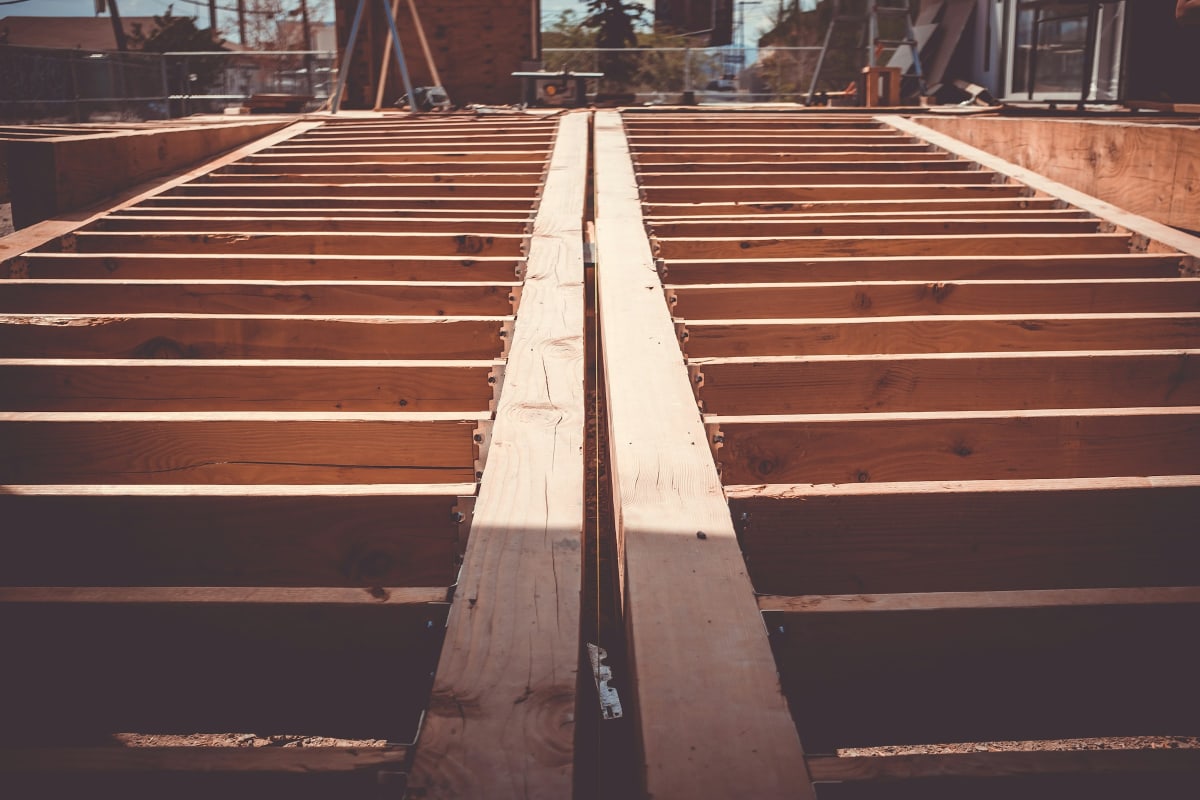
BCI joists allow long spans with little to no twisting, shrinking, or bowing. That dimensional stability helps you keep a consistent framing plane for the subfloor.
They’re also designed to help reduce floor vibration. How firm the finished floor feels depends on the framing layout, including joist depth, spacing, and support locations. Plan for stiffness early. Evaluate floor feel while those choices are still open.
Choosing a joist depth
BCI’s standard depths run from 9½ to 20 inches. Start with the floor depth your plans can accommodate, then work through the actual support-to-support span, loads, and joist spacing.
For an open living room, support locations belong in the decision from the start. Put them on the plan alongside your available floor depth and mechanical routes. Use the applicable East or West specifier guide to evaluate joist depth and floor stiffness together.
Leave room for the mechanical runs
The joist webs can accommodate holes for plumbing and HVAC. Plan those routes while the framing layout is still being worked out. Settling on a depth before sorting out the mechanical runs can leave you with an awkward route through an otherwise workable floor frame.
BCI joists can also be trimmed on site without specialized tools. Coordinate the framing and mechanical plans, and give the trades the applicable installation and hole-cutting details before cutting starts.
Handling and subfloor fastening
BCI joists are lightweight, and their eased edges help reduce splinters during handling. The wider nailing surface gives you more room for fastening the subfloor. That’s useful when you’re lining up sheet edges over the joists.
Depth range and guides
| Detail | BCI specification |
|---|---|
| Standard joist depths | 9½–20 inches |
| East specifier guide | MTP-E7000 |
| West specifier guide | MTP-W7000 |
| East installation guide | MTP-E7001 |
| West installation guide | MTP-W7001 |
Frequently Asked Questions
What is a BCI joist?
BCI joists are engineered wood I-joists used for floor and roof framing. The I-shaped cross section has top and bottom flanges connected by a vertical web. You need the span and load checked for the specific joist before settling on a depth; matching the height of an existing joist isn’t enough.
Who makes BCI joists?
Boise Cascade makes BCI joists and is headquartered in Boise, Idaho. BCI is its product line, not a separate company. When you’re reviewing framing details, make sure they apply to that line, since Boise Cascade also makes other engineered wood products.
Ready to Get Started?
Our building materials specialists can help you find the right Bci products for your project.